
When you find yourself saying, “Sorry to keep you waiting,” you are acknowledging a lapse in time that has impacted someone else’s day. This common English expression serves as a bridge, helping to restore professional rapport after a delay. Whether you are late for a Zoom call or slow to respond to an email, choosing the right words matters.
Mastering the nuance of this phrase allows you to show respect for your recipient’s schedule while maintaining your professional composure. Understanding how to use these social lubricants effectively will help you navigate daily interactions with greater confidence and ease, ensuring that minor inconveniences do not damage your valuable working relationships.
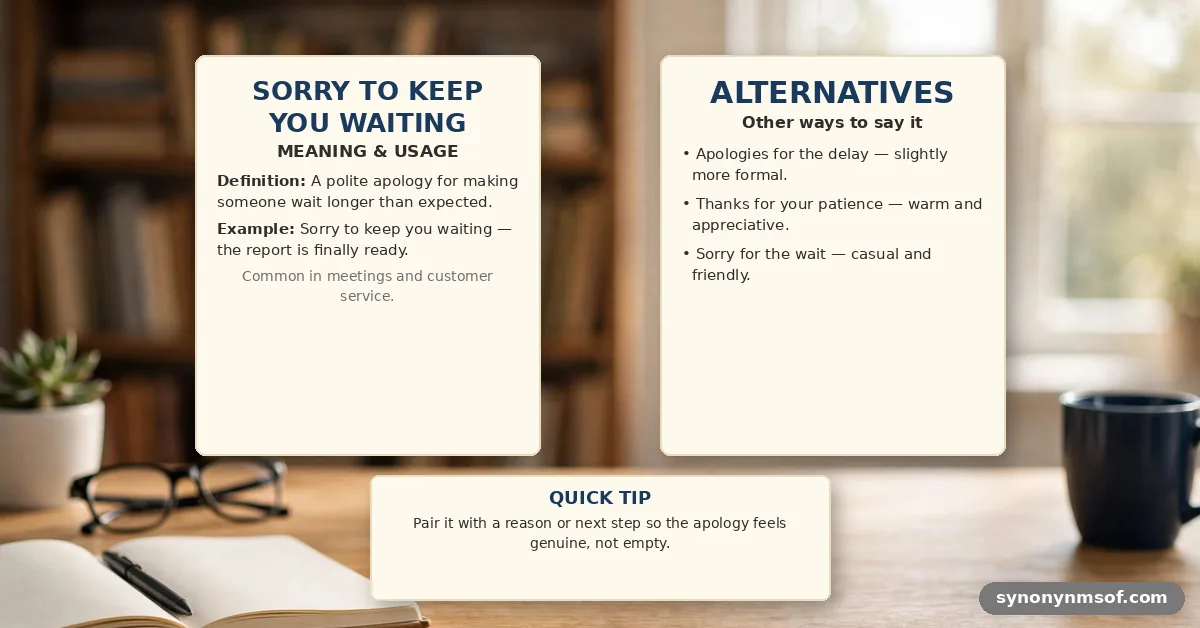
The expression “sorry to keep you waiting” is a standard way to acknowledge that your actions, or lack thereof, have caused a delay. It functions primarily as a social signal of humility and awareness. By using this phrase, you communicate that you value the other person’s time and that you are not indifferent to the fact that you held them up.
In a fast-paced work environment, time is often the most precious asset. When you acknowledge a delay, you are essentially validating the recipient’s experience.
This simple act of recognition can prevent frustration from escalating into resentment. It signals that you are a reliable partner who respects the professional boundaries of others.
Using this language effectively requires a balance between sincerity and brevity. You do not need to over-explain the reasons for your tardiness, as that can sometimes sound like making excuses.
Instead, focus on the acknowledgment and the move forward. This keeps the interaction professional and prevents the delay from becoming the centerpiece of the conversation.
When to Use Professional Apologies
Deciding when to offer an apology depends on the context of the delay. If you are five minutes late to a meeting, a quick, polite acknowledgment is appropriate. However, if the delay involves a project deadline or a significant lapse in communication, you may need a more substantive approach.
Consider the impact on the other person. If your delay has caused them to miss another commitment, your apology should reflect the gravity of that disruption.
Professionalism in these moments is about accountability. You are taking responsibility for the impact your timeline had on their productivity.
Avoid overusing these phrases for trivial matters. If you apologize for every minor pause in a conversation, you may inadvertently project a lack of confidence.
Use these expressions strategically to maintain their impact. When you do use them, pair them with a clear path forward to demonstrate that you are ready to get back to work.
Polite Alternatives for Daily Communication
There are many ways to express regret for a delay that sound more polished or specific than the standard phrase. Depending on your relationship with the person, you might choose an option that feels more natural to your personal communication style.
- Thank you for your patience while I gathered the necessary files.
- I appreciate your flexibility regarding the shift in our meeting time.
- Please excuse the delay in my response to your inquiry.
- I am sorry for the wait; let us dive right into the agenda.
- Thank you for holding; I am ready to assist you now.
These alternatives shift the focus from the mistake to the gratitude you feel for the other person’s cooperation. By thanking them for their patience, you turn a negative situation into a positive exchange. This approach is highly effective in client-facing roles where maintaining a helpful, upbeat tone is essential.
Categorizing Your Response by Tone
Choosing the right words depends heavily on the power dynamic and the urgency of the situation. A casual email to a teammate requires a different touch than a formal letter to a stakeholder. You should adjust your language to match the expectations of your recipient.
Soft and Appreciative

These phrases are best for building long-term relationships where you want to emphasize gratitude. They are ideal for clients or partners who have been understanding about a delay. Use these when you want to soften the edges of a professional inconvenience.
Urgent and Direct
When time is critical, you should be brief. Avoid flowery language that wastes more of the recipient’s time. A direct apology shows that you recognize the urgency and are focused on resolving the issue immediately.
Neutral and Professional
These options work well in standard business correspondence. They are safe, reliable, and convey the necessary message without appearing overly emotional. Use these when you are unsure of the recipient’s preferred communication style.
Comparison of Communication Styles
To help you select the most appropriate phrase, consider the following table. It contrasts different approaches based on their formality and the level of urgency required in the situation.
| Phrase | Formality | Urgency |
|---|---|---|
| Sorry to keep you waiting | Moderate | Low |
| Thank you for your patience | High | Low |
| Please accept my apologies for the delay | High | Moderate |
| Sorry for the wait, let’s proceed | Low | High |
| Apologies for the late reply | Moderate | Moderate |
Common Mistakes to Avoid
One of the biggest mistakes people make is over-explaining. If you spend three paragraphs detailing why your internet went down, you are just adding more noise to the situation. Keep the explanation to a single sentence or omit it entirely if the cause is irrelevant.
Another pitfall is sounding insincere or robotic. If you copy and paste the same apology into every email, people will notice. Tailor your response slightly to the individual or the specific project to show that you are paying attention.
Finally, avoid turning your apology into a demand for forgiveness. You are not asking the other person to absolve you of a crime; you are simply acknowledging a lapse in time. Keep the tone professional and forward-looking rather than focused on your own guilt.
Refining Your Workplace Language
Using the right language is a skill that takes practice. You might start by observing how your peers or mentors handle delays in their own communication. Often, the most effective speakers use simple, clear language that acknowledges the issue and moves on.
Consider the medium you are using. A Slack message allows for a more casual tone, while a formal report or a client email demands a higher level of polish.
Always match your tone to the platform. If you are ever in doubt, choose the slightly more formal option to remain on the safe side.
Learning to handle these moments gracefully is a sign of emotional intelligence. It shows that you can manage setbacks without losing your cool. As you incorporate these phrases into your daily routine, you will find that your professional interactions become smoother and more productive.
Frequently Asked Questions
Is saying “sorry to keep you waiting” considered professional?
Yes, it is a standard and acceptable phrase in almost all business contexts. It is polite, direct, and shows that you respect the other person’s time.
What is the best way to express urgency politely?
The best way is to combine an apology with a call to action. For example, say, “I apologize for the delay, and I have attached the documents you requested so we can move forward immediately.”
How does “at your earliest convenience” differ from “as soon as possible”?
“At your earliest convenience” is much softer and gives the recipient more control over their schedule. “As soon as possible” implies a high level of urgency and can sound demanding if not used carefully.
Should I always apologize for being late?
It is good practice to acknowledge the delay, but you do not need to grovel. A brief, sincere acknowledgment is usually sufficient to maintain professional respect.
Are there cultural differences in how delays are handled?
Yes, some cultures value punctuality more strictly than others. In high-context cultures, the way you apologize for a delay can be just as important as the work you are delivering.
Refining Your Professional Presence
Mastering the way you apologize for delays is a fundamental part of building a strong professional reputation. By choosing your words with care, you demonstrate that you are not only reliable but also thoughtful regarding the experiences of those you work with.
When you find yourself in a situation where you need to say sorry to keep you waiting, aim for clarity and brevity. This keeps the focus on your work rather than your mistakes.
As you continue to refine your language, pay attention to the feedback you receive. You will likely notice that a simple, sincere acknowledgment goes much further than a long-winded excuse.
Keep your communications professional, stay focused on the task at hand, and always prioritize the quality of your relationships. Your ability to handle these small moments with grace will pay dividends in your career growth.
SEO Title: Sorry to Keep You Waiting: Meaning & Professional Examples
Meta Description: Learn better ways to say sorry to keep you waiting. Discover professional alternatives, tone-based advice, and tips for effective workplace communication.
Suggested URL Slug: sorry-to-keep-you-waiting-meaning-examples
Primary Keyword: Sorry to keep you waiting
Secondary Keywords: professional ways to say as soon as possible, polite ways to say as soon as possible, business communication tips, workplace etiquette, professional apologies