

Whether you’re writing a cover letter, emailing a recruiter, sending a LinkedIn message, or following up after an interview, the phrase “I am interested in this position” is one of the most common ways to express enthusiasm for a job opportunity.
There’s nothing wrong with the phrase. It’s professional, polite, and widely accepted across industries. However, because recruiters and hiring managers read hundreds of applications every week, using the exact same wording as everyone else can make your message feel generic.
Today’s employers aren’t just evaluating your qualifications—they’re also paying attention to your communication style. A thoughtful, specific expression of interest can help you stand out before you’ve even had an interview.
Instead of relying on one overused sentence, consider choosing language that reflects your enthusiasm, confidence, and genuine interest in the role.
In this guide, you’ll discover 35+ professional alternatives to “I am interested in this position,” along with examples, tone guidance, email templates, communication tips, and expert advice to help your job application sound more authentic and memorable.
What Does “I Am Interested in This Position” Mean?
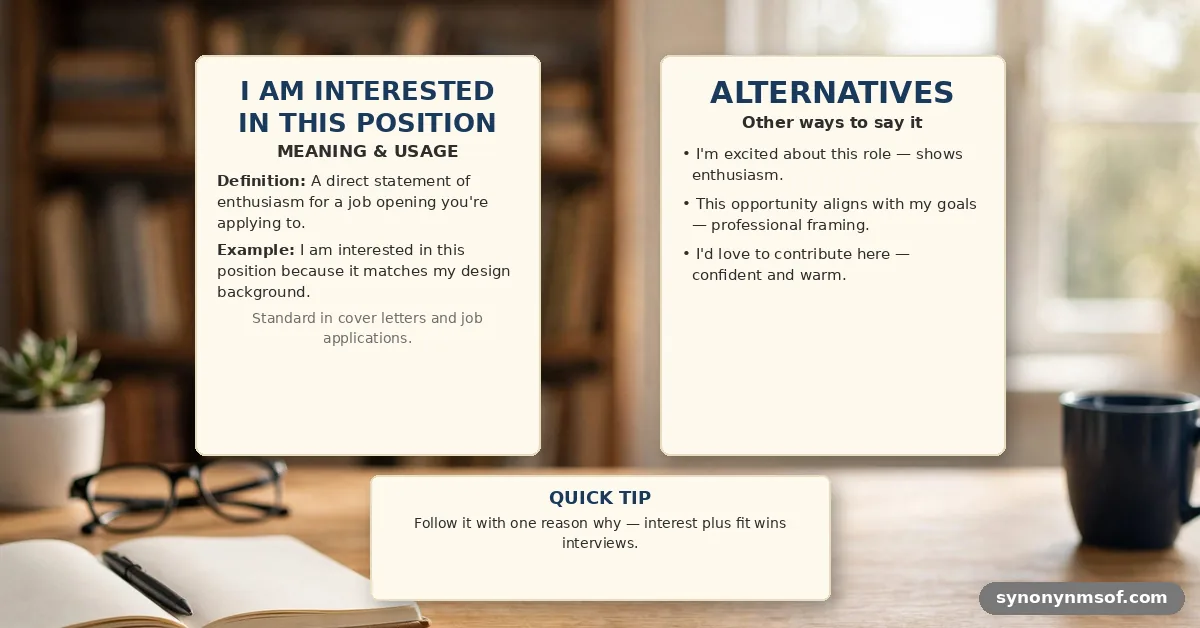
The phrase “I am interested in this position” simply means that you’d like to be considered for a specific job opportunity. It expresses your desire to apply and indicates that the role appeals to your skills, experience, or career goals.
People commonly use it in:
- Cover letters
- Job inquiry emails
- LinkedIn messages
- Networking conversations
- Recruiter outreach
- Follow-up emails
- Internship applications
- Internal job applications
Although it’s perfectly acceptable, adding a brief explanation of why you’re interested often creates a stronger impression.
See Also: 45+ Ways to Say “Hello All” Professionally (With Examples)
Is “I Am Interested in This Position” Professional?
Yes. It’s completely professional and appropriate for:
- Corporate jobs
- Government positions
- Academic roles
- Nonprofit organizations
- Startups
- Remote positions
- Internships
- Entry-level and executive roles
The phrase itself isn’t the problem. The challenge is that it’s become extremely common, so it doesn’t always communicate enthusiasm or personality on its own.
Adding a few words about why the role interests you can make your application feel more engaging and genuine.
Quick Comparison Table
| Alternative | Tone | Best For |
|---|---|---|
| I’m excited about this opportunity | Warm | Cover letters |
| This role aligns with my experience | Professional | Formal applications |
| I’d love the opportunity to contribute | Friendly | Networking |
| I’m genuinely interested in this role | Authentic | Recruiter emails |
| This position caught my attention | Engaging | Job inquiries |
| I’m enthusiastic about joining your team | Positive | Company applications |
| I’d welcome the opportunity to discuss my qualifications | Formal | Interviews |
| I believe I’d be a strong fit | Confident | Applications |
| This opportunity aligns with my career goals | Motivated | Career changes |
| I’m eager to learn more about this role | Curious | Early conversations |
35 Professional Alternatives to “I Am Interested in This Position”
1. I’m Excited About This Opportunity
Tone: Warm and enthusiastic
Best used for: Cover letters, recruiter emails, and interviews
Example:
I’m excited about this opportunity because it combines strategic planning with collaborative leadership, two areas where I’ve developed strong experience.
2. This Role Aligns Well With My Experience
Tone: Professional
Best used for: Corporate applications
Example:
This role aligns well with my experience managing cross-functional teams and delivering successful marketing campaigns.
3. I’d Love the Opportunity to Contribute
Tone: Friendly and collaborative
Best used for: Networking and cover letters
Example:
I’d love the opportunity to contribute my project management skills to your growing organization.
4. I’m Genuinely Interested in This Role
Tone: Authentic
Best used for: Recruiter outreach
Example:
I’m genuinely interested in this role because it combines innovation with customer-focused problem-solving.
5. This Position Immediately Caught My Attention
Tone: Engaging
Best used for: Introductory emails
Example:
This position immediately caught my attention because it perfectly matches my background in software development.
6. I’m Enthusiastic About Joining Your Team
Tone: Positive
Best used for: Cover letters
Example:
I’m enthusiastic about joining your team and contributing to your continued growth.
7. I Believe I’d Be a Strong Fit for This Role
Tone: Confident
Best used for: Formal applications
Example:
I believe I’d be a strong fit for this role based on my experience leading successful client initiatives.
8. I’d Welcome the Opportunity to Discuss My Qualifications
Tone: Formal
Best used for: Traditional cover letters
Example:
I’d welcome the opportunity to discuss how my background aligns with your organization’s needs.
9. This Opportunity Aligns With My Career Goals
Tone: Motivated
Best used for: Career transitions
Example:
This opportunity aligns closely with my long-term goal of working in product management.
Must Read: 45 Ways to Say “Does That Work for You?” Professionally
10. I’m Eager to Learn More About This Role
Tone: Curious and professional
Best used for: Recruiter conversations
Example:
I’m eager to learn more about this role and explore how my skills could benefit your team.
11. I’d Be Thrilled to Be Considered
Tone: Warm
Best used for: Smaller companies and nonprofits
Example:
I’d be thrilled to be considered for this opportunity and to contribute to your mission.
12. I’m Passionate About the Work Your Company Does
Tone: Genuine
Best used for: Mission-driven organizations
Example:
I’m passionate about the work your company does and would be honored to contribute to your team.
13. I’d Be Excited to Bring My Experience to Your Organization
Tone: Confident
Best used for: Experienced professionals
Example:
I’d be excited to bring my leadership and operations experience to your organization.
14. This Role Is Exactly What I’ve Been Looking For
Tone: Enthusiastic
Best used for: Dream job applications
Example:
This role is exactly what I’ve been looking for because it combines strategy, creativity, and collaboration.
15. I Can See Myself Making a Meaningful Contribution Here
Tone: Thoughtful
Best used for: Cover letters
Example:
I can see myself making a meaningful contribution by helping improve customer engagement initiatives.
16. I’d Appreciate the Opportunity to Be Considered
Tone: Respectful
Best used for: Traditional applications
Example:
I’d appreciate the opportunity to be considered for this position and discuss how I can add value.
17. I’m Drawn to This Position Because…
Tone: Personal
Best used for: Personalized cover letters
Example:
I’m drawn to this position because it offers the opportunity to solve meaningful challenges while continuing to grow professionally.
18. I See Strong Alignment Between My Skills and This Role
Tone: Professional and confident
Best used for: Mid-level and senior positions
Example:
I see strong alignment between my skills and this role, particularly in stakeholder management and strategic planning.
19. I’m Highly Interested in This Opportunity
Tone: Professional and sincere
Best Used For: Job applications and recruiter emails
Example:
I’m highly interested in this opportunity and believe my experience in data analysis would allow me to contribute immediately.
20. I’d Be Delighted to Join Your Team
Tone: Warm and appreciative
Best Used For: Smaller companies, nonprofits, and education
Example:
I’d be delighted to join your team and support your mission through my experience in community outreach.
21. I Believe My Background Makes Me an Excellent Match
Tone: Confident and professional
Best Used For: Corporate roles
Example:
I believe my background makes me an excellent match for this position, particularly my experience managing international projects.
22. I’m Looking Forward to the Possibility of Working Together
Tone: Positive and optimistic
Best Used For: Cover letters and follow-up emails
Example:
I’m looking forward to the possibility of working together and contributing to your continued success.
23. This Role Fits My Skills and Aspirations
Tone: Thoughtful
Best Used For: Career advancement
Example:
This role fits both my current skill set and my long-term professional aspirations.
24. I’d Be Excited to Help Your Team Achieve Its Goals
Tone: Collaborative
Best Used For: Team-oriented positions
Example:
I’d be excited to help your team achieve its goals while continuing to grow professionally.
25. I’m Interested in Becoming Part of Your Organization
Tone: Professional
Best Used For: Traditional applications
Example:
I’m interested in becoming part of your organization because of its reputation for innovation and employee development.
26. This Opportunity Strongly Appeals to Me
Tone: Formal
Best Used For: Executive and corporate positions
Example:
This opportunity strongly appeals to me because it aligns with both my expertise and leadership experience.
27. I’d Welcome the Chance to Add Value
Tone: Professional
Best Used For: Cover letters
Example:
I’d welcome the chance to add value through my experience in customer success and strategic planning.
28. I’m Motivated to Apply for This Position
Tone: Confident
Best Used For: Job applications
Example:
I’m motivated to apply for this position because it offers the opportunity to solve meaningful business challenges.
29. I’m Inspired by Your Company’s Vision
Tone: Genuine
Best Used For: Mission-driven organizations
Example:
I’m inspired by your company’s vision and would welcome the opportunity to contribute to its continued success.
30. I Feel This Position Is an Excellent Fit
Tone: Professional
Best Used For: Formal applications
Example:
I feel this position is an excellent fit based on my experience leading digital transformation projects.
31. I’d Appreciate the Opportunity to Learn More
Tone: Curious
Best Used For: Initial recruiter conversations
Example:
I’d appreciate the opportunity to learn more about the role and discuss how my experience aligns with your needs.
32. I’m Excited About the Possibility of Contributing
Tone: Warm and positive
Best Used For: Cover letters
Example:
I’m excited about the possibility of contributing to your innovative team and helping achieve future goals.
33. I’d Love to Bring My Skills to Your Team
Tone: Friendly
Best Used For: Startup applications
Example:
I’d love to bring my communication and leadership skills to your growing team.
34. I Believe This Opportunity Is the Right Next Step
Tone: Career-focused
Best Used For: Mid-career professionals
Example:
I believe this opportunity is the right next step in my professional journey and aligns with my long-term goals.
35. I’m Ready to Make a Positive Impact
Tone: Confident and energetic
Best Used For: Nearly any job application
Example:
I’m ready to make a positive impact by applying my experience in operations management and process improvement.
Which Alternative Should You Use?
Different situations call for different wording. Choosing the right phrase helps your application sound more natural and relevant.
| Situation | Recommended Alternative |
|---|---|
| Cover letter | I’m excited about this opportunity |
| Recruiter email | I’m genuinely interested in this role |
| LinkedIn message | This position caught my attention |
| Networking event | I’d love the opportunity to contribute |
| Government application | I believe my background aligns well with this role |
| Startup application | I’d love to bring my skills to your team |
| Internal promotion | I believe this opportunity is the right next step |
| Internship | I’m eager to learn more about this role |
| Executive position | This opportunity strongly appeals to me |
| Follow-up email | I’m looking forward to the possibility of working together |
Example Cover Letter Opening
Instead of writing:
I am interested in this position and would like to apply.
Try something more engaging:
I was excited to discover the Marketing Manager opening at your company because it closely matches both my professional experience and my passion for building customer-focused marketing strategies. I’d welcome the opportunity to contribute my background in campaign management, leadership, and digital growth to your team.
Example Recruiter Email
Subject: Interest in the Customer Success Manager Position
Hello Sarah,
I recently came across the Customer Success Manager opening on your careers page, and I was immediately drawn to the opportunity. The role aligns closely with my experience in client relationship management, onboarding, and customer retention.
Over the past five years, I’ve helped improve customer satisfaction while leading cross-functional initiatives that increased client engagement and long-term retention. I’d be excited to bring those skills to your organization.
Thank you for your time and consideration. I look forward to hearing from you.
Best regards,
[Your Name]
Example LinkedIn Message
Hello James,
I hope you’re doing well. I recently saw the Product Marketing Manager position at your company and wanted to reach out because the opportunity aligns closely with my experience in product launches and content strategy.
I’d appreciate the opportunity to learn more about the role and the team if you have a few minutes to connect.
Thank you for your time.
Best,
[Your Name]
Example Follow-Up Email After an Interview
Hello Ms. Anderson,
Thank you again for taking the time to meet with me today.
After learning more about the role and your team’s goals, I’m even more enthusiastic about the opportunity. Our conversation reinforced how closely the position aligns with my experience and career aspirations.
I appreciate your consideration and look forward to the possibility of contributing to your organization.
Kind regards,
[Your Name]
Why “I Am Interested in This Position” Can Sound Generic
The phrase “I am interested in this position” has been used in job applications for decades—and for good reason. It’s professional, respectful, and gets the point across.
However, there’s one drawback: it’s extremely common.
Recruiters and hiring managers often review dozens—or even hundreds—of applications for a single opening. When many candidates use the exact same wording, individual applications begin to blend together.
That doesn’t mean you should never use the phrase. Instead, think of it as the starting point rather than the entire message.
Compare these two openings:
Generic:
I am interested in this position and would like to apply.
More memorable:
I was excited to discover this opportunity because it combines customer experience, leadership, and problem-solving—areas where I’ve built strong experience and enjoy making a meaningful impact.
Both examples express interest, but the second explains why the position appeals to the applicant. That added context creates a stronger first impression.
Why Recruiters Value Genuine Enthusiasm
Technical skills matter, but enthusiasm also plays an important role in hiring decisions.
When employers read applications, they often ask themselves questions such as:
- Does this candidate truly want this role?
- Have they researched our company?
- Are they applying thoughtfully or sending the same application everywhere?
- Will they stay engaged if hired?
- Can they communicate professionally?
Applicants who express sincere interest often appear more motivated and invested in the opportunity.
That doesn’t mean exaggerating your excitement. Instead, focus on explaining what specifically attracts you to the role, whether it’s the company’s mission, the responsibilities, opportunities for growth, or the chance to apply your experience in meaningful ways.
The Psychology Behind Strong Job Applications
Many successful applications have one thing in common: they feel personal without becoming overly emotional.
Hiring managers are people first. They’re naturally drawn to communication that feels:
- Clear
- Honest
- Specific
- Confident
- Easy to read
On the other hand, applications filled with generic statements and corporate buzzwords often feel forgettable.
Rather than trying to sound impressive, focus on sounding authentic.
For example:
Less Effective
I possess exceptional communication skills and believe I would be an asset.
More Effective
Throughout my career, I’ve enjoyed helping customers solve complex problems, and I’m excited about the opportunity to bring that experience to your team.
The second example shows personality while remaining professional.
How to Express Interest Without Sounding Desperate
Showing enthusiasm is important, but it’s equally important to maintain professionalism.
Instead of saying:
I really need this job.
or
I’ll do anything to work here.
Try language that demonstrates confidence.
For example:
- I’d welcome the opportunity to contribute to your team.
- I believe my experience aligns well with your needs.
- I’d be excited to discuss how I can add value.
- This role represents an exciting next step in my career.
Confident language communicates interest without appearing overly eager.
Tips to Make Your Job Application Sound More Authentic
A few simple adjustments can make your application feel much stronger.
Mention Why the Role Appeals to You
Instead of simply saying you’re interested, explain what attracted you.
Example:
I was particularly interested in this role because of your company’s commitment to innovation and continuous learning.
Connect Your Experience to the Position
Help recruiters see the connection immediately.
Example:
My experience managing remote teams closely aligns with the responsibilities outlined in the job description.
Personalize Every Application
Avoid copying the same paragraph into every cover letter.
Mention:
- The company
- The role
- A project
- Their mission
- A recent achievement
- Something unique about the organization
Even small details demonstrate genuine interest.
Focus on What You Can Contribute
Instead of emphasizing only what you hope to gain, explain how you can help the employer.
Example:
I’d welcome the opportunity to contribute my experience improving customer satisfaction and operational efficiency.
Keep Your Language Simple
Professional writing doesn’t require complicated vocabulary.
Simple, natural language is often more persuasive than overly formal wording.
Common Mistakes to Avoid
Using Only Generic Statements
Simply saying you’re interested doesn’t tell employers why you’re interested.
Always add a sentence explaining your motivation.
Overusing Buzzwords
Phrases like:
- Dynamic professional
- Results-driven
- Go-getter
- Team player
- Self-starter
can become repetitive if they’re not supported with real examples.
Making the Application Too Long
Hiring managers appreciate concise communication.
Focus on quality over quantity.
Forgetting to Research the Company
Applications that mention specific details about the employer often feel more thoughtful and personalized.
Talking Only About Yourself
Remember to explain how your skills can benefit the company—not just how the position benefits you.
Sounding Overly Formal
Professional doesn’t have to mean robotic.
Natural language usually creates a stronger connection.
Quick Checklist Before Sending Your Application
Before submitting your application, ask yourself:
✔ Did I explain why I’m interested in this role?
✔ Did I mention something specific about the company?
✔ Does my enthusiasm sound genuine?
✔ Did I connect my experience to the position?
✔ Does my writing sound natural instead of copied?
✔ Have I avoided unnecessary buzzwords?
✔ Did I proofread for grammar and spelling?
If you can answer “yes” to each question, your application is likely to leave a stronger impression.
Frequently Asked Questions
Is “I am interested in this position” professional?
Yes. It’s a professional and widely accepted phrase for job applications, cover letters, and recruiter emails. However, adding a brief explanation of why you’re interested can make your message more engaging.
Is the phrase too generic?
Not necessarily, but because it’s so common, it may not help your application stand out. Pairing it with a specific reason for your interest creates a stronger impression.
What’s a more natural alternative?
Some excellent alternatives include:
- I’m excited about this opportunity.
- This role aligns well with my experience.
- I’d love the opportunity to contribute.
- I’m genuinely interested in this role.
- This position immediately caught my attention.
Should I explain why I’m interested?
Absolutely. Recruiters appreciate candidates who explain what attracted them to the role or company.
Can I use these alternatives in a cover letter?
Yes. Most of the alternatives in this guide are ideal for cover letters because they sound more engaging than repeating the same standard phrase.
Which alternative is best for LinkedIn?
“This position caught my attention” or “I’d love to learn more about this opportunity” both work well because they feel conversational while remaining professional.
Should I sound enthusiastic?
Yes—but keep your enthusiasm genuine and balanced. Confidence combined with authenticity usually leaves the strongest impression.
Is it okay to be personal?
Yes, as long as you remain professional. Sharing why the role aligns with your interests or career goals can make your application more memorable.
Can I use these phrases during an interview?
Definitely. Many of these alternatives work well when answering questions such as:
- Why are you interested in this position?
- Why do you want to work here?
How many times should I mention my interest?
Usually once is enough. Focus the rest of your application on your qualifications, achievements, and how you can contribute.
What do recruiters want to hear?
Recruiters typically look for applicants who:
- Understand the role.
- Show genuine enthusiasm.
- Communicate clearly.
- Demonstrate relevant experience.
- Explain how they’ll add value.
What’s the biggest mistake applicants make?
The biggest mistake is expressing interest without explaining why. Specificity makes your application feel more authentic and memorable.
Final Thoughts
The phrase “I am interested in this position” remains a perfectly professional way to express your interest in a job. There’s no rule against using it, and recruiters won’t reject an application simply because those words appear in your cover letter or email.
However, in today’s competitive job market, standing out often comes down to how well you communicate—not just what you say.
By choosing a more engaging alternative, explaining why the opportunity appeals to you, and connecting your experience to the employer’s needs, you can transform a simple statement of interest into a compelling introduction.
Whether you’re writing a cover letter, reaching out to a recruiter, networking on LinkedIn, or preparing for an interview, thoughtful language demonstrates professionalism, confidence, and genuine enthusiasm.
Ultimately, employers aren’t just looking for someone who is interested in the position—they’re looking for someone who understands the role, believes in the company’s mission, and is ready to make a meaningful contribution.