
Monday mornings often begin with more than just meetings and inboxes—they begin with conversation.
One of the most common opening lines in professional communication is:
“I hope you had a great weekend.”
You’ll find it in:
- Workplace emails
- Client messages
- Slack conversations
- Microsoft Teams chats
- Networking emails
- Follow-up messages
- Virtual meetings
- Professional introductions
It’s a short sentence that many people type almost automatically.
But despite its simplicity, this phrase serves an important purpose.
It helps transition from personal time back into work while adding warmth to an otherwise task-focused conversation. Instead of jumping straight into requests, deadlines, or updates, it acknowledges the person on the other side of the screen.
That small gesture can make communication feel more respectful, approachable, and human.
In this guide, you’ll learn what “I hope you had a great weekend” means, whether it’s appropriate in professional settings, when to use it, and 35+ natural alternatives that will help your emails sound fresh instead of repetitive.
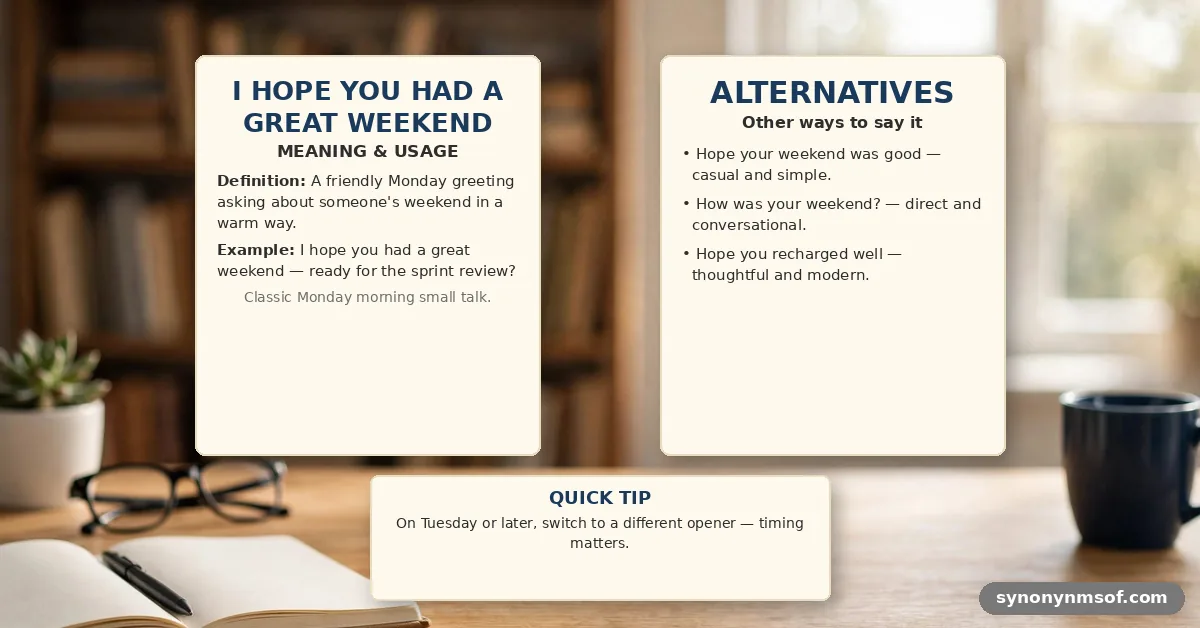
What Does “I Hope You Had a Great Weekend” Mean?
The phrase simply means:
“I hope your weekend was enjoyable, relaxing, or pleasant.”
It’s not asking someone to describe their weekend.
Instead, it’s a friendly expression of goodwill that helps start a conversation positively.
Most people use it to:
- Begin an email politely
- Build rapport
- Show friendliness
- Ease into business discussions
- Make communication feel less transactional
It’s most commonly used on Monday mornings, but it also works after holidays or extended breaks.
Is “I Hope You Had a Great Weekend” Professional?
Yes.
It’s considered completely appropriate in professional communication.
You’ll regularly see it used in:
- Corporate emails
- Client correspondence
- Team chats
- Networking messages
- Internal communications
- Follow-up emails
Professional doesn’t have to mean distant.
Modern workplace communication encourages being both respectful and approachable, and this greeting helps achieve that balance.
Must See: 35+ Professional Ways to Say “I Am Interested in This Position”
Why People Use This Phrase
Although it’s brief, this greeting communicates several positive qualities.
It shows:
- Courtesy
- Professional warmth
- Respect
- Emotional intelligence
- Friendliness
- Genuine interest
Instead of beginning with:
“Please review the attached file.”
many people naturally write:
“I hope you had a great weekend. Please find the attached file for your review.”
The second version feels smoother and more conversational.
Quick Comparison Table
| Alternative | Tone | Best Used For |
| Hope your weekend went well | Neutral | Professional emails |
| Hope you had a relaxing weekend | Warm | Colleagues |
| Hope you enjoyed your weekend | Friendly | Team conversations |
| Hope you had some time to recharge | Thoughtful | Busy workplaces |
| Trust you had a pleasant weekend | Formal | Clients |
| Hope your week is off to a great start | Flexible | Monday–Wednesday |
| Hope you got some rest this weekend | Caring | Supportive messages |
| Hope Monday is treating you well | Casual | Internal chats |
35+ Professional Alternatives to “I Hope You Had a Great Weekend”
Instead of repeating the same greeting every Monday, try these natural alternatives.
1. Hope your weekend went well.
Tone: Neutral
Example:
Hope your weekend went well. I wanted to follow up regarding last week’s proposal.
2. Hope you had a relaxing weekend.
Tone: Warm
Example:
Hope you had a relaxing weekend before another busy week.
3. Hope you enjoyed your weekend.
Tone: Friendly
Example:
Hope you enjoyed your weekend with your family.
4. Hope you had some time to recharge.
Tone: Thoughtful
Example:
Hope you had some time to recharge before the week ahead.
5. Trust you had a pleasant weekend.
Tone: Formal
Example:
Trust you had a pleasant weekend. I’m reaching out regarding our upcoming meeting.
6. Hope your week is off to a great start.
Example:
Hope your week is off to a great start. I wanted to share a quick update.
7. Hope you got some rest this weekend.
Example:
Hope you got some rest this weekend after such a busy month.
8. Hope Monday is treating you well.
Example:
Hope Monday is treating you well so far.
9. Hope you had a wonderful weekend.
Example:
Hope you had a wonderful weekend and enjoyed some downtime.
10. Hope you were able to unwind.
Example:
Hope you were able to unwind over the weekend.
11. Hope you had a restful break.
Example:
Hope you had a restful break before the new week.
12. Hope you had an enjoyable weekend.
Example:
Hope you had an enjoyable weekend. I’m following up on our conversation.
13. Hope you found time to relax.
Example:
Hope you found time to relax despite your busy schedule.
14. Wishing you a great start to the week.
Example:
Wishing you a great start to the week.
15. Hope you had a peaceful weekend.
Example:
Hope you had a peaceful weekend and are feeling refreshed.
16. Hope you’re feeling refreshed today.
Example:
Hope you’re feeling refreshed today.
17. Hope you had a chance to disconnect.
Example:
Hope you had a chance to disconnect over the weekend.
18. Hope you made the most of your weekend.
Example:
Hope you made the most of your weekend.
19. Hope your weekend was refreshing.
Example:
Hope your weekend was refreshing and enjoyable.
20. Hope you had a nice couple of days off.
Example:
Hope you had a nice couple of days off.
See Also: 45+ Ways to Say “Hello All” Professionally (With Examples)
21. I trust your weekend went well.
Example:
I trust your weekend went well.
22. Hope everything is going well this week.
Example:
Hope everything is going well this week.
23. Hope you had a chance to recharge your batteries.
Example:
Hope you had a chance to recharge your batteries over the weekend.
24. Hope you’re having a great Monday.
Example:
Hope you’re having a great Monday.
25. Hope you had a pleasant few days away from work.
Example:
Hope you had a pleasant few days away from work.
26. Hope you enjoyed some well-earned rest.
Example:
Hope you enjoyed some well-earned rest this weekend.
27. Hope the weekend treated you well.
Example:
Hope the weekend treated you well.
28. Hope you had some quality downtime.
Example:
Hope you had some quality downtime.
29. Hope your weekend was everything you needed.
Example:
Hope your weekend was everything you needed before the new week.
30. Hope you had a chance to recharge and reset.
Example:
Hope you had a chance to recharge and reset.
31. Wishing you a productive week ahead.
Example:
Wishing you a productive week ahead.
32. Hope you’re settling into the week smoothly.
Example:
Hope you’re settling into the week smoothly.
33. Hope your Monday has started well.
Example:
Hope your Monday has started well.
34. Hope you had a fulfilling weekend.
Example:
Hope you had a fulfilling weekend with family and friends.
35. Here’s to a great week ahead!
Example:
Here’s to a great week ahead! I wanted to check in regarding our project.
When Should You Use These Greetings?
These phrases work best when you’re beginning a conversation rather than making them the focus of the message.
They’re especially appropriate for:
- Monday morning emails
- Client follow-ups
- Internal team messages
- Networking conversations
- Sales outreach
- Manager-to-employee communication
- Project updates
- Meeting invitations
A short greeting can make the rest of your message feel more welcoming.
Email Examples
Example 1
Hi Emily,
Hope you had a relaxing weekend.
I’m following up on the revised proposal we discussed last Friday. Please let me know if you’ve had a chance to review it.
Best regards,
James
Example 2
Good morning David,
Hope your week is off to a great start.
Just wanted to confirm tomorrow’s meeting at 10:00 AM.
Looking forward to speaking with you.
Example 3
Hello Sarah,
Trust you had a pleasant weekend.
Attached is the updated report for your review. Please let me know if you’d like any revisions before Friday.
Kind regards,
Michael
Why These Small Greetings Matter
Some people dismiss greetings as unnecessary.
Research on workplace communication suggests otherwise.
Simple expressions of courtesy can help:
- Build trust
- Encourage collaboration
- Reduce perceived abruptness
- Improve workplace relationships
- Create a more positive tone
People generally respond more positively when communication acknowledges them before moving directly into requests.
That doesn’t mean every email needs small talk—but when appropriate, it often improves the interaction.
How to Avoid Sounding Robotic
Because this phrase is so common, it’s easy for it to sound copied and pasted.
Instead of writing the exact same greeting every Monday, rotate your wording.
Instead of:
Hope you had a great weekend.
Try:
Hope you had a chance to recharge before another busy week.
Or:
Hope you enjoyed some well-earned downtime over the weekend.
Small variations make your writing feel more natural. As a quick writing tip, make sure you know the difference between where or were before you send your email.
Common Mistakes to Avoid
Using It Every Single Week
Repeating identical greetings can make emails feel automated.
Mix up your opening lines.
Being Overly Enthusiastic
Avoid greetings like:
I hope you had the most amazing, fantastic weekend ever!!
Professional communication should remain natural.
Making It Too Personal
Unless you know someone well, avoid asking detailed questions about their personal life.
Simple goodwill is enough.
Pairing Warmth with Abrupt Requests
This sounds awkward:
Hope you had a great weekend. I need this ASAP.
Instead, transition politely.
For example:
Hope you had a great weekend. Whenever you have a chance today, could you please review the attached document?
Tips for Sounding More Genuine
A few simple habits can make your greetings feel authentic.
- Rotate your opening phrases.
- Match the tone to your relationship.
- Keep greetings brief.
- Don’t force small talk when time is critical.
- Write naturally rather than trying to sound overly formal.
Authenticity is more important than creativity.
When You Can Skip the Greeting
Although these greetings are helpful, they aren’t always necessary.
Consider skipping them when:
- Responding to urgent issues
- Handling emergencies
- Sending very short internal updates
- Continuing an ongoing email thread
- Addressing time-sensitive requests
In those situations, clarity should come first.
Final Thoughts
“I hope you had a great weekend” remains one of the most effective Monday greetings because it’s simple, polite, and universally understood.
While there’s nothing wrong with using it, relying on the same phrase week after week can make your writing feel repetitive.
By rotating between natural alternatives like “Hope your weekend went well,” “Hope you had some time to recharge,” or “Hope your week is off to a great start,” you can keep your communication fresh while maintaining a professional tone.
Ultimately, people don’t remember the exact greeting you used—they remember how your message made them feel.
A little warmth at the beginning of an email can make professional communication more approachable, more engaging, and more human.
Frequently Asked Questions
Is “I hope you had a great weekend” professional?
Yes. It’s widely accepted in business emails, workplace chats, networking messages, and client communication.
What does “I hope you had a great weekend” mean?
It expresses the hope that someone had an enjoyable, relaxing, or pleasant weekend before returning to work.
What are some professional alternatives?
Some popular alternatives include:
- Hope your weekend went well
- Hope you had a relaxing weekend
- Hope your week is off to a great start
- Trust you had a pleasant weekend
- Hope you had some time to recharge
Is it okay to use this phrase with clients?
Absolutely. It’s polite, professional, and helps build positive business relationships.
Can this phrase sound repetitive?
Yes. If you use it in every Monday email, it may start to sound routine. Rotating among different greetings keeps your communication fresh.
Should every Monday email begin this way?
Not necessarily. Use it when it fits naturally. For urgent or ongoing conversations, it’s perfectly acceptable to get straight to the point.
Which alternative sounds the most formal?
“Trust you had a pleasant weekend” is one of the most formal options and works well in client-facing or executive communication.
Which alternative is the friendliest?
“Hope you enjoyed your weekend” and “Hope Monday is treating you well” are warm, conversational choices that work well with colleagues.
Does using a greeting improve workplace communication?
Yes. A thoughtful opening can make emails feel more approachable, strengthen rapport, and create a positive tone before discussing work-related matters.
What’s the best alternative overall?
For most situations, “Hope your week is off to a great start” is one of the most versatile choices because it works beyond Monday and feels both professional and friendly.