
Few phrases have the emotional impact of “I’m proud of you.”
It’s only four words, yet they can leave a lasting impression.
Whether they’re spoken by a parent after graduation, a friend during a difficult chapter, a mentor celebrating progress, or a partner recognizing personal growth, these words tell someone something they often need to hear:
“I see your effort.”
“I recognize what you’ve been through.”
“You matter.”
People don’t just want others to notice their successes—they want someone to notice the hard work, resilience, courage, and determination behind those successes.
Still, repeating “I’m proud of you” every time can begin to feel predictable. Sometimes another phrase communicates your support even more personally.
In this guide, you’ll discover 35+ meaningful alternatives to “I’m proud of you,” complete with explanations, tone, and practical examples so you can express encouragement naturally in any situation.
What Does “I’m Proud of You” Mean?
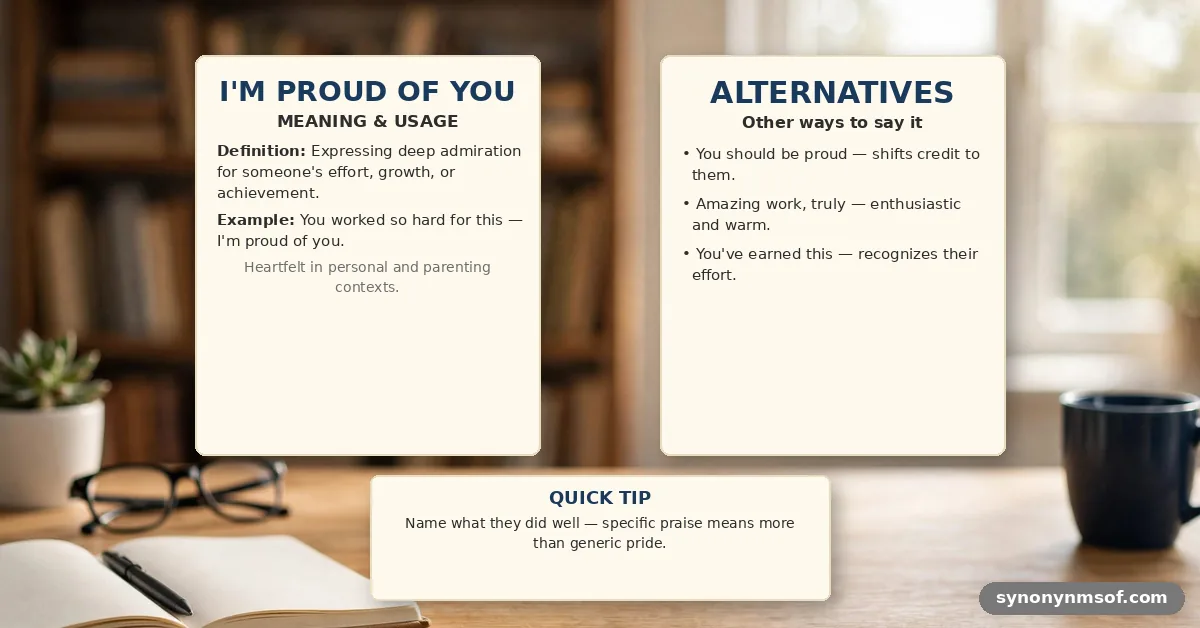
When someone says “I’m proud of you,” they’re recognizing another person’s effort, growth, achievement, or character.
The phrase often means:
- I admire what you’ve accomplished.
- I recognize how hard you’ve worked.
- I appreciate your courage.
- I see your personal growth.
- I respect your resilience.
- I believe in you.
Importantly, pride isn’t limited to major achievements.
Someone can be proud of you simply because you:
- Got through a difficult week.
- Started believing in yourself again.
- Overcame anxiety.
- Stayed kind under pressure.
- Didn’t give up.
- Learned from failure.
- Continued moving forward.
That’s why these words carry so much emotional weight.
Must read: 35+ other ways to say “I Hope You Had a Great Weekend” (With Examples)
Quick Comparison Table
| Alternative | Tone | Best Used For |
| You should be proud of yourself | Encouraging | Personal growth |
| You’ve come so far | Emotional | Long journeys |
| I admire your dedication | Respectful | Hard work |
| I’m so happy for you | Warm | Celebrations |
| You inspire me | Deeply meaningful | Personal admiration |
| I knew you could do it | Motivational | Success moments |
| You’re doing amazing | Casual | Everyday encouragement |
| Your hard work paid off | Appreciative | Career or school |
| You handled that beautifully | Supportive | Difficult situations |
| I believe in you | Reassuring | Challenging moments |
35+ Other Ways to Say “I’m Proud of You”
1. You Should Be Proud of Yourself
Tone: Empowering
Meaning: Encourages someone to recognize their own achievements.
Example:
“You should be proud of yourself—you’ve worked incredibly hard to reach this point.”
2. You’ve Come So Far
Tone: Emotional
Best for: Personal growth.
Example:
“Looking back, you’ve come so far. It’s inspiring to see.”
3. I Admire Your Dedication
Tone: Respectful
Example:
“I truly admire your dedication throughout this project.”
4. I’m So Happy for You
Tone: Warm and celebratory
Example:
“I’m so happy for you. You deserve every bit of this success.”
5. You Inspire Me
Tone: Deeply heartfelt
Example:
“The way you’ve handled everything honestly inspires me.”
6. I Knew You Could Do It
Tone: Encouraging
Example:
“I knew you could do it. Your determination never went unnoticed.”
7. Your Hard Work Paid Off
Tone: Appreciative
Example:
“Your hard work finally paid off, and it’s wonderful to see.”
8. You Did an Amazing Job
Tone: Friendly
Example:
“You did an amazing job on that presentation.”
9. You Never Gave Up
Tone: Inspirational
Example:
“You never gave up, even when things became difficult.”
10. I’m Impressed by Your Growth
Tone: Reflective
Example:
“I’m impressed by how much you’ve grown this year.”
11. You Handled That Beautifully
Tone: Supportive
Example:
“You handled that conversation beautifully.”
12. You Should Celebrate Yourself
Tone: Positive
Example:
“Take a moment—you should celebrate yourself today.”
13. I Respect Your Strength
Tone: Compassionate
Example:
“I respect your strength more than you probably realize.”
14. You Deserve This
Tone: Encouraging
Example:
“You’ve earned every bit of this success.”
15. I Believe in You
Tone: Motivational
Example:
“I’ve always believed in you.”
See Also: 35+ Professional Ways to Say “I Am Interested in This Position”
16. Your Progress Is Incredible
Tone: Appreciative
Example:
“Your progress over the past few months has been incredible.”
17. You Keep Getting Better
Tone: Positive
Example:
“Every time I see you, you keep getting better.”
18. You Should Feel Accomplished
Tone: Encouraging
Example:
“You should feel accomplished after everything you’ve done.”
19. You Make Me Smile
Tone: Affectionate
Example:
“Seeing your growth genuinely makes me smile.”
20. I’m Grateful for Your Effort
Tone: Appreciative
Example:
“I’m grateful for everything you’ve contributed.”
21. You’ve Earned Every Bit of This
Tone: Sincere
Example:
“You’ve earned every bit of this achievement.”
22. You’re Becoming the Person You Wanted to Be
Tone: Emotional
Example:
“You’re becoming the person you’ve always hoped to become.”
23. I Couldn’t Be Happier for You
Tone: Heartfelt
Example:
“I couldn’t be happier for you today.”
24. You Continue to Impress Me
Tone: Professional
Example:
“You continue to impress me with your consistency.”
25. Keep Up the Great Work
Tone: Professional
Example:
“Keep up the great work—you’re making excellent progress.”
26. You Rose to the Challenge
Tone: Motivational
Example:
“You really rose to the challenge.”
27. You Should Be Celebrated
Tone: Warm
Example:
“Today is about you—you should be celebrated.”
28. I Appreciate Everything You’ve Done
Tone: Grateful
Example:
“I appreciate everything you’ve done to make this happen.”
29. You Proved Yourself
Tone: Encouraging
Example:
“You proved yourself through hard work and persistence.”
30. You’re Stronger Than You Think
Tone: Comforting
Example:
“You’re stronger than you give yourself credit for.”
31. I Love Seeing You Succeed
Tone: Personal
Example:
“I genuinely love seeing you succeed.”
32. You Did Yourself Proud
Tone: Traditional
Example:
“You really did yourself proud today.”
33. You Should Feel Proud of What You’ve Accomplished
Tone: Genuine
Example:
“You should feel proud of everything you’ve accomplished.”
34. You Made It Through
Tone: Compassionate
Example:
“You made it through one of the hardest chapters of your life.”
35. I’m Proud of the Person You’re Becoming
Tone: Deeply emotional
Example:
“More than anything, I’m proud of the person you’re becoming.”
Why These Alternatives Matter
While “I’m proud of you” is timeless, using different expressions makes your encouragement feel more thoughtful and personal. Choosing the right words is a skill — for example, our guide on smoky or smokey clears up a commonly confused pair.
For example:
Instead of saying,
“I’m proud of you.”
You could say,
“I’m impressed by how calmly you handled that situation.”
or
“You’ve come so far, and it’s been amazing to watch your growth.”
Specific encouragement shows that you’ve genuinely noticed someone’s effort rather than offering a generic compliment.
How to Make Encouragement Feel More Genuine
The most meaningful encouragement usually includes three things:
1. Be Specific
Instead of:
“Great job.”
Try:
“I’m impressed that you stayed committed even when things became difficult.”
2. Focus on Effort
Success doesn’t always deserve the most recognition.
Persistence often does.
Recognize qualities like:
- Patience
- Courage
- Consistency
- Determination
- Kindness
- Growth
3. Speak Honestly
You don’t need dramatic words.
Simple, sincere language often has the greatest emotional impact. As a writing tip, getting small details right matters — learn the difference between smelled or smelt to keep your writing polished.
When Should You Say “I’m Proud of You”?
Many people reserve these words for major milestones, but they matter just as much during everyday victories.
You can say them when someone:
- Graduates from school
- Gets a promotion
- Starts a new job
- Recovers from illness
- Overcomes fear
- Reaches a personal goal
- Learns a new skill
- Faces disappointment with courage
- Improves their mental health
- Simply keeps going despite challenges
Often, the quiet victories deserve the loudest encouragement.
Professional vs. Personal Alternatives
Different situations call for different wording.
Professional Settings
These phrases work well with coworkers, employees, students, or mentees:
- I admire your dedication.
- Your hard work paid off.
- You handled that exceptionally well.
- You continue to impress me.
- Excellent work on this project.
- Your progress has been remarkable.
- You’ve earned this success.
Personal Relationships
These sound warmer and more emotional:
- I’m so happy for you.
- You inspire me.
- You’ve come so far.
- I believe in you.
- You’re stronger than you think.
- I’m proud of the person you’re becoming.
- I love seeing you succeed.
Common Mistakes When Encouraging Someone
Being Too Generic
“Nice job.”
is pleasant but forgettable.
Instead, mention exactly what impressed you.
Only Praising Results
People often work incredibly hard without achieving immediate success.
Recognizing effort builds confidence and resilience.
Waiting for Big Achievements
You don’t need to wait for graduations or promotions.
Celebrate:
- Small wins
- Daily progress
- Personal growth
- Emotional resilience
Those moments often mean even more.
Overdoing the Praise
Excessive compliments can feel insincere.
A simple, heartfelt sentence is usually enough.
Why Adults Need Encouragement Too
Children hear encouragement regularly.
Adults often hear:
- Deadlines
- Feedback
- Criticism
- Expectations
- Responsibilities
What they hear far less often is genuine recognition.
That’s why a sincere phrase like,
“You’ve grown so much.”
or
“I’m really happy for you.”
can have a surprisingly powerful effect.
Sometimes, those words arrive exactly when someone needs them most.
Final Thoughts
Saying “I’m proud of you” is one of the simplest ways to make someone feel seen, appreciated, and valued. A quick writing tip: double-check tricky pairs like tear or tare before you send a heartfelt message.
But there are many other heartfelt ways to express the same feeling.
Whether you choose “You’ve come so far,” “I admire your dedication,” “You inspire me,” or “I’m proud of the person you’re becoming,” the most important ingredient isn’t the wording—it’s your sincerity. Still, precise wording helps — see our guide on theater or theatre for another commonly mixed-up pair.
People may forget compliments that sound routine.
They rarely forget encouragement that feels genuine.
A few thoughtful words can remind someone that their effort mattered, their growth was noticed, and they don’t have to face life’s challenges unnoticed.
Frequently Asked Questions
What does “I’m proud of you” really mean?
It means you recognize and appreciate someone’s effort, growth, resilience, achievement, or character. It’s a way of showing admiration and emotional support.
What are some good alternatives to “I’m proud of you”?
Some of the best alternatives include:
- You should be proud of yourself.
- You’ve come so far.
- I admire your dedication.
- You inspire me.
- I’m so happy for you.
- I believe in you.
- Your hard work paid off.
- You’re stronger than you think.
Is it okay to say “I’m proud of you” at work?
Yes. Managers, mentors, teachers, and team leaders can use the phrase appropriately to recognize effort and achievement. In more formal settings, alternatives like “I admire your dedication” or “Excellent work on this project” may sound more natural.
Why do these words mean so much?
They provide emotional validation. When someone says they’re proud of you, they’re acknowledging your hard work, perseverance, and personal growth—not just the final result.
Should I praise effort or achievement?
Ideally, both. Praising effort encourages resilience and a growth mindset, while recognizing achievements helps celebrate important milestones. The strongest encouragement often combines both.
How can I make encouragement sound more sincere?
Be specific. Instead of saying, “Good job,” explain what impressed you. Mention the person’s dedication, courage, improvement, or persistence. Personal, thoughtful praise feels much more authentic than a generic compliment.
When is the best time to tell someone you’re proud of them?
Anytime you genuinely notice their growth, determination, kindness, resilience, or success. You don’t have to wait for a major accomplishment—sometimes the most meaningful encouragement comes during life’s quiet victories.