
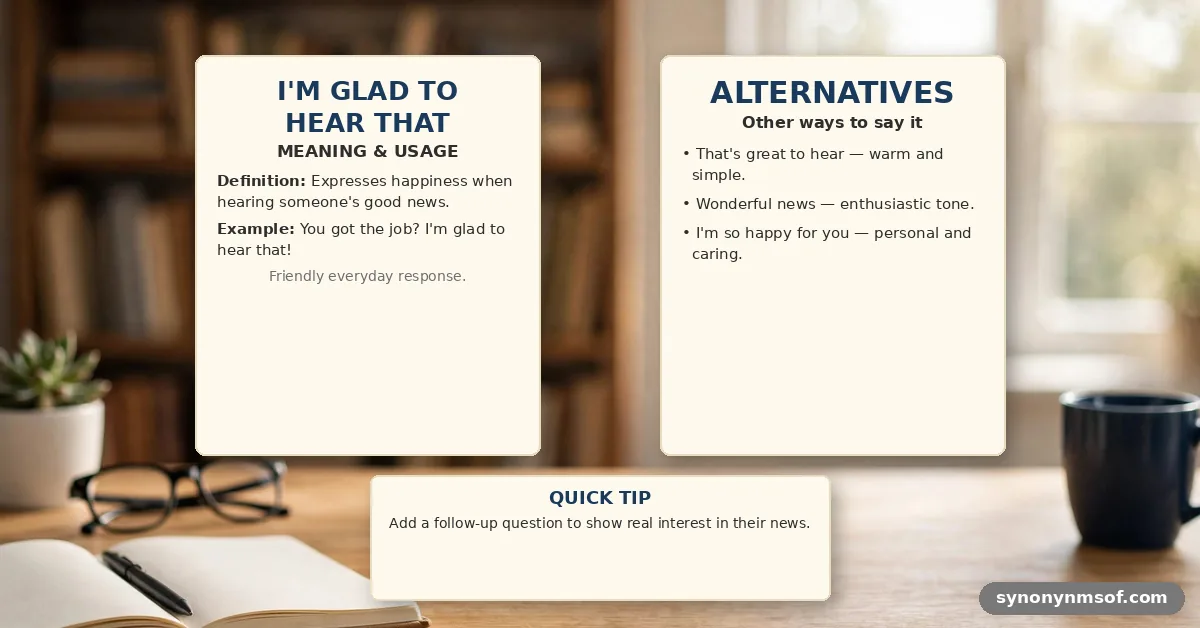

When someone shares good news with you, saying I’m glad to hear that is one of the most reliable ways to show you’re genuinely listening. It’s a versatile phrase that bridges the gap between casual chat and formal business correspondence. By using it, you signal empathy, support, and active engagement with the person speaking.
Whether you’re responding to a colleague’s project update or a friend’s personal milestone, this expression helps maintain a positive connection. Understanding the nuances of this phrase ensures you sound sincere rather than robotic in your daily interactions. Let’s look at why this simple sentence works so well and how you can use it effectively in various settings.
The True Meaning and Purpose
At its core, this phrase acts as a verbal acknowledgment of positive information. It serves as a bridge that validates the speaker’s experience while inviting them to continue the conversation. You aren’t just confirming receipt of the news; you are actively participating in the joy or relief of the moment.
Why It Feels Personal

The strength of this expression lies in its ability to humanize digital communication. In a world of quick emails and rapid-fire texts, taking a second to say you’re happy for someone creates a sense of warmth. It signals that you aren’t just skimming their words, but truly processing the content of their message.
Matching the Tone to the News
While the phrase is inherently positive, your delivery matters significantly. In a professional scenario, it remains a standard, polite way to acknowledge progress. In a personal context, adding a bit more detail—like “I’m so glad to hear that, it’s wonderful news!”—makes your response feel more authentic.
When to Use the Phrase
You should reach for this expression whenever you want to signal approval, relief, or shared happiness. It works best as an immediate follow-up to a piece of information that makes the speaker look good or feel better. Consider these common instances where it fits perfectly:
- When a colleague reports that a challenging project is finally complete.
- When a friend shares updates about their recovery from an illness.
- When a client confirms they are satisfied with your recent delivery.
- When someone tells you they have received a long-awaited promotion.
Professional vs. Casual Applications
The beauty of this phrase is its flexibility across different environments. You can easily adapt it to suit the formality of your relationship with the other person. Below is a comparison of how different contexts change the way you might use this expression.
| Context | Expected Response | Level of Formality |
|---|---|---|
| Work Email | I am glad to hear that the project is back on track. | High |
| Team Chat | Glad to hear that, great work everyone! | Moderate |
| Text Message | So glad to hear that, you must be thrilled! | Low |
| Client Call | I’m very glad to hear that you’re satisfied with the results. | High |
Alternatives for Different Scenarios
Sometimes, you might want to vary your language to avoid sounding repetitive. If you find yourself using the same phrase too often, consider these alternatives to keep your communication fresh. Each one carries a slightly different shade of meaning, allowing you to tailor your response to the specific situation.
Options for Formal Settings
In high-stakes business environments, you might want to sound slightly more polished. Using phrases like “That is excellent news” or “I am pleased to receive this update” provides a professional tone while maintaining the same sentiment. These options are helpful when dealing with senior management or external stakeholders.
Options for Casual Settings
With friends or close teammates, you have more freedom to be expressive. You might say “That’s amazing!” or “I’m so happy for you!” to show genuine excitement. These variants help build stronger personal bonds and make your interactions feel less transactional.
Common Pitfalls to Avoid
While the phrase is generally safe, avoid using it when the news is clearly serious or tragic. Responding to a difficult life event with “I’m glad to hear that” would be inappropriate and could come across as dismissive. Always pause to ensure the news is actually positive before choosing your words.
Another mistake is using the phrase too mechanically. If you send the same response to every single message, people may start to feel that your support is insincere. Try to pair the phrase with a follow-up question or a specific comment about what they shared to keep the dialogue moving.
FAQ
Is it correct to say I’m glad to hear that?
Yes, it is perfectly correct and widely accepted in both spoken and written English. It is a polite, standard way to acknowledge positive information in almost any context.
How do I reply to someone who says this to me?
You can simply say “Thank you,” or continue the conversation by sharing a bit more detail. Acknowledging their support with “I appreciate you saying that” is also a great way to close the loop.
What is the difference between this and “Good to hear”?
“Good to hear” is slightly more casual and concise. Use it in quick text messages or rapid-fire team chats, whereas “I’m glad to hear that” works well in more structured emails or face-to-face conversations.
What should I say if the news is neutral?
If the information isn’t necessarily “good” or “bad,” you might prefer “Thanks for the update” or “I appreciate you letting me know.” These phrases acknowledge receipt without attaching an emotional judgment to the facts.
Final Thoughts
Choosing the right words shows that you value the person on the other end of the conversation. Whether you are using I’m glad to hear that in a high-pressure email or a quick text, the intent remains the same: to foster a positive, supportive connection. By being mindful of your tone and the context of the news you receive, you can ensure your responses always land with the intended warmth.
Don’t be afraid to experiment with variations or add personal details to make your support feel unique. Effective communication is a skill that improves with practice, so keep engaging with those around you in a way that feels natural and sincere. Next time you receive good news, take a moment to offer a thoughtful response that truly reflects your appreciation for the update.
SEO Title: I’m Glad to Hear That: Meaning & Examples
Meta Description: Discover the meaning, proper usage, and professional variations of the phrase I’m glad to hear that to ensure your communication remains sincere and effective.
Suggested URL Slug: glad-to-hear-that-meaning-examples
Primary Keyword: I’m Glad to Hear
Primary Keyword: I’m Glad to Hear That
Secondary Keywords: good news, happy hear, professional tone, positive, personal, explanation phrase