
Receiving an email that says, “Thank you for following up,” serves as a professional acknowledgment of a previous exchange or request. It signifies that the recipient recognizes your effort to keep a conversation moving, which helps maintain momentum in business relationships.
Whether you are managing a project or chasing a lead, knowing when and how to use this phrase is essential for clear communication. By mastering these expressions, you ensure your correspondence feels both appreciative and purposeful, rather than repetitive or demanding.
You will gain a deeper understanding of the nuance behind these words and how they impact your professional reputation. This article provides the context you need to choose the right tone for every interaction.
The Meaning Behind the Phrase
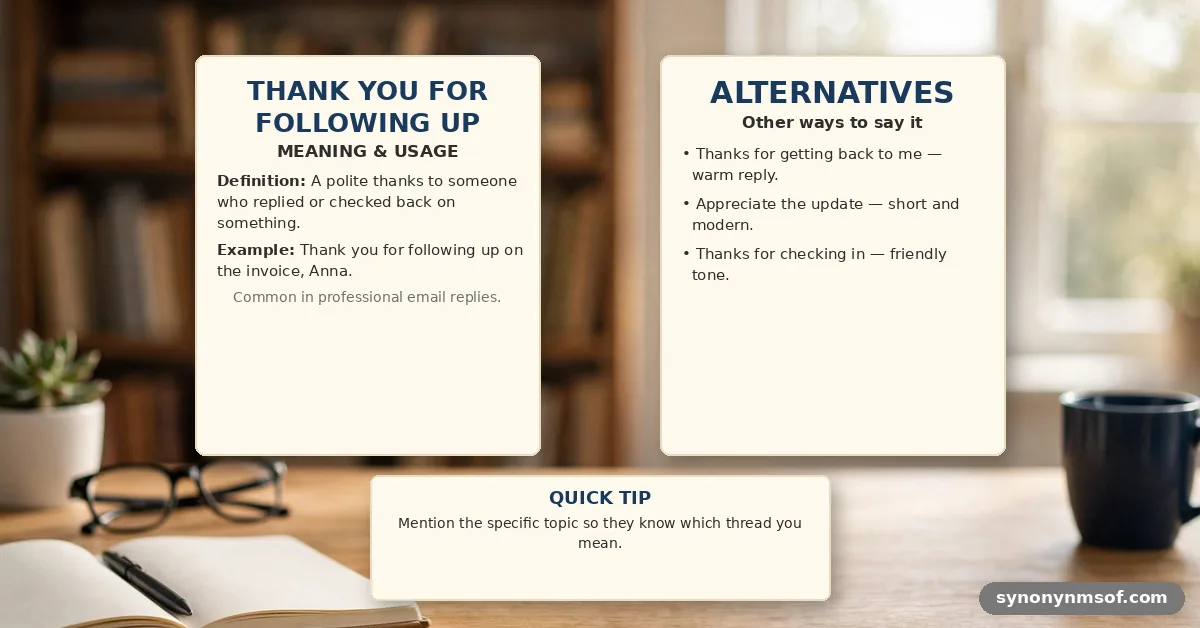
At its core, saying “thank you for following up” is a way to validate the sender’s initiative. It acknowledges that the other person has taken the time to check on the status of a task, a pending document, or a scheduled meeting. This simple act of gratitude can soften the potential friction that sometimes arises when someone is being nudged to complete a task.
When you use this phrase, you signal that you are organized and attentive to your inbox. It shows the reader that their communication has been received and is being prioritized. This creates a positive feedback loop, encouraging others to continue engaging with you in a proactive, professional manner.
When to Use Professional Follow-Up Acknowledgments
Choosing the right moment to express gratitude for a follow-up is just as important as the words themselves. If someone has sent you a polite nudge, responding with an acknowledgment is a hallmark of good professional etiquette. It helps build rapport, especially when you are working with clients or external stakeholders who may feel anxious about the status of a project.
Consider using these acknowledgments in the following scenarios:
- When a colleague or manager checks in on a project deadline you are currently meeting.
- When a client reaches out to ensure you received a specific file or piece of information.
- When you are confirming that a previously discussed action item is underway.
- When someone checks in to see if you have had a chance to review a proposal or contract.
Categorized Alternatives for Professional Communication
Depending on your relationship with the recipient, you might want to adjust the level of formality. Some situations call for a crisp, direct response, while others benefit from a softer, more conversational tone. Below are several ways to acknowledge a follow-up effectively.
Polite and Standard Responses

These options work well for most daily interactions. They are professional, clear, and perfectly suited for internal team communication.
“Thank you for the follow-up; I am currently reviewing the details.” This is a classic, reliable sentence that keeps the conversation moving without unnecessary fluff.
Formal and Client-Facing Responses
When dealing with external stakeholders, you may want to sound slightly more polished. These examples emphasize appreciation for their patience and attention to the matter.
“I appreciate you following up on this request. I expect to have an update for you by the end of the day.” Providing a specific timeline adds value to your response, proving that you are actively managing their expectations.
Casual and Quick Responses
If you have an established, friendly relationship with your coworker, you can keep the tone light. These are best used in instant messaging or rapid-fire email chains.
“Thanks for checking in! I’m on it now.” This conveys high energy and responsiveness, which is often appreciated in fast-paced environments.
Comparison of Communication Styles
Choosing the right phrase often depends on the urgency of the matter and the hierarchy of the person you are emailing. Use the table below to determine which style fits your current situation.
| Style | Formality Level | Best Used For | Key Example |
|---|---|---|---|
| Direct | High | Urgent client deadlines | I appreciate the follow-up; here is the file. |
| Standard | Medium | Daily project updates | Thank you for following up on this. |
| Casual | Low | Internal team chats | Thanks for the nudge, I’m working on it. |
Common Mistakes to Avoid
A common error is sounding defensive when someone checks in on your progress. Phrases like “I already told you I would do it” or “Why are you asking again?” can damage working relationships. Even if you feel behind schedule, try to maintain a helpful and appreciative tone.
Another mistake is being overly vague. If you say “Thanks for the follow-up” without offering an update or a specific time for when you will deliver, you leave the other person in the dark. Always pair your gratitude with a concrete next step to ensure the conversation remains productive.
Best Practices for Email Etiquette
Effective email communication relies on clarity and brevity. When someone follows up with you, they are essentially asking for a status report. Treat your response as a professional update that respects their time and their need for information.
Avoid using complex, flowery language that hides your meaning. Most professionals prefer short, punchy sentences that get straight to the point. If you do not have an answer yet, it is better to be honest than to remain silent.
Integrating Follow-Up Gratitude into Workflow
You can turn the act of acknowledging follow-ups into a standard part of your daily workflow. By creating templates or using canned responses, you save time while ensuring you never miss a chance to be polite. This consistency builds trust with your team and shows that you are a reliable communicator.
Remember that your inbox is a reflection of your professional brand. When you consistently respond with grace and clarity, people learn that they can rely on you to handle tasks without excessive supervision. This autonomy is often rewarded with more responsibility and trust from leadership.
Frequently Asked Questions
Is it professional to say thank you for following up?
Yes, it is highly professional. It demonstrates that you value the other person’s time and are actively engaged in the process of communication.
What is the best way to express urgency politely?
The best way is to combine your gratitude for the follow-up with a specific time-bound promise, such as “I appreciate your patience, and I will have this completed by 4:00 PM today.”
What is the difference between at your earliest convenience and thank you for following up?
“At your earliest convenience” is a request for action, whereas “thank you for following up” is a response to someone else’s request for action. They serve opposite roles in a conversation.
Should I use “thanks” or “thank you” in a follow-up email?
Use “thank you” for formal or client-facing emails. “Thanks” is perfectly acceptable for internal, casual team communication.
Conclusion
Mastering how you acknowledge a follow-up can significantly improve your daily interactions. By choosing the right words, you demonstrate that you are organized, respectful, and reliable.
Whether you are responding to a high-priority client or a close colleague, a simple expression of gratitude keeps the project moving forward effectively. Start implementing these variations in your next few emails to see how it shifts the tone of your professional correspondence.
Effective communication is a skill that evolves with every message you send. By being mindful of your tone and the expectations of the reader, you build stronger, more productive working relationships. Continue to look for opportunities to be clear, concise, and appreciative in your daily work, and you will find that your professional influence grows naturally over time.
SEO Title: Thank You for Following Up: Meaning & Examples
Meta Description: Learn the best professional ways to say thank you for following up. Discover formal, polite, and casual examples for effective business emails.
Suggested URL Slug: thank-you-for-following-up-meaning-examples
Primary Keyword: thank you for following
Primary Keyword: thank you for following up
Secondary Keywords: professional ways to say thank you for following up, polite ways to say thank you for following up, email etiquette, communication, follow-up email