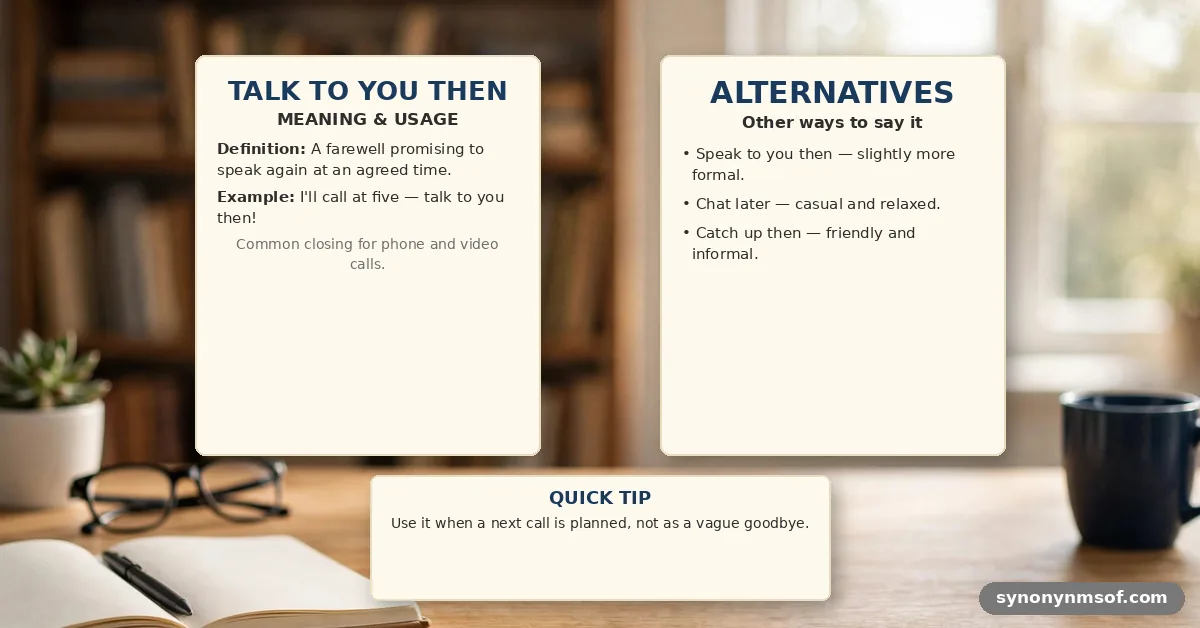

Understanding the phrase “talk to you then” is essential for clear communication, as the expression functions as a definitive marker for a future conversation. By exploring the meaning, examples, and alternatives, you will gain a better grasp of how to manage expectations during professional and personal exchanges. This phrase specifically signals that the speaker has acknowledged a scheduled time or condition for a follow-up interaction.
It serves as a polite way to close a current discussion while confirming that both parties are on the same page. Mastering this nuance prevents ambiguity, ensuring your interlocutors feel heard and prepared for the next step in your ongoing dialogue.
The phrase “talk to you then” serves as a conclusive remark that links a present moment to a specific, future point in time. It is used primarily when a meeting, call, or appointment has been set or agreed upon. By using the word “then,” the speaker highlights the temporal link between the current goodbye and the upcoming interaction.
It functions as a verbal handshake, solidifying an agreement without needing further confirmation. If you say this to a colleague, you are essentially stating that you have noted the appointment and intend to honor it. It is rarely used in vague situations where no time or date has been established.
Grammar and Usage
The distinction between “then” and “than” is a common source of confusion for many writers. “Then” is an adverb relating to time, whereas “than” is a conjunction used for comparisons. In the context of “talk to you then,” you are always referring to a specific moment in time.
Using “than” in this phrase would be grammatically incorrect and would confuse the recipient. Always ensure your spelling reflects the temporal nature of the expression. This simple adherence to standard grammar helps maintain a professional tone in written correspondence like emails or Slack messages.
Contextual Examples
To see how this works in practice, consider a scenario where you are scheduling a follow-up call with a client. After agreeing to speak on Tuesday at 2:00 PM, saying “talk to you then” is the perfect way to wrap up the conversation. It confirms the appointment without sounding repetitive.
In casual settings, the phrase remains equally effective but feels slightly more structured than a simple “see ya.” It suggests a level of reliability that friends or family appreciate when planning outings. Whether you are coordinating a dinner or a business review, the meaning remains consistent and clear.
Comparison of Closing Phrases
When choosing how to end a conversation, the nuance of your sign-off matters significantly. Some phrases lean toward the professional, while others are strictly for close acquaintances. Understanding these differences allows you to tailor your tone to the situation.
| Phrase | Formality Level | Best Use Case |
|---|---|---|
| Talk to you then | Moderate | Confirmed appointments |
| Speak with you soon | High | General follow-ups |
| Catch you later | Low | Casual friends |
| Talk soon | Medium | Ongoing projects |
Alternatives for Professional Settings
When the situation requires a higher degree of formality, you might find “talk to you then” a bit too relaxed. In executive communications or high-stakes negotiations, precision is paramount. Using more structured language ensures that your intent is clear and professional.
Consider using phrases that emphasize the upcoming event rather than just the act of talking. For instance, “I look forward to our meeting on Tuesday” provides a more polished finish. It removes the ambiguity of a simple “talk” and replaces it with a concrete reference to the agenda.
Alternatives for Casual Interactions
In your personal life, you have much more freedom to vary your closing remarks. If you find yourself using the same phrase repeatedly, try swapping it for something that matches the energy of the conversation. These alternatives keep your language fresh and engaging.
- See you then
- Chat later
- Catch you on the flip side
- Looking forward to it
- Talk later
The Psychological Impact
Using a definitive closing phrase like “talk to you then” provides psychological closure for both parties. It signals that the current task or information exchange is complete. This reduces the “open loop” feeling that can occur when a conversation ends without a clear plan.
When you provide a clear sign-off, you are demonstrating respect for the other person’s time. They leave the interaction knowing exactly when they can expect to hear from you again. This consistency builds trust over time, especially in remote working environments.
Digital Communication Etiquette
In emails or instant messaging, the way you end a thread is just as important as the body of the text. Digital communication often lacks the vocal cues of a face-to-face chat, so your words must carry the weight of your intent. Using “talk to you then” in an email can feel like a direct commitment.
Make sure that if you use this phrase, you have actually agreed on a time in the preceding text. If you haven’t, the reader might be confused about which “then” you are referring to. Clarity is the primary rule of digital etiquette, and this phrase is a tool for that clarity.
Regional Variations
Language is fluid, and regional differences can change how a phrase is perceived. While “talk to you then” is standard English, some regions might prefer “speak then” or “see you then.” These variations are minor but can impact how natural you sound in a specific local context.
If you are working with an international team, stick to the most standard version of the phrase. This minimizes the risk of misinterpretation. You can learn more about proper word usage through reputable linguistic resources to ensure your communication remains effective across borders.
Common Mistakes to Avoid
One common mistake is using “talk to you then” when the timing is still up in the air. This can create a false sense of security that a meeting is locked in when it is not. If the time is tentative, use “talk to you soon” instead of “then.”
Another error is failing to follow through. If you say you will talk to someone at a specific time, you must be available. Breaking this implicit promise can damage your credibility, especially in a professional setting where punctuality is a key metric of reliability.
Historical Linguistic Context
The use of “then” as a temporal marker has deep roots in the English language. It evolved from older Germanic roots that meant “at that time.” This historical weight is why the phrase sounds so final and satisfying when used correctly.
It implies a logical sequence, a “cause and effect” relationship between the conversation and the future meeting. By using it, you are participating in a long tradition of structured, purposeful communication. It is a small but meaningful way to connect with the history of our language.
FAQ: Understanding the Phrase
Is it ever rude to say talk to you then?
It is generally not rude, but it can sound dismissive if you use it to cut someone off mid-sentence. Always ensure the conversation has reached a natural conclusion before using this or any other closing phrase.
Can I use this phrase in a formal job interview?
It is acceptable if you are confirming a follow-up date, but “I look forward to speaking with you then” is a more polished version. It adds a layer of professional courtesy that is highly valued in interviews.
What is the difference between talk to you then and talk to you later?
“Talk to you then” implies a specific, pre-arranged time. “Talk to you later” is a general, indefinite promise to reconnect at some point in the future.
Should I capitalize the phrase in an email?
You should capitalize the first letter if it starts a sentence, but it does not need to be capitalized if it is part of a sign-off or a closing clause. Proper punctuation is key to maintaining a professional appearance.
Does it sound too robotic?
It can sound slightly formal or rigid if used too frequently. Vary your language by mixing in warmer phrases like “I’m looking forward to our chat” to keep your communication style feeling human.
Closing Thoughts
Mastering the use of “talk to you then” improves your ability to manage social and professional expectations. By understanding the meaning, examples, and alternatives, you can ensure your communication is both clear and appropriate for any context. Whether you choose to use this specific phrase or one of its many alternatives, the goal remains the same: to create a bridge to your next interaction.
As you move forward, try to pay attention to how you close your conversations. You might find that small adjustments to your vocabulary make a significant difference in how others perceive your reliability and professionalism.
Feel free to experiment with different sign-offs to see which ones best match your personal style. Hopefully, this guide has provided the clarity you need to communicate with confidence and precision in every future exchange.