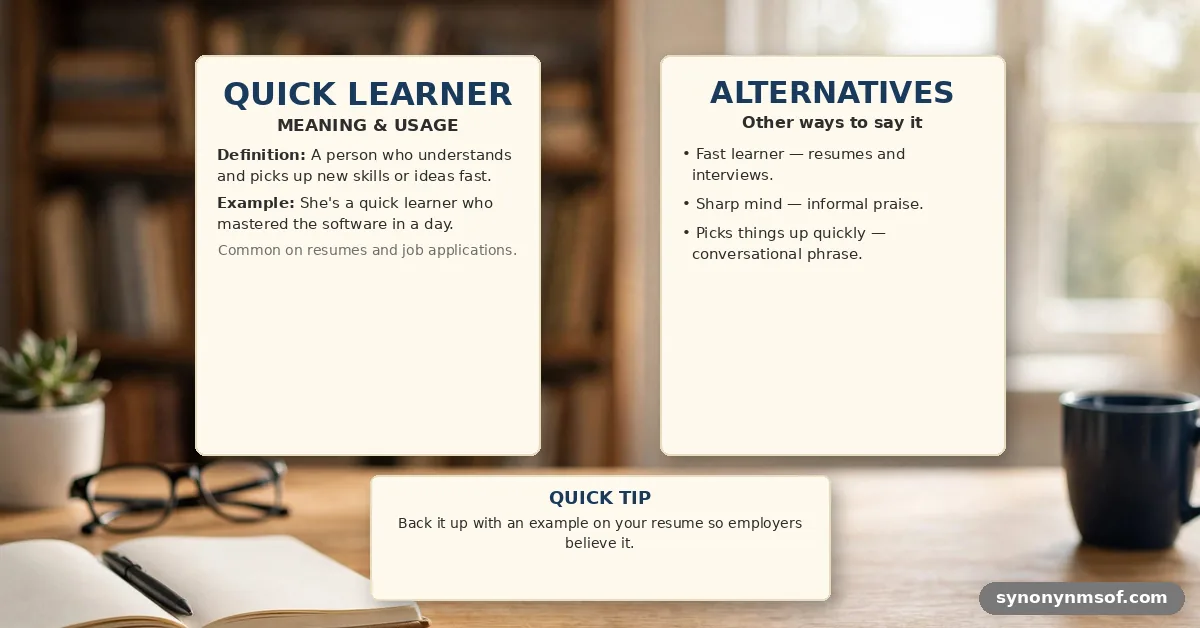

Being a quick learner means you possess the cognitive agility to absorb, process, and apply new information significantly faster than the average person. Employers value this trait because it reduces training time and allows teams to adapt to changing market conditions without stalling. Whether you are mastering a complex software suite or learning a new language, this ability relies on pattern recognition and active engagement with the material.
Understanding how to refine this skill can change your career trajectory and personal growth potential. This article breaks down exactly what defines a rapid learner and how you can demonstrate this competency effectively.
Defining the Quick Learner
A quick learner is someone who demonstrates high levels of cognitive flexibility and retention. They don’t just memorize facts; they synthesize new concepts with existing knowledge to create actionable insights. This mental process often involves identifying underlying structures or rules that govern a specific task, allowing the individual to bypass the trial-and-error phase that slows others down.
Cognitive Traits vs. Learned Behaviors

While some people naturally process information rapidly, much of this ability is a result of intentional practice. It involves active listening, curiosity, and the willingness to ask clarifying questions early in the instruction process. When you seek the “why” behind a task rather than just the “how,” you anchor the new information more securely in your memory.
The Role of Prior Knowledge
Your ability to learn quickly is often proportional to your existing mental models. If you already understand the logic of one programming language, learning a second one becomes a matter of mapping new syntax to familiar concepts. This is why lifelong learners often find it easier to pick up new skills—their mental library is simply better organized.
Practical Applications in Professional Settings
In the workplace, being a quick learner is less about raw intelligence and more about efficiency. It means you can take a complex process, document it, and execute it independently after minimal guidance. This reduces the burden on mentors and allows you to contribute value to the organization almost immediately.
Demonstrating Aptitude on Your Resume
Avoid simply stating “I am a quick learner” as a bullet point. Instead, provide specific examples of how you used this trait to solve a business problem. For example, describe how you learned a new CRM system in a week to help your team hit a quarterly target.
Comparing Learning Styles
Different individuals absorb information through various channels, and understanding your preferred mode can accelerate your progress. The following table highlights common learning approaches in a professional environment:
| Learning Method | Best For | Time Efficiency |
|---|---|---|
| Hands-on Practice | Technical Skills | High |
| Visual Documentation | Process Workflows | Medium |
| Verbal Instruction | Conceptual Strategy | Low to Medium |
| Peer Shadowing | Complex Social Dynamics | High |
Language Acquisition and Cognitive Speed
Learning a new language is the ultimate test of being a quick learner. Whether you are moving between English, Chinese, or French, the principles remain the same. You must identify high-frequency patterns and immerse yourself in the environment where the language is spoken.
Adapting to New Linguistic Structures
If you are transitioning between languages that are structurally different—such as moving from German to Mandarin—you cannot rely on direct translation. You must learn to think in the target language’s logic. This requires a high degree of cognitive shifting, which is a hallmark of someone who can pick up new systems rapidly.
Resources for Accelerated Learning
There are many digital tools available today, though you should verify your technical setup to ensure your browser supports HTML5 standards for interactive learning. Many platforms offer audio-based lessons that help you internalize pronunciation and syntax through repetition. If your current tool doesn’t support html audio, you might struggle with listening comprehension, which is vital for language fluency.
Overcoming Common Learning Barriers
Many people feel they aren’t quick learners because they approach the process with fear or rigidity. If you are afraid of making mistakes, your brain enters a defensive state that inhibits memory retention. True rapid learners view errors as data points that refine their understanding of the subject.
The Curse of Perfectionism
Perfectionism is a primary enemy of speed. If you insist on getting every detail perfect on the first attempt, you will never move past the initial stage of acquisition. Embrace the “good enough” threshold initially, then iterate and refine your performance as you gain more experience.
Building a Feedback Loop
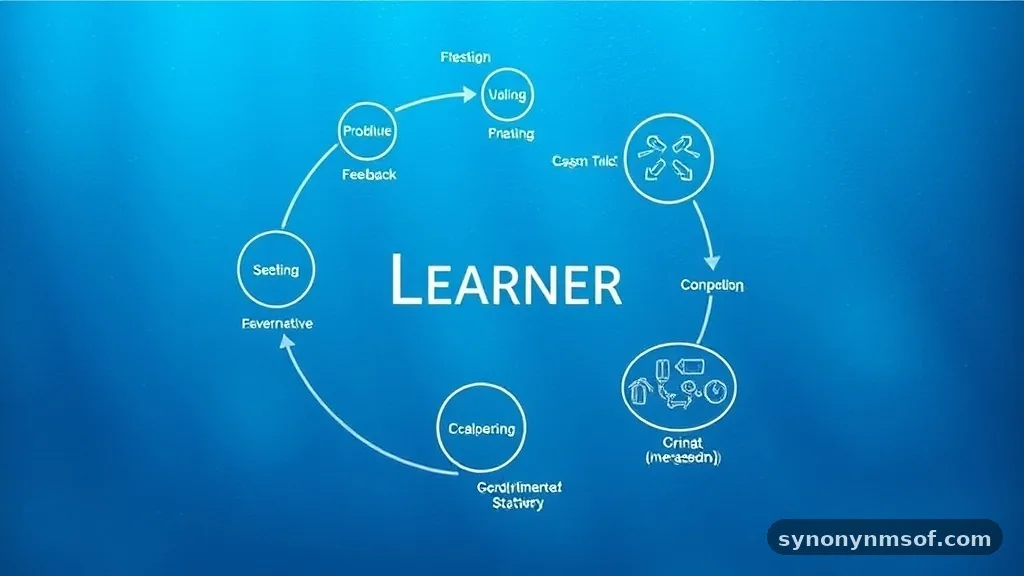
You need a reliable way to measure your progress. Without feedback, you might be practicing the wrong things with great speed, which only cements bad habits. Seek out mentors or automated assessment tools that provide immediate corrections.
* Set clear, time-bound objectives for every session.
* Record yourself or your work to identify recurring mistakes.
* Teach what you have learned to someone else to solidify your own understanding.
* Break down large projects into small, manageable milestones.
The Science of Memory and Retention
Memory is not a static warehouse but a dynamic process of reconstruction. To be a quick learner, you must understand how to move information from short-term to long-term memory. This typically involves techniques like spaced repetition and active recall rather than passive reading.
Spaced Repetition Systems
Spaced repetition involves reviewing material at increasing intervals. By testing yourself right before you are about to forget a piece of information, you trigger a stronger neural response. This is significantly more effective than cramming for a single exam or task.
The Power of Active Recall
Passive reading—looking over notes multiple times—is one of the least effective ways to learn. Instead, close the book or turn off the screen and try to explain the concept from memory. If you stumble, that is where you need to focus your next round of study.
Cultural Perspectives on Learning
Different cultures value the concept of a quick learner in various ways. In some educational systems, the focus is on rote memorization and speed, while in others, it is on critical thinking and deep inquiry. Understanding these differences can help you navigate diverse international teams effectively.
English vs. Non-English Contexts
In English-speaking business environments, the emphasis is often on the ability to translate information into practical outcomes. In other cultures, such as those that prioritize long-term mastery, the word for a quick learner might carry a different weight, implying a more profound understanding of the subject’s history and philosophy.
Bridging the Gap
When working with colleagues from different backgrounds, be mindful that “quick” might be interpreted differently. Always clarify expectations regarding the depth and speed required for a specific task. This prevents misunderstandings that can lead to frustration on both sides.
Advanced Techniques for Rapid Skill Acquisition
Once you master the basics, you can move toward advanced techniques that allow for even greater speed. This involves deconstructing complex skills into their smallest, most essential components. By mastering the core 20% of a skill that provides 80% of the results, you can achieve proficiency much faster.
The 80/20 Principle in Learning
Identify the essential tasks or concepts that appear most frequently in your field. If you are learning to code, focus on core logic and data structures before worrying about aesthetic UI design. You will find that mastering these fundamentals makes everything else feel intuitive.
Creating Your Own Curriculum
Don’t wait for a formal training program to teach you. Build your own path by gathering high-quality resources, finding a mentor, and setting a schedule. Taking ownership of your learning process is the most reliable way to increase your speed.
FAQ
Is being a quick learner an innate talent?
While some people have a natural aptitude for pattern recognition, being a quick learner is primarily a set of habits. You can develop this ability by practicing active recall, seeking feedback, and managing your environment to reduce distractions.
How do I show I am a quick learner in an interview?
Avoid just saying the words. Instead, tell a story about a time you had to learn a complex skill under pressure. Detail the steps you took to master it, how long it took, and the specific impact your new knowledge had on the project.
What is the difference between a quick learner and a smart person?
Intelligence is a broad capacity for reasoning and problem-solving, whereas being a quick learner is a specific skill related to the speed of acquisition. A very intelligent person might be slow to learn a new system because they are overly analytical, while a quick learner prioritizes momentum.
Can I become a faster learner as an adult?
Yes, your brain retains neuroplasticity throughout your life. While the pace of learning might feel different than in childhood, adults have the advantage of existing mental models and context, which can actually make the process more efficient if managed correctly.
Conclusion
Developing the capacity to process new information effectively is one of the most powerful investments you can make in your professional future. By focusing on active recall, managing your feedback loops, and deconstructing complex tasks into manageable parts, you can significantly improve your ability to adapt to new challenges. Remember that being a quick learner is not about innate genius but about disciplined, intentional practice.
Start by identifying one skill you want to acquire this month and apply the principles discussed here. Track your progress, embrace the inevitable mistakes, and refine your approach as you go.
As you become more confident in your ability to learn, you will find that no challenge is too daunting to tackle. Keep pushing your boundaries and continue to refine your process as a dedicated and quick learner.