

Type the word “potatoes” into a shopping list, a recipe, or a restaurant menu and it feels automatic. Yet the moment you slow down and look at the letters, a small doubt creeps in: is the plural of “potato” really spelled “potatoes,” or should it be “potatos”? You would not be the first person to hesitate. This single word generates a surprising amount of uncertainty among native and non-native English speakers alike, and the misspelling “potatos” shows up regularly in blog posts, social media captions, grocery flyers, and even business documents.
Here is the short answer, stated plainly: “potatoes” is the only correct plural of “potato” in standard English. The form “potatos” is a common misspelling and is not recognized by dictionaries. There is no context, region, or dialect where “potatos” is the preferred form. In this article, we will walk through the meaning of each form, the spelling rule that produces “potatoes,” side-by-side examples, the mistakes writers make most often, and answers to the questions people ask most about this word.
Getting this right matters more than it might seem. Spelling is one of the fastest signals a reader uses to judge the quality of a piece of writing. A menu that offers “baked potatos” looks sloppy, while an academic paper, a cookbook, or a product label that reads “potatoes” looks professional. Whether you are a student writing an essay, a food blogger publishing a recipe, or a shop owner printing shelf tags, the few minutes you spend understanding the plural of “potato” will pay off every time you write it.
What Does “Potatoes” Mean?
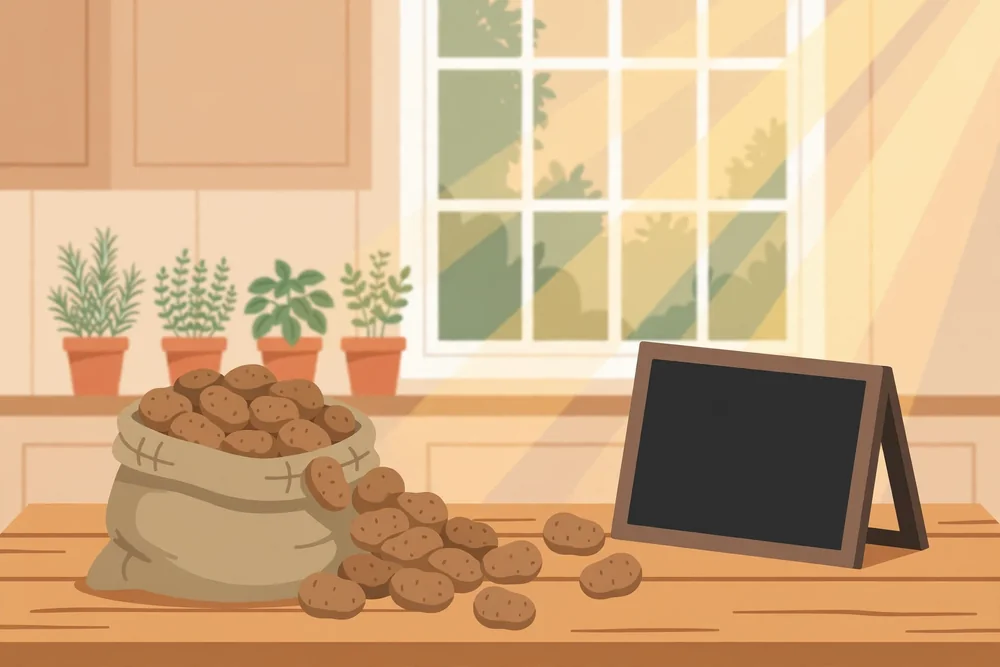
“Potatoes” is the plural form of the noun “potato.” A potato is the starchy, edible tuber of the plant Solanum tuberosum, a member of the nightshade family. Potatoes grow underground on the roots of the plant and are one of the most widely eaten vegetables in the world. When you talk about more than one of these tubers, whether they are raw in a sack, roasting in the oven, or mashed in a bowl, the correct word is “potatoes.”
The potato originated in the Andean region of South America, where it was domesticated thousands of years ago. Spanish explorers carried it to Europe in the sixteenth century, and from there it spread across the globe. Today it ranks among the most-produced food crops in the world, behind maize, wheat, and rice. In everyday language, “potatoes” appears in countless familiar phrases: “baked potatoes,” “mashed potatoes,” “roast potatoes,” “boiled potatoes,” “fried potatoes,” and “new potatoes,” the last of which refers to small, young potatoes harvested early in the season.
Grammatically, “potatoes” is a regular plural count noun. It takes plural verbs and plural determiners: “These potatoes are fresh,” “Many potatoes were harvested,” “A few potatoes remain.” It also appears in fixed expressions such as “meat and potatoes,” meaning the basic or most important part of something, and “couch potato,” whose plural is “couch potatoes,” describing people who spend a lot of time sitting and watching television. In all of these uses, the spelling with “-es” is the standard, dictionary-recognized form across American, British, Canadian, and Australian English.
What Does “Potatos” Mean?
Unlike “potatoes,” the form “potatos” has no recognized meaning in standard English. It does not appear as a headword in major dictionaries, and style guides treat it as a straightforward misspelling. When someone writes “potatos,” they almost always mean “potatoes” but have dropped the “e” before the final “s,” the same way “tomatos” sometimes appears in place of “tomatoes” or “heros” in place of “heroes.”
How did this misspelling become so common? Part of the answer is speed. When typing quickly, the “e” in “-es” is easy to skip, and because “potatos” looks plausible at a glance, writers often fail to catch the error on a reread. Autocorrect and predictive text can compound the problem: once a misspelling is saved to a personal dictionary, software may stop flagging it. Social media posts, user reviews, and casual forums then spread the form, and repeated exposure makes it feel more acceptable than it actually is.
English learners sometimes produce “potatos” for a logical reason. Most English plurals are formed by adding “-s” to the singular, so “potato” plus “-s” seems to follow the default rule. The spelling “potatoes” only looks like an exception until you learn the specific convention for nouns ending in a consonant followed by “o.” Related spelling folklore may add to the confusion: a highly publicized spelling-bee incident involving the word “potato” in the early 1990s turned the humble tuber into a symbol of spelling anxiety in the United States, which may be one reason people second-guess themselves whenever they write the word.
Key Differences Between “Potatoes” and “Potatos”
At first glance, the two forms differ by a single letter, but that one letter carries all the weight. The simplest way to understand the difference is to compare the two spellings across the features that matter for a writer: correctness, dictionary recognition, regional acceptance, and appropriate context. The comparison below makes the picture clear.
- Status: “potatoes” is the correct plural of “potato”; “potatos” is a misspelling.
- Dictionary recognition: “potatoes” appears in every major dictionary of English; “potatos” does not appear as a headword in any of them.
- Regional acceptance: “potatoes” is the standard plural in American, British, Canadian, Australian, and all other varieties of English; “potatos” is standard in none of them.
- Pronunciation: in speech, the two forms sound identical, which is why the error often slips past writers who proofread by reading aloud.
- Formality: “potatoes” is appropriate in every register, from casual text messages to academic papers; “potatos” is inappropriate in formal writing and best avoided everywhere else.
- Search behavior: dictionaries and spell-checkers flag “potatos” as an error, and search engines typically reinterpret it as “potatoes” when ranking results.
It is worth emphasizing that this is not a regional spelling difference like “colour” versus “color” or “organise” versus “organize.” In those cases, both spellings are correct within their respective varieties of English. “Potatos,” by contrast, has no legitimate home anywhere. A writer in London, New York, Sydney, or Toronto should spell the plural exactly the same way: “potatoes.”
The practical takeaway is simple. Whenever you mean more than one potato, write “potatoes” with the “e.” If you catch yourself typing “potatos,” treat it as a typo and correct it immediately. Over time, the correct spelling will become automatic, just as it is with other familiar “-es” plurals such as “tomatoes” and “heroes.”
Usage Rules: When to Use Each Form
English pluralization has a specific rule for nouns that end in the letter “o,” and understanding it removes the guesswork from “potatoes” forever. The rule depends on the letter that comes right before the final “o.”
When a noun ends in a consonant followed by “o,” the plural is usually formed by adding “-es.” The letter “t” in “potato” is a consonant, so the plural becomes “potatoes.” The same pattern applies to a whole family of familiar words: “tomato” becomes “tomatoes,” “hero” becomes “heroes,” “echo” becomes “echoes,” “torpedo” becomes “torpedoes,” “veto” becomes “vetoes,” and “embargo” becomes “embargoes.” Once you see the pattern, “potatoes” stops looking like an exception and starts looking like the natural result of a rule.
When a noun ends in a vowel followed by “o,” the plural is formed by adding just “-s.” That is why “radio” becomes “radios,” “studio” becomes “studios,” “video” becomes “videos,” “portfolio” becomes “portfolios,” and “ratio” becomes “ratios.” Notice that “potato” does not fit this pattern, because “t” is a consonant, not a vowel. This is the distinction that the misspelling “potatos” gets wrong: it treats “potato” as if it belonged in the vowel-plus-“o” group.
There is also a set of common exceptions made up of clipped or shortened words. “Photo” is short for “photograph,” and its plural is “photos,” not “photoes.” “Piano” was clipped from “pianoforte,” and its plural is “pianos.” Similarly, “memo” becomes “memos,” “kilo” becomes “kilos,” and “auto” becomes “autos.” These are the words that tempt writers to write “potatos,” because they show that “-s” alone can follow “o.” But “potato” is not a clipped word, so the exception does not apply to it.
A handful of nouns accept two plural forms, such as “volcano,” which can become “volcanoes” or “volcanos,” and “mango,” which can become “mangoes” or “mangos.” “Potato” is not one of these flexible words. Unlike “volcano” or “mango,” it has a single recognized plural: “potatoes.” If your spell-checker ever accepts “potatos,” that is a flaw in the tool, not a second valid option.
One more usage note concerns the uncountable form. In British English, “mashed potato” is sometimes used as a mass noun: “Would you like some mashed potato?” In American English, “mashed potatoes” is the norm: “Would you like some mashed potatoes?” Both are acceptable, and the choice is a matter of regional habit rather than correctness. What is never acceptable, in either variety, is “mashed potatos.”
A few memory tricks can make the correct spelling stick. One popular mnemonic is “Never serve potatos, always serve potatoes,” which pairs the wrong and right forms so your eye learns to prefer the one with the “e.” Another is to link the word to its closest cousin: if you can spell “tomatoes,” you can spell “potatoes,” because both follow the same consonant-plus-“o” rule. Visual learners sometimes picture the extra “e” as a small potato sitting between the “o” and the “s.” Whichever image works for you, the goal is the same: make “potatoes” the automatic spelling so that “potatos” looks wrong on sight.
Example Sentences
Seeing a word used correctly in natural sentences is one of the fastest ways to internalize its spelling. The examples below show “potatoes” used in a variety of everyday contexts, from cooking to gardening to business.
- She bought six potatoes from the farmers market this morning.
- Roasted potatoes are my favorite side dish for a Sunday dinner.
- The recipe calls for three large potatoes, peeled and diced.
- Mashed potatoes pair perfectly with grilled chicken and steamed vegetables.
- Our garden produced more potatoes this year than we could possibly eat.
- He boiled the potatoes for twenty minutes before mashing them with butter.
- The store sells two kinds of potatoes: russet and Yukon gold.
- Potatoes are a staple food in many countries around the world.
- We need to pick up potatoes, onions, and carrots for the soup.
- She sliced the potatoes thinly and baked them until they were crisp.
- The farmer loaded sacks of potatoes onto the back of the truck.
- These potatoes were harvested just yesterday, so they are very fresh.
Now compare those with examples of the misspelling, shown here only so you can recognize and correct the error. Each incorrect sentence is followed by its corrected version.
- Incorrect: “I bought six potatos from the market.” Correct: “I bought six potatoes from the market.”
- Incorrect: “The restaurant serves excellent baked potatos.” Correct: “The restaurant serves excellent baked potatoes.”
- Incorrect: “How many potatos should I peel for dinner?” Correct: “How many potatoes should I peel for dinner?”
- Incorrect: “Potatos are rich in potassium and vitamin C.” Correct: “Potatoes are rich in potassium and vitamin C.”
A useful habit is to read each sentence back to yourself after writing it and check the plural endings of any word that ends in “o.” If the word is “potato” in the singular, the plural must end in “-es.” This quick scan takes seconds and catches the missing “e” before it reaches your reader.
Common Mistakes and How to Avoid Them
The most frequent mistake is, of course, the missing “e” itself: writing “potatos” instead of “potatoes.” It happens in typed messages, handwritten notes, and even printed signage. The fix is a simple memory hook: the letter “t” in “potato” is a consonant, and consonant-plus-“o” nouns take “-es.” Repeat the pair “potato, potatoes” to yourself a few times, and the correct spelling begins to feel as natural as “tomato, tomatoes.”
A second common error is confusing the plural with the possessive. Writers sometimes type “potato’s” when they mean more than one potato, as in “the potato’s are on sale.” The apostrophe turns the word into a possessive or a contraction, not a plural. If you mean several potatoes, write “potatoes” with no apostrophe. If you mean something belonging to one potato, write “the potato’s skin.” If you mean something belonging to several potatoes, write “the potatoes’ skins.” Keeping these three forms distinct clears up a large share of potato-related spelling trouble.
A third mistake is inconsistency within a single document. A recipe might read “potatoes” in the ingredient list and “potatos” in the instructions, or a menu might mix the two spellings across sections. Readers notice inconsistency even when they cannot name the rule, and it quietly undermines confidence in the writing. When you proofread, search the document for every instance of the word and make sure each one uses the same correct spelling.
A fourth mistake is over-applying the “-es” rule to words that do not take it. Once writers learn that “potato” becomes “potatoes,” some begin writing “photoes” instead of “photos” or “pianoes” instead of “pianos.” The safeguard is to remember which words are clipped forms: “photo” comes from “photograph” and “piano” from “pianoforte,” and clipped words take a plain “-s.” “Potato” is a complete word, not a clipping, so it keeps the “-es.”
A fifth mistake involves compound forms. The plural of “sweet potato” is “sweet potatoes,” with the plural marker on the noun, not the adjective. The same logic applies to “couch potato,” which becomes “couch potatoes.” Writing “sweets potato” or “sweet potatos” doubles the error, so pluralize only the noun and keep the “-es” ending intact.
Finally, many writers rely too heavily on spell-checkers. Most modern tools will flag “potatos,” but custom dictionaries, industry jargon lists, and autocorrect habits can accidentally whitelist it. A thirty-second manual check of any word ending in “o” is a cheap insurance policy. Professional editors routinely run this check, because they know that software catches most errors but not all of them.
Frequently Asked Questions
Is “potatos” ever correct in English?
No. “Potatos” is not recognized as a correct spelling in any variety of standard English, whether American, British, Canadian, or Australian. Dictionaries list only “potatoes” as the plural of “potato.” The form “potatos” appears in informal writing as a typo or misspelling, usually caused by typing too fast or by applying the default “-s” plural rule to a word that requires “-es.” If you encounter “potatos” in a draft, correct it to “potatoes” every time.
Why is it “potatoes” and not “potatos”?
The spelling follows the English rule for nouns that end in a consonant followed by “o”: the plural is formed by adding “-es.” In “potato,” the letter before the final “o” is “t,” a consonant, so the rule gives us “potatoes.” The same rule produces “tomatoes” from “tomato,” “heroes” from “hero,” and “echoes” from “echo.” Words that end in a vowel plus “o,” such as “radio” and “studio,” take only “-s,” which is why “radios” and “studios” look different. “Potato” belongs to the consonant-plus-“o” group, so “-es” is the correct ending.
Is it “mashed potato” or “mashed potatoes”?
Both forms are used, and the choice depends on regional habit rather than correctness. In British English, “mashed potato” often functions as a mass noun, as in “Would you like some mashed potato?” In American English, the plural “mashed potatoes” is the standard form, as in “Would you like some mashed potatoes?” Pick the version that matches the variety of English you are writing in and use it consistently throughout your document. What you should not write, in any variety, is “mashed potatos.”
What is the plural of “sweet potato”?
The plural of “sweet potato” is “sweet potatoes.” In compound nouns, the plural marker goes on the noun, not the adjective, so “sweet” stays unchanged while “potato” becomes “potatoes.” This gives us sentences like “She roasted three sweet potatoes for dinner” and “Sweet potatoes are rich in beta carotene.” The same principle applies to “couch potato,” which becomes “couch potatoes” in the plural. In every case, the noun takes the “-es” ending.
Do all English words ending in “o” form the plural with “-es”?
No. English has three main patterns for nouns ending in “o.” Nouns ending in a consonant plus “o” usually add “-es,” giving “potatoes,” “tomatoes,” and “heroes.” Nouns ending in a vowel plus “o” add only “-s,” giving “radios,” “studios,” and “videos.” Clipped or shortened words such as “photo,” “piano,” and “memo” also take just “-s,” giving “photos,” “pianos,” and “memos.” A few nouns accept both endings, such as “volcano,” which can be “volcanoes” or “volcanos.” When in doubt about a specific word, check a dictionary, but for “potato” the answer is fixed: “potatoes.”
Conclusion
The question of “potatos” or “potatoes” has a clear and simple answer: “potatoes” is the only correct plural of “potato” in standard English, while “potatos” is a common misspelling. The “-es” ending follows the rule for nouns that end in a consonant plus “o,” the same rule that gives us “tomatoes” and “heroes.” Remembering this pattern not only settles the potato question but also helps you spell dozens of similar words correctly, from “echoes” to “torpedoes.”
Good spelling is a habit built from small, consistent choices. Each time you write “potatoes” with its full “-es” ending, check that you have not confused the plural with the possessive “potato’s,” and keep your spelling consistent across the whole document, you reinforce the habit. Whether you are writing a grocery list, a recipe, a menu, or an essay, the correct form costs you nothing extra and quietly tells your reader that the writing can be trusted.
Explore more on Synonynmsof.