
When you see the phrase please be informed in an email, it serves as a formal signal that important news is coming. It is a standard way to grab a reader’s attention before delivering an update, a change in policy, or a shift in a project timeline.
While it is widely used, using it correctly requires a clear understanding of its tone and purpose. If you want to ensure your communication remains professional and effective, mastering this specific phrasing can help you manage expectations without appearing overly stiff or bureaucratic.
Knowing how to use this phrase effectively will help you communicate clearly in your professional life. It bridges the gap between casual updates and high-stakes announcements.
By learning the right context for these words, you can make your writing more precise and authoritative. This guide provides the tools you need to use this common expression with confidence and clarity in your daily work.
What Please Be Informed Really Means

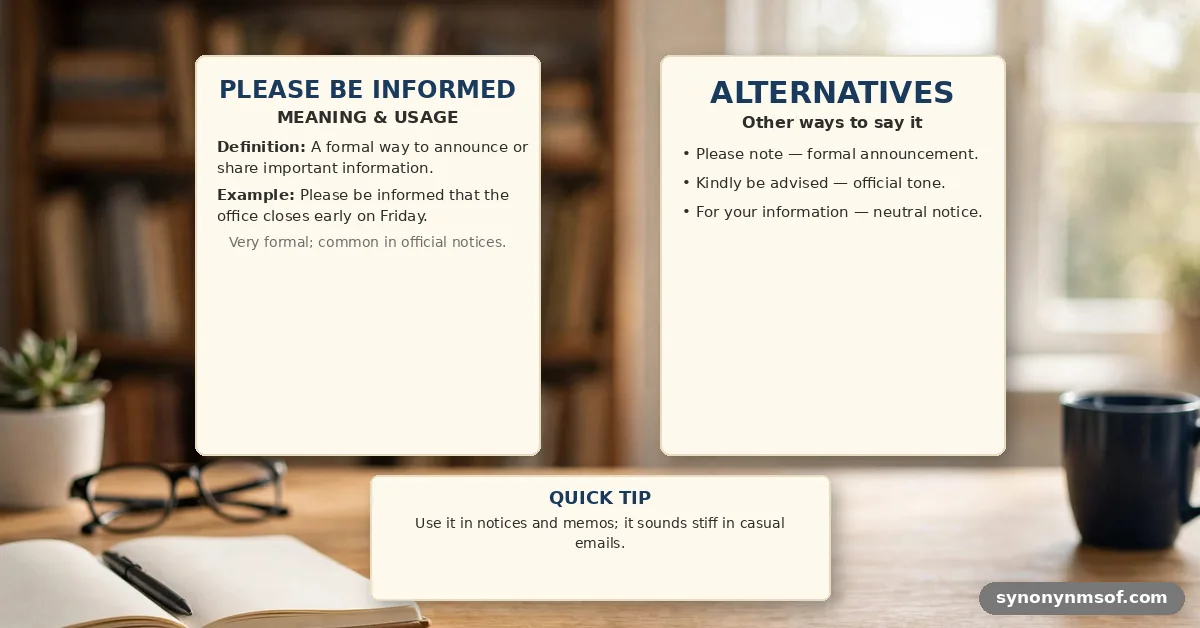
At its core, please be informed is a polite, albeit formal, way to notify a recipient of a specific fact. It functions as a heads-up, ensuring that the reader is aware of something they might have missed or that has recently changed. You will see it most often in corporate environments, legal correspondence, or official company announcements.
The phrase is designed to be neutral. It lacks the urgency of a demand but carries more weight than a casual “just so you know.”
Because it is quite traditional, it can occasionally feel detached if used too frequently. You should use it when you need to maintain a professional distance or when the information being shared is significant enough to require a formal tone.
When to Use This Expression
You should consider using this phrasing when you are acting as an official point of contact. If you are announcing a new office policy, a change in meeting times, or a shift in project ownership, it signals that the information is authoritative. It tells the reader that they are now officially “in the loop” regarding the matter at hand.
It is also useful in situations where you need to document that a party has received specific details. Because it is a standard piece of business English, it leaves little room for ambiguity. When the stakes are high, such as in contract updates or personnel changes, the clarity provided by this phrase is a distinct advantage.
Formal Alternatives for Different Contexts
Sometimes, this phrase can sound a bit too rigid for modern workplace communication. If you find it doesn’t match your brand voice or the relationship you have with the recipient, there are several alternatives. Choosing the right words depends on how much you want to soften the message while still maintaining professionalism.
- For a softer touch: “I’m writing to let you know that…”
- For direct updates: “Please note that…”
- For urgent matters: “I am writing to bring your attention to…”
- For simple notifications: “This is to update you on…”
- For team announcements: “We would like to share that…”
Polite and Soft Options
If you want to keep the tone friendly while still being clear, try using “I am writing to let you know.” This removes the bureaucratic feel of “please be informed” while keeping the message organized. It works well for coworkers you talk to on a regular basis.
Urgent and Direct Options
When the information is critical and time-sensitive, “Please note” is often the most effective choice. It is short, punchy, and impossible to miss. In a busy online environment, getting straight to the point is often more appreciated than using flowery, formal language.
Comparison of Communication Styles
The table below helps you select the right phrase based on the formality of the situation and the urgency of the information you are sharing. Use this as a quick reference when drafting your next important email.
| Phrase | Tone | Best Used For |
|---|---|---|
| Please be informed | Highly Formal | Official announcements or legal updates. |
| Please note | Professional/Direct | Highlighting key details in a project. |
| I’m writing to share | Polite/Collaborative | Team updates or project progress. |
| Just a heads up | Casual | Internal team chats or quick reminders. |
Common Mistakes to Avoid
One common error is overusing “please be informed” in casual settings. Using it in a quick Slack message or a text to a close colleague can make you sound like a robot. The phrase is meant for formal emails, not real-time conversation.
Another mistake is using it as an excuse for poor communication. Simply stating that someone should be informed does not replace the need to explain why that information matters. Always follow the phrase with a concise, clear explanation of the impact or the required action.
How to Improve Your Professional Language
Developing your language skills involves knowing which words fit the culture of your office. Some companies prioritize a very formal, traditional style, while others prefer brevity. If you are an English learner, start by observing how your supervisors and clients structure their own messages.
Practice replacing “please be informed” with other phrases to see how the tone changes. You might find that “I am writing to provide an update” sounds much more natural in most modern contexts. The goal is to ensure your intent is clear without sounding like a template.
Frequently Asked Questions
Is please be informed professional?
Yes, it is highly professional and widely accepted in formal corporate settings. However, it can sound overly stiff or even cold if used in informal emails or internal team messages.
What is the best way to express urgency politely?
Using “Please note” or “I would appreciate your attention to this” is often more effective than standard formal phrases. These options draw the eye to the information without sounding like an order.
What is the difference between at your earliest convenience and as soon as possible?
“At your earliest convenience” is a polite, formal way to ask for a task to be completed without setting a hard deadline. “As soon as possible” is more urgent and implies that the task should be prioritized immediately.
How do I use informed in a sentence?
You can use it in many ways, such as “Keep me informed of any changes” or “He was well-informed about the project requirements.” It simply means to be aware or to have received specific information.
Refining Your Workplace Communication
Choosing the right words is a vital skill for anyone navigating a professional career. Whether you choose to use the traditional please be informed or opt for a more modern alternative, the most important factor is clarity. Your readers should always understand exactly what you are sharing and why it is relevant to them.
Take a moment to review your recent emails and see where you might adjust your tone. By being intentional about your language, you build stronger relationships and ensure your message is received as intended. Start small by testing out a few of the alternatives provided here, and you will quickly find the style that works best for your unique professional voice.
SEO Title: Please Be Informed: Meaning, Usage, and Examples
Meta Description: Learn the meaning of “please be informed,” when to use it in professional emails, and discover better, more modern alternatives for your workplace.
Suggested URL Slug: please-be-informed-meaning-examples
Primary Keyword: please be informed
Primary Keyword: please be informed
Secondary Keywords: professional ways to say, workplace, emails, business english, language, formal