
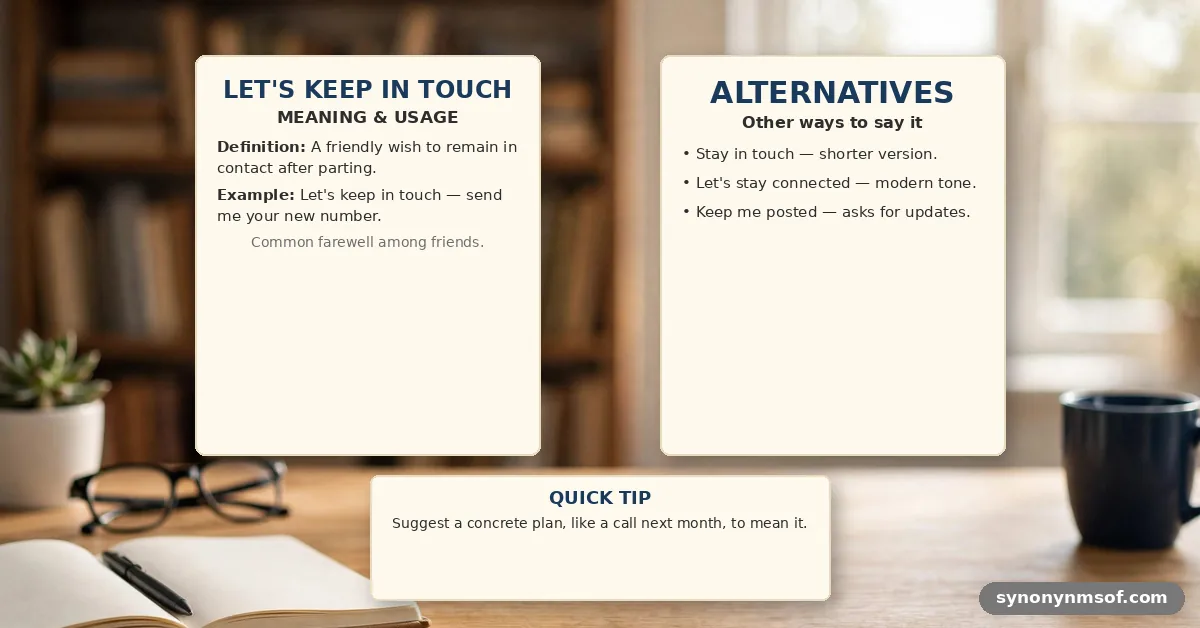

When you hear someone say “let’s keep in touch,” you are often witnessing a polite social bridge being built or maintained. It is a common English phrase used to express a desire for ongoing communication after an interaction ends. Whether you are wrapping up a business meeting, parting ways with a colleague, or ending a casual conversation, the phrase serves as a soft landing.
Understanding how to use it—and how to respond when you hear it—can help you manage your social and professional networks more effectively. This article explores the nuances of this expression, providing you with the tools to navigate these interactions with confidence and clarity.
The Core Meaning and Intent

At its heart, the phrase is a verbal commitment to future connection. It implies that the current interaction is not the end of the relationship, but rather a milestone in a longer history. You are essentially saying that you value the connection enough to suggest a path for future dialogue.
However, the weight of the phrase varies wildly depending on the context. In a casual setting, it might be a simple pleasantry, akin to saying goodbye.
In a professional environment, it acts as a signal that you are open to future collaboration or networking opportunities. Recognizing this distinction is key to interpreting the intentions of others.
Professional Nuances of Staying Connected
Using this phrase in a business setting requires a bit more intentionality than in your private life. If you say it to a potential client, you are signaling that you want to remain on their radar for future projects. It is a subtle way of keeping the door open without appearing overly aggressive or desperate.
When a manager or recruiter uses this language, it often suggests that they appreciate your profile but may not have a current opening. It is a way to transition from a formal interview setting to a more relaxed, long-term professional acquaintance. You should treat it as a genuine invitation to follow up periodically with relevant updates.
Variations for the Workplace
* Let’s stay in touch: A slightly more active variation that implies a mutual effort to maintain the connection.
* I’d love to stay in the loop: This focuses on receiving information or updates rather than just a general check-in.
* Let’s reconnect down the road: This sets a vague but intentional expectation for a future meeting or conversation.
How to Respond to the Phrase
Responding to this sentiment can feel awkward if you aren’t sure of the other person’s sincerity. If you genuinely want to maintain the relationship, the best approach is to suggest a concrete next step. This moves the interaction from a polite sentiment into a functional, ongoing connection.
If you are less interested in maintaining the relationship, a polite acknowledgement is perfectly acceptable. A simple “That sounds great, I look forward to it” satisfies the social contract without requiring you to commit to a specific follow-up plan. You are not obligated to turn every pleasantry into a lifelong correspondence.
Comparison of Connection Phrases
Choosing the right words depends on the depth of the relationship and the desired level of formality. The following table illustrates how different phrases function in various contexts to help you select the most appropriate option.
| Phrase | Formality Level | Best Context |
|---|---|---|
| Let’s keep in touch | Moderate | General networking, colleagues |
| I look forward to our next update | High | Formal business, client relations |
| Stay in the loop | Low/Moderate | Close coworkers, casual projects |
| Let’s touch base soon | Moderate | Active project collaboration |
Common Mistakes and Misinterpretations
One major error people make is using this phrase when they have no intention of actually following up. If you say it to everyone you meet, it loses its meaning and can come across as insincere. It is better to use it only when you truly see value in the future connection.
Another mistake is failing to define what “in touch” actually looks like. Does it mean sending an email every few months, or just connecting on a professional networking site? Being vague can lead to one person expecting frequent updates while the other assumes the relationship is dormant.
The Role of Digital Tools
In our digital era, keeping in touch has become much easier but also more impersonal. Sending a quick update via a professional platform is often more effective than a formal letter. These tools allow you to stay present in someone’s mind without being intrusive.
You might consider creating a small, informal log or list of contacts you want to check in with periodically. This prevents you from losing track of valuable professional relationships over time. A short note sent once or twice a year is often enough to keep a connection active.
Frequently Asked Questions
Is it professional to say let’s keep in touch?
Yes, it is perfectly professional, provided it is used with genuine intent. It acts as a polite bridge between a completed transaction and a potential future opportunity.
How do you respond if you don’t actually want to keep in touch?
You can provide a polite, non-committal response like, “It was a pleasure meeting you as well.” This acknowledges the interaction without creating an expectation for future contact.
What is the difference between staying in touch and touching base?
Staying in touch implies a long-term, ongoing relationship. Touching base is usually more specific and relates to checking in on a particular project or piece of information.
Can I use this phrase in a formal email?
You can, but it is often better to use more specific language in formal writing. Phrases like “I look forward to hearing from you” or “Let’s remain in contact regarding this matter” are often more precise.
Building Lasting Professional Bonds
The art of keeping in touch is really about valuing the people you meet throughout your career journey. Whether you are using the phrase in a casual coffee chat or a structured business meeting, the goal remains the same: maintaining a human connection in a busy world. By being intentional with your words, you ensure that these invitations lead to meaningful, long-term relationships rather than fading into the background.
When you offer to stay in touch, remember that the quality of your future interactions matters far more than the frequency. A thoughtful, occasional message is always better than an empty promise made in passing. As you continue to build your network, focus on authenticity, and you will find that these simple words become the foundation for many rewarding professional opportunities.