
Using the phrase I would be happy to serves as a reliable way to show enthusiasm and professionalism in workplace communication. It signals that you are not just willing to perform a task, but that you are genuinely pleased to contribute to the success of your team or client. Whether you are responding to a request for a meeting, offering assistance on a project, or accepting an invitation, this phrasing helps set a positive, collaborative tone.
Mastering these social cues is essential for building rapport. By understanding how to deploy this expression effectively, you can ensure your written correspondence remains both polite and consistently professional.
The Core Meaning and Professional Utility

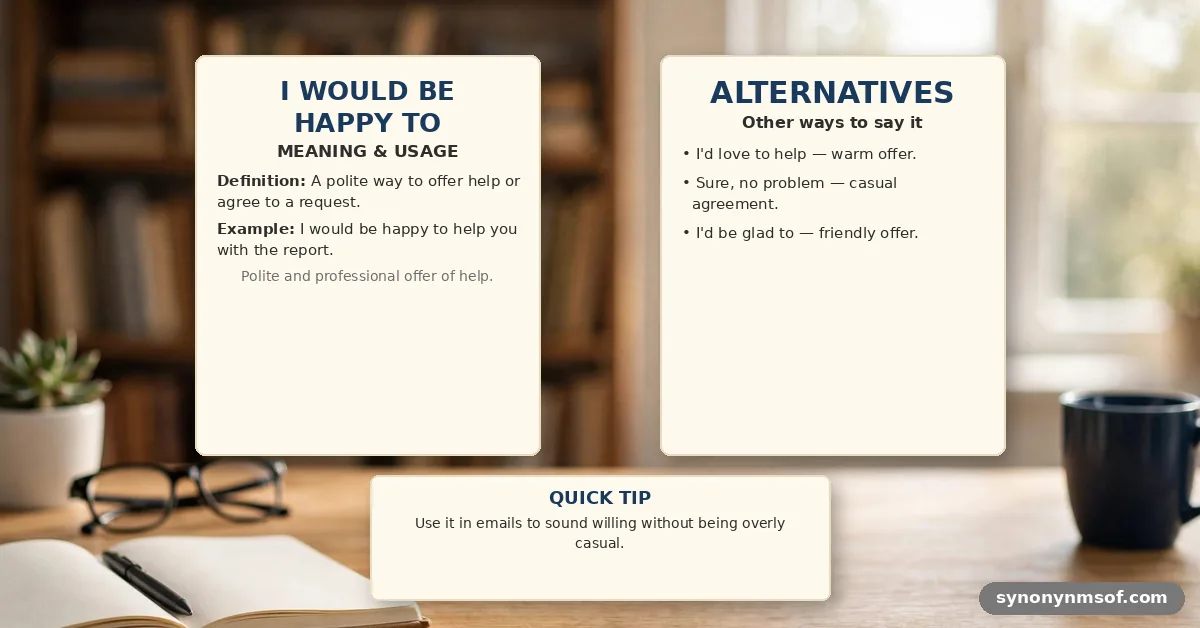
When you tell someone I would be happy to, you are doing more than confirming an action. You are actively shaping the dynamic of the conversation by removing any sense of burden. It suggests that the request is welcome and that you view the task as a constructive use of your time.
This phrase acts as a social lubricant in corporate environments. It softens the transaction of delegating work or scheduling time, making the interaction feel like a partnership rather than a command. Using it shows that you value the requestor’s goal as much as your own.
When and Where to Use This Phrase
The most effective moments to use this language involve collaborative tasks or service-oriented requests. If a manager asks for a report, replying with this phrase demonstrates a proactive attitude. It is also highly effective when you are responding to external clients who might feel hesitant about asking for your time.
Situations for Maximum Impact
* Acknowledging a request for a document or data set.
* Confirming your attendance at a last-minute internal meeting.
* Accepting an invitation to mentor a new member of the team.
* Offering to troubleshoot an issue for a struggling colleague.
Nuances of Tone and Formality
While the phrase is generally safe, its impact changes based on the surrounding context. It is inherently formal enough for executive-level emails, yet it remains warm enough for instant messaging platforms. The key to its success lies in the specificity that follows the phrase.
You should always pair this expression with a clear statement of action. Saying “I would be happy to” by itself can feel incomplete. Following it with “provide the quarterly audit by Friday” turns a polite sentiment into a concrete project milestone.
Strategic Alternatives for Specific Contexts
Sometimes you need a slight variation to avoid repetition or to adjust the level of enthusiasm. Depending on the urgency of the task, you might choose a phrase that sounds more direct or more deferential.
- I am pleased to assist with this request.
- It would be my pleasure to handle that for you.
- I am certainly available to help you with that project.
- I look forward to working on this with you.
- I am glad to take care of that matter.
Comparison of Professional Phrases
Choosing the right wording depends on your existing relationship with the recipient. If you work with them daily, you can lean toward more casual options. If you are communicating with a senior executive or a prospective client, stick to more formal structures.
| Phrase | Formality Level | Best Use Case |
|---|---|---|
| I would be happy to | Moderate/Professional | Standard office requests |
| It would be my pleasure | High/Formal | Client-facing or executive communication |
| I am glad to help | Low/Casual | Close team members |
| I look forward to assisting | High/Formal | Initial outreach or formal proposals |
Avoiding Common Communication Pitfalls
The worst use of this phrase occurs when it is used insincerely or as a filler. If you are already overwhelmed with work, using this language might create an expectation that you cannot meet. Never promise to be happy to help if you do not have the bandwidth to deliver on time.
Another pitfall is using it to mask a lack of clarity. If you use the phrase but fail to explain how you will proceed, the recipient remains in the dark. Always follow the polite sentiment with a clear timeline or a request for more information.
The Role of Authenticity in Workplace Writing
Your professional reputation is built on consistency. If you use polite phrases, ensure they align with your actual work habits. People notice when the tone of an email does not match the reality of the delivery.
If you are genuinely busy, it is better to be honest about your timeline than to use overly enthusiastic language that you cannot back up. A simple “I would be happy to help, though my current schedule allows me to start on Tuesday” is far more professional than a hollow promise.
FAQ
Is it professional to say I would be happy to?
Yes, it is a standard and highly professional way to show cooperation. It strikes a balance between being helpful and maintaining appropriate workplace boundaries.
How do I express urgency without sounding rude?
Combine the polite phrase with a specific timeframe. For example, “I would be happy to review this, and I can have it back to you by 3:00 PM today.”
What is the difference between this and I am happy to?
The difference is subtle but significant. “I would be happy to” is slightly more formal and conditional, making it perfect for initial responses. “I am happy to” is more active and works well when you are already in the middle of a project.
Can I use this phrase with my boss?
It is an excellent choice for communicating with leadership. It shows that you are receptive to their requests and that you approach your tasks with a positive outlook.
Are there times when I should avoid this phrase?
Avoid it if you are declining a request. Using it in a refusal can create confusion and make it sound like you are mocking the person who asked for your help.
Refining Your Professional Communication
Developing a strong command of phrases like I would be happy to allows you to influence the tone of your workplace interactions. By selecting the right words for the right situation, you signal that you are a reliable, enthusiastic, and thoughtful communicator. This level of intentionality makes your emails stand out in a crowded inbox and helps you build stronger, more collaborative relationships with your colleagues.
Start by auditing your recent sent messages to see how often you use these types of expressions. You may find that shifting your language slightly can improve the way others perceive your responsiveness.
As you continue to refine your writing, remember that the goal is always to balance politeness with clarity and accountability. Practice using these variations in your next few interactions to see how they change the dynamic of your team discussions.