
Using the phrase “I was wondering” is a staple of polite English communication, acting as a soft buffer before you ask for information or a favor. It transforms what might otherwise feel like a blunt demand into an invitation for someone to assist you. When you use this construction, you signal respect for the other person’s time and autonomy.
Learning how to deploy this phrase effectively helps you build better rapport in professional settings and casual conversations alike. By mastering these nuances, you ensure your requests sound considerate rather than intrusive, making it far more likely that you will receive the help or information you need.
When you lead with “I was wondering,” you are essentially performing a linguistic pivot. You are taking a direct question and framing it as a personal reflection.
This subtle shift is vital in English because directness can sometimes be perceived as aggressive or demanding, depending on the power dynamic. By using this phrase, you allow the listener to provide information without feeling like they are being interrogated or ordered around.
This technique is particularly useful when you are unsure if the person has the capacity to help you right now. It creates a “polite distance” that gives the other party an easy way to decline if they are busy. For example, asking “Can you finish this report by Friday?” sounds like a command.
Changing it to “I was wondering if you might be able to finish the report by Friday?” invites a collaborative response. It shows you acknowledge their existing workload.
Grammatical Structure and Tense

The phrase uses the past continuous tense, which is a common feature of indirect speech in English. Even though you are asking about a current or future need, using the past tense “was” adds an extra layer of softness. It suggests that the thought has been on your mind for a little while, making the request feel less spontaneous and more considered.
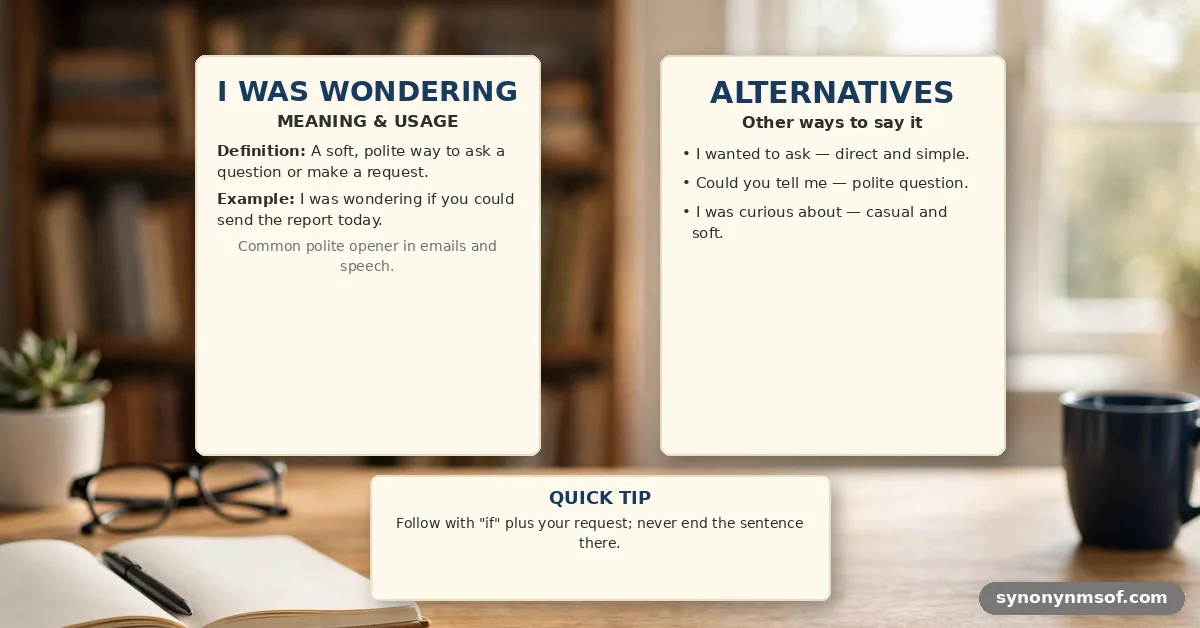
You will typically follow the phrase with the conjunction “if” or “whether” to introduce your actual question. This structure creates a subordinate clause that keeps the focus on your own internal state—the “wondering”—rather than forcing the other person to immediately face a direct inquiry. This grammatical setup is a standard way to make requests sound more conversational and less like a formal deposition.
When to Use This Phrase
Context is everything when deciding whether to use this opener. It shines in situations where you want to maintain a friendly, approachable persona, such as at a networking event or during a team meeting. It is also perfect for when you are reaching out to someone for the first time or asking for a small favor from a busy colleague.
However, avoid overusing it in high-stakes, time-sensitive situations. If a building is on fire or a deadline is seconds away, you do not need to soften your speech.
In those moments, brevity is the most professional choice. Use the phrase when you have the luxury of time and the need to preserve a positive relationship.
Categorized Examples of Usage
To understand how to apply this effectively, consider the following scenarios. Each example demonstrates how the phrase serves as a bridge to your request.
- Professional Requests: I was wondering if you could provide the latest sales figures for the quarterly review.
- Seeking Clarification: I was wondering if you meant the meeting is on Friday or if it was pushed to Monday.
- Asking for Assistance: I was wondering if you might have a moment to help me with this technical issue.
- Social Invitations: I was wondering if you would like to join us for a quick bite at the cinema later.
Comparing Directness and Politeness
Choosing the right level of directness depends on who you are talking to. Use the table below to gauge how your phrasing impacts the perceived urgency and tone of your request.
| Phrasing Method | Tone | Best Used For |
|---|---|---|
| I was wondering if… | Polite/Soft | Requests, favors, or inquiries |
| Could you please… | Direct/Professional | Standard workplace tasks |
| Please do this now. | Urgent/Authoritative | Emergencies or firm deadlines |
Common Mistakes to Avoid
One common error is tacking “I was wondering” onto a sentence that is already quite long or complex. This can make your request feel muddled and difficult to follow. Keep your actual question concise after the opening phrase to ensure your message remains clear.
Another mistake is using the phrase when you are clearly not wondering about anything. If you are issuing a direct order, do not hide it behind soft language.
This can come across as passive-aggressive, which undermines trust. If you need something done by a specific time, be clear and professional rather than hiding your intent behind a veil of uncertainty.
FAQ
Is it always polite to say I was wondering?
While it is generally considered polite, its effectiveness depends on the sincerity of your tone. If you use it to mask a demand in a way that feels manipulative, it can frustrate the listener. Use it when you genuinely want to offer the other person a graceful way to engage with your request.
What is the difference between I was wondering and I am wondering?
The past tense “I was wondering” is more common and generally sounds softer. “I am wondering” sounds more immediate and can sometimes feel more direct or impatient. Stick to the past tense for most professional requests.
Can I use this phrase in an email?
Absolutely. It works very well in email correspondence to keep your tone friendly. It is an excellent way to start a follow-up inquiry without sounding like you are nagging the recipient.
Does this phrase make me sound unconfident?
It shouldn’t if you deliver it with a professional follow-up. If you state your request clearly after the opener, you sound considerate. If you trail off and fail to ask the question, that is when you might appear unsure of yourself.
Mastering Professional Communication
Refining your language is a continuous process that pays dividends in your career and personal life. By incorporating phrases like “I was wondering” into your daily vocabulary, you demonstrate a high level of social awareness and respect for those around you. Remember that the goal is not to obscure your meaning, but to make your interactions more pleasant and collaborative for everyone involved.
Start by observing how others in your workplace use these softeners. Notice when they are effective and when they might be unnecessary. As you practice, you will find a natural rhythm that feels authentic to your personality.
Being mindful of your words is a small step, but it makes a significant impact on how you are perceived by your peers, clients, and friends. Keep refining your approach, and you will find that your requests are met with much more willingness and cooperation.