
When you send a message stating that you look forward to connecting with you, you are signaling a clear intent to foster a professional relationship. This common phrase serves as a bridge, transforming a simple request for a meeting or an introduction into a warm, forward-looking invitation.
Whether you are reaching out to a potential mentor, a recruiter, or a prospective client, the way you phrase your interest dictates the energy of the entire exchange. Understanding how to use this language effectively helps you build rapport while maintaining a respectful, polished tone that aligns with modern workplace expectations.
The True Meaning Behind the Phrase
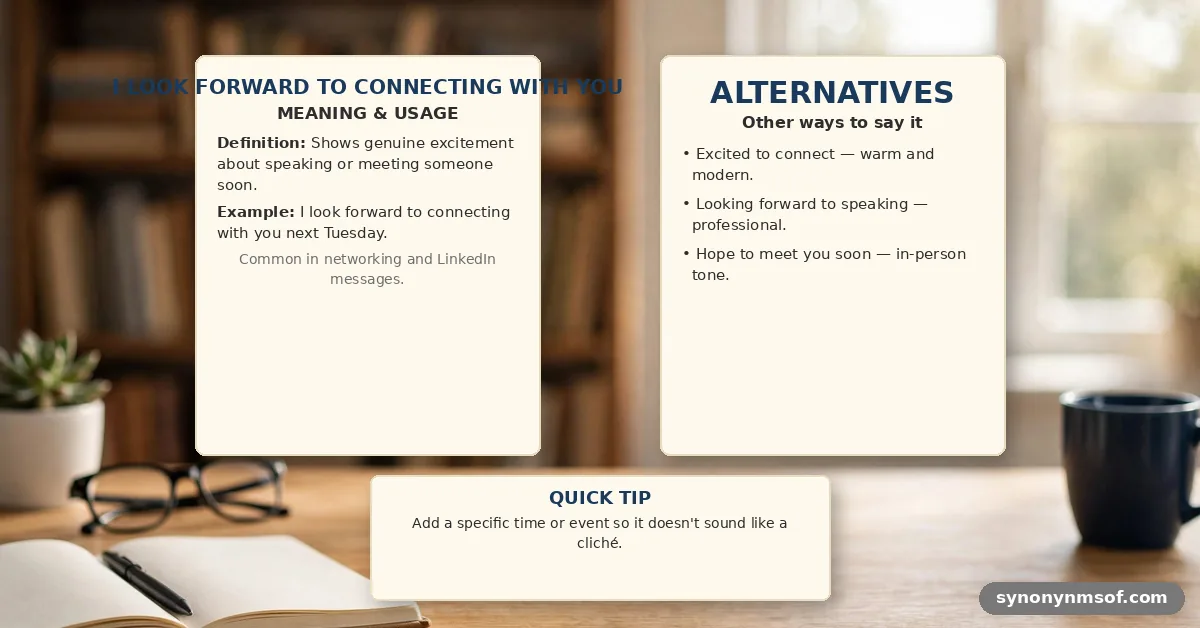
At its core, this expression is a polite way of saying that you value the other person’s time and are eager to engage in a productive dialogue. It moves beyond a simple, cold request for a meeting by adding a layer of enthusiasm and professional courtesy. By focusing on the future interaction, you indicate that you are prepared and genuinely interested in the exchange.
Why Tone Matters in Networking

Professional communication relies heavily on subtle cues that indicate respect and readiness. When you write that you are excited to connect, you are essentially confirming that you have done your homework and are ready to contribute. This sets a positive precedent, ensuring that the recipient feels their time will be well-spent rather than wasted on an aimless conversation.
Distinguishing Between Intent and Expectations
There is a fine line between expressing interest and appearing demanding. Using this phrase correctly demonstrates that you understand the value of the other person’s schedule. It frames your request as a mutual opportunity for growth or information sharing, rather than a one-sided demand for their attention.
When to Use This Expression
Timing is everything when you initiate professional contact. You should reach out when you have a clear purpose, such as seeking career advice, exploring a business partnership, or acknowledging a recent introduction. Using this language when you have nothing specific to discuss can make the message feel hollow or overly formal.
- After receiving a warm referral from a mutual contact.
- When scheduling an initial interview with a hiring manager.
- During the follow-up phase after a networking event.
- When requesting a brief informational interview with an industry leader.
Alternative Ways to Express Interest
Sometimes you need to adjust your phrasing to suit the specific relationship or the level of formality required. If you feel the standard phrase is too repetitive, you can choose from a variety of professional alternatives that convey similar sentiments.
Polite and Soft Variations
For those times when you want to be low-pressure and accommodating, softer language works best. These options show that you are flexible and willing to work around the recipient’s busy schedule.
You might try saying, “I would appreciate the opportunity to learn more about your work at your earliest convenience.” This phrasing is respectful and gives the recipient agency, which is often appreciated in high-level networking.
Direct and Professional Alternatives
When dealing with peers or colleagues you already know, a more direct approach is often preferred. Keeping it brief shows that you respect their time and are ready to get straight to the point.
Try using, “I am eager to discuss our potential collaboration further,” or “I look forward to our upcoming conversation.” These variations remain professional while removing the fluff that can sometimes clutter a busy inbox.
Comparing Your Communication Options
Choosing the right phrase depends on the context of your request and the status of the person you are contacting. The following table provides a quick guide to help you decide which approach fits best.
| Phrase | Formality Level | Best Used For |
|---|---|---|
| I look forward to connecting | Moderate/High | Initial outreach or cold emails |
| I am eager to speak with you | High | Formal interviews or senior leadership |
| Let’s chat soon | Low/Casual | Existing colleagues or friendly peers |
| I appreciate your time | High | Closing a request for a meeting |
Common Mistakes to Avoid
One of the most frequent errors is using this phrase when you have failed to provide a clear call to action. If you tell someone you are looking forward to connecting without suggesting a time or a specific topic, you place the burden of planning on them. Always include a brief sentence explaining why you want to meet.
Overusing Professional Fluff
Avoid stacking multiple polite phrases in a single paragraph. Phrases like “I truly hope you are having a wonderful week and I look forward to connecting with you” can sound insincere. Keep your opening brief and focused on the value you hope to exchange.
Ignoring the Recipient’s Context
Never assume that everyone has the same communication style. If you are reaching out to someone in a creative or startup environment, a slightly more casual tone is often more effective. Conversely, in a legal or corporate setting, sticking to more traditional, formal language is the safer, more appropriate choice.
The Role of Follow-Up
The sentiment expressed in your initial message must be backed up by your actions. If you say you are looking forward to connecting, you must follow through with clear communication regarding scheduling. Leaving a thread hanging for days or weeks undermines the professional image you worked so hard to build.
Managing Scheduling Logistics
Make the scheduling process as easy as possible for the other person. Offering specific time slots or providing a link to your digital calendar shows that you are organized. This minimizes back-and-forth emails, which is a hallmark of professional efficiency.
Maintaining Professional Momentum
Once you have secured a meeting, send a brief confirmation email. This reinforces your original message and demonstrates that you are taking the upcoming interaction seriously. Consistency in your tone from the first email to the meeting itself is key to building lasting professional trust.
FAQ
Is saying I look forward to connecting with you professional?
Yes, it is a standard and widely accepted professional phrase. It is polite, clear, and shows that you are eager to engage in a positive way, making it ideal for networking and business correspondence.
What is the best way to express urgency politely?
If you need to meet soon, avoid being demanding. Instead, use phrases like “I would appreciate the chance to discuss this at your earliest convenience,” which balances your need for time with respect for their schedule.
What is the difference between at your earliest convenience and as soon as possible?
At your earliest convenience is a formal, polite way to suggest urgency without putting pressure on the recipient. As soon as possible can sometimes sound demanding or aggressive, so it is usually better to opt for the more courteous alternative in professional settings.
How do I know if I should use a more casual tone?
Look at the sender’s previous emails or the company culture. If their communication is brief, uses contractions, or skips formal salutations, you can safely adopt a more relaxed tone while still maintaining professionalism.
Building Lasting Connections
Effective networking is rarely about the single phrase you use, but rather the consistency of your professional presence. When you state that you look forward to connecting, you are making a promise of professional engagement that should be reflected in your follow-up, your preparation, and your conduct during the meeting. By selecting language that respects the other person’s time and clearly communicates your intent, you position yourself as a thoughtful, reliable partner in any business relationship.
Take the time to tailor your outreach to the specific individual you are contacting. While templates are helpful for managing high volumes of correspondence, a personalized touch is what actually opens doors.
Keep your language clear, your tone respectful, and your follow-through consistent to ensure that every connection you initiate has the best chance of flourishing. I hope this look at how you approach your professional outreach helps you feel more confident in your next interaction.
SEO Title: I Look Forward to Connecting With You: Meaning & Usage
Meta Description: Learn the professional meaning of I look forward to connecting with you. Discover how to use this phrase effectively to build rapport and network.
Suggested URL Slug: i-look-forward-to-connecting-with-you-meaning
Primary Keyword: I Look Forward to
Primary Keyword: I Look Forward to Connecting With You
Secondary Keywords: professional, tone, look forward, connect, excited, formal, phrase, example, use, explanation, meeting, wait, meaning, purpose, definition