
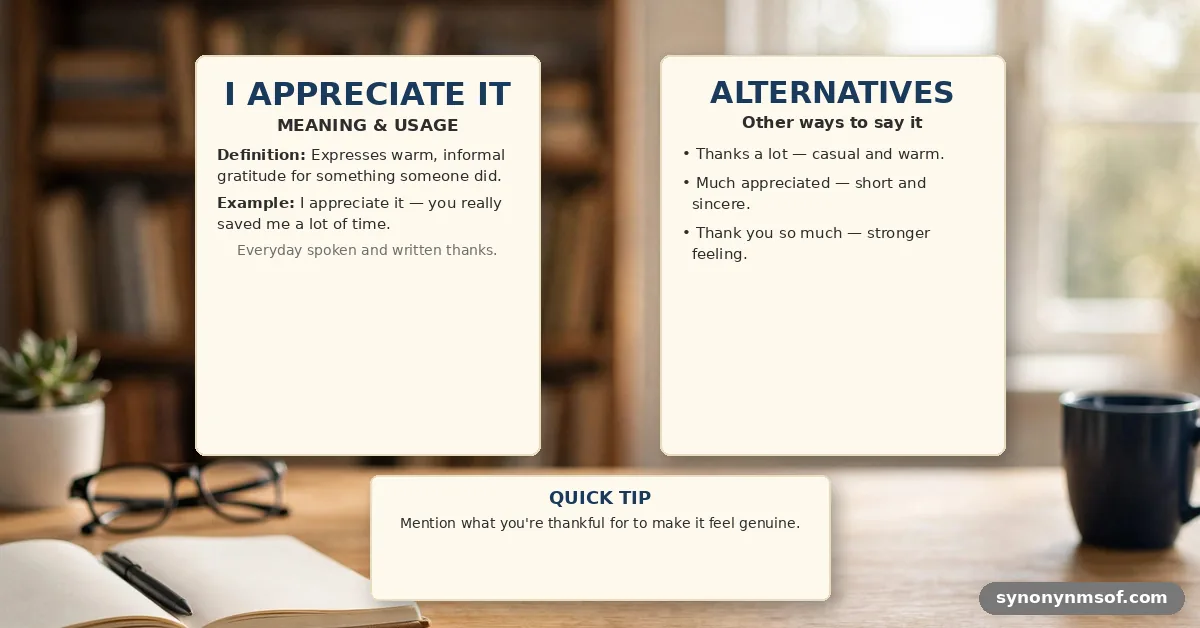

When someone says I appreciate it to you, they are expressing genuine gratitude for an action, a gift, or a piece of advice. It functions as a versatile, polite acknowledgment that validates the effort someone else put into a task. Understanding the nuance of this phrase helps you navigate social and professional interactions with grace.
Whether you are responding to a small favor or a significant contribution, knowing how to use this expression effectively ensures your tone remains sincere. This article clarifies when to use it, why it works, and how to vary your language to match the situation at hand.
The Core Meaning and Intent
At its simplest level, saying I appreciate it is a way to tell someone that you value what they have done. It carries a slightly different weight than a simple thank you. While a thank you is often a reflexive social pleasantry, this phrase suggests a deeper recognition of the time or energy invested.
You might use it when a colleague finishes a report you needed or when a friend helps you move furniture. It signals that you do not take the gesture for granted. In many cases, it serves as a bridge that keeps the relationship balanced and appreciative.
Professional Contexts for Gratitude
In the workplace, clear communication is essential for maintaining rapport. Using I appreciate it appropriately can help you build trust with your team. It is particularly useful when someone provides feedback or solves a problem that was causing you stress.
When to use it with colleagues

When a coworker helps you meet a deadline, acknowledging their input is vital. You might say, I appreciate the extra eyes on this project; it really helped me catch those errors. This phrasing shows you respect their expertise and their time.
When to use it with management
When speaking to a supervisor, you want to sound professional yet authentic. If a manager provides guidance, saying, I appreciate your advice on this strategy, demonstrates that you are coachable. It reinforces your willingness to learn and improve.
- Use it to acknowledge receipt of requested information.
- Use it when someone goes out of their way to assist you.
- Use it to close a conversation after a helpful interaction.
- Use it to validate someone’s effort on a shared goal.
- Use it as a polite buffer when you cannot provide an immediate answer.
Comparing Expressions of Thanks
Choosing the right words depends on the depth of the favor and your relationship with the person. While some phrases are interchangeable, others carry specific connotations regarding time and intimacy.
| Phrase | Tone | Best Usage |
|---|---|---|
| Thank you | Standard/Neutral | Everyday interactions |
| I appreciate it | Sincere/Professional | Acknowledging specific effort |
| Thanks so much | Warm/Friendly | Personal favors |
| I am grateful | Formal/Serious | Major life assistance |
Common Grammatical Pitfalls
Many speakers wonder if it is grammatically correct to say I appreciate it. It is perfectly standard English, yet people often stumble when trying to combine it with other words. You should avoid saying I appreciate you for that, which can sound slightly awkward in formal writing.
Instead, focus on the action or the object of your gratitude. Saying I appreciate your help is cleaner and more direct. Keep the focus on the contribution rather than the person, especially in formal emails or official reports.
How to Respond to Gratitude
Knowing how to react when someone tells you they appreciate it is just as important as saying it yourself. You want to acknowledge their thanks without sounding dismissive or overly formal. A simple, confident response keeps the interaction positive.
Ideal responses
If you want to keep things casual, saying, No problem, or, Happy to help, works perfectly. In a more professional setting, try, It was my pleasure, or, I am glad I could assist. These responses show that you were happy to contribute and that you value the working relationship.
Cultural Nuances and Tone
The way we express thanks varies across regions and social groups. In some cultures, brevity is preferred, while in others, an elaborate explanation of gratitude is expected. When you use the phrase I appreciate it, you are generally safe in most Western professional environments.
However, consider the medium of your message. An email might require a slightly more formal closing, whereas a text message allows for a more relaxed approach. Always match your level of formality to the person you are addressing to ensure your message lands correctly.
Building Stronger Relationships
Consistent use of polite language fosters a culture of mutual respect. When you make it a habit to say I appreciate it, you encourage others to do the same. This reciprocal behavior creates an environment where people feel seen and valued for their work.
Small gestures matter
Even small acts, like holding a door or sharing a file, deserve recognition. When you acknowledge these moments, you reinforce the social bonds that make teamwork possible. Never underestimate the power of a genuine acknowledgment to change the tone of a difficult day.
Frequently Asked Questions
Is it professional to say I appreciate it?
Yes, it is highly professional. It demonstrates that you are observant and that you value the contributions of others, which is a key trait in effective leadership and teamwork.
What is the difference between this phrase and a simple thank you?
A thank you is a general expression of gratitude. I appreciate it implies that you have thought about the effort the other person made and that you recognize the value of their specific contribution.
Can I use this phrase in a formal email?
Absolutely. It fits well in the body of an email or as a concluding sentence. It adds a touch of warmth to a professional message without being overly sentimental.
How do I make this phrase sound more sincere?
Be specific. Instead of just saying the phrase, add context by mentioning exactly what you are thankful for. For example, saying, I appreciate the time you took to review my draft, sounds much more genuine than a generic comment.
Is it okay to use this in a text message?
It works very well in text messages, especially when you are coordinating tasks with friends or colleagues. It keeps the tone light yet appreciative, which helps prevent misunderstandings in written communication.
Conclusion
Mastering the art of saying I appreciate it allows you to communicate your gratitude with clarity and sincerity. Whether you are navigating a high-stakes meeting or simply thanking a friend for their time, this phrase remains a reliable tool in your social toolkit. By choosing your words carefully and acknowledging the effort of those around you, you build stronger, more resilient relationships.
Take the time to notice the small contributions people make in your daily routine. When you vocalize your thanks, you create a positive cycle of interaction that benefits everyone involved. Start incorporating this expression more intentionally this week, and observe how it helps you foster a more collaborative and appreciative environment in your personal and professional life.