
When someone suggests you hop on a call, they are proposing a brief, informal conversation to address a specific topic. This expression has become a staple of modern office culture, signaling a shift away from lengthy email threads toward more direct, real-time communication. While it sounds light and spontaneous, knowing when to use it and how to interpret the invitation is essential for maintaining professional boundaries.
Understanding the nuances behind this common request will help you manage your time better and ensure your interactions remain productive. By exploring the origins, proper usage, and social implications of these conversations, you will gain the confidence to handle meeting requests with ease and clarity.
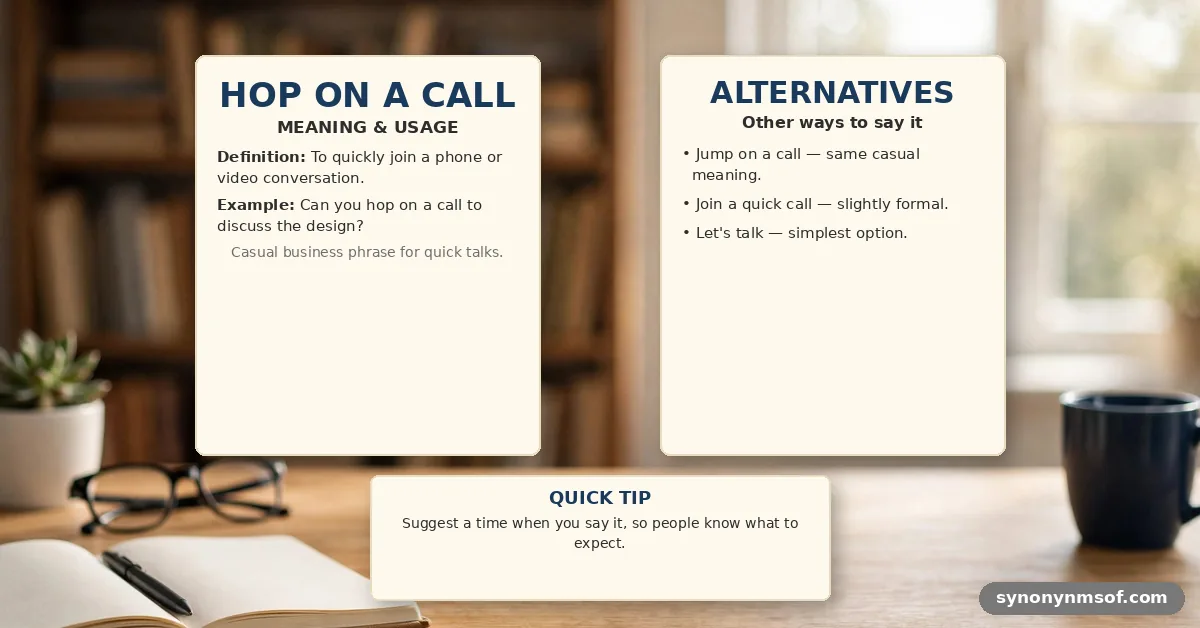
The expression is essentially a verbal shorthand for initiating a quick, synchronous discussion. It implies that the conversation will be low-stakes and relatively short, rather than a formal, scheduled meeting with an agenda and minutes. When a colleague says they want to hop on a call, they are often signaling that a matter has become too complex for text-based communication.
This language choice is intentionally casual. It strips away the heavy formality of a “scheduled conference” or a “formal briefing,” making the request feel less like a demand on your time.
However, the perceived brevity is not always guaranteed. Sometimes, a quick chat can spiral into a thirty-minute deep dive if both parties are not careful about setting expectations.
Professional Suitability and Context
Using this phrasing is generally acceptable in modern, collaborative work environments. It works well when you have an established rapport with the recipient. If you are working in a fast-paced agency or a tech startup, it is likely the standard way to suggest a touch-base.
However, you should exercise caution when dealing with external clients or senior executives. In highly formal industries like law or finance, a request to hop on a call might be perceived as lacking the necessary professional gravity. In those instances, opting for a more structured invitation is usually the safer, more respectful choice.
Categorized Alternatives to the Phrase
Depending on your audience and the urgency of the matter, you may want to adjust your wording. Here are three categories of alternatives that convey different levels of professional intent.
Polite and Soft Invitations

- Do you have a moment to discuss this over the phone?
- Would you be open to a brief conversation regarding this project?
- Could we find a time to connect briefly to align on these details?
Urgent and Direct Requests
- Can we speak immediately to resolve this issue?
- I need to discuss this with you directly; are you free now?
- Let us jump on a quick call to handle this matter before the deadline.
Neutral and Professional Options
- I would like to schedule a brief meeting to review these points.
- Are you available for a quick phone consultation?
- Let us coordinate a time to talk through the current status.
Choosing the Right Communication Style
Deciding how to phrase your request depends entirely on the relationship you have with the other person. If you are emailing a direct report, a casual request is perfectly fine. When you are reaching out to a stakeholder you have never met, you should prioritize clarity and respect for their schedule.
Always consider the complexity of the subject matter before you suggest a call. If the topic requires documentation or deep analysis, a phone call might not be the most efficient medium. Sometimes, sending a summary email first is the most professional way to prepare the other person for the discussion.
Comparison of Meeting Request Phrasing
Selecting the right terminology depends on the desired level of urgency and the professional setting of your organization. Use the table below to determine which phrasing aligns with your specific needs.
| Phrase | Formality Level | Urgency |
|---|---|---|
| Hop on a call | Casual | Low to Medium |
| Can we connect? | Neutral | Medium |
| Requesting a brief meeting | Professional | Low |
| Urgent discussion needed | Formal | High |
Common Mistakes to Avoid
One common error is using this phrase when the subject matter is actually quite sensitive or requires a paper trail. If you are delivering bad news or discussing performance issues, a casual request to hop on a call can feel dismissive or manipulative. It creates an atmosphere of ambiguity that can cause unnecessary anxiety for the recipient.
Another mistake is failing to provide context for the request. Simply asking someone to talk without explaining why is a major productivity killer. Always include a brief sentence about the topic so the other person can prepare their thoughts before you actually speak.
Frequently Asked Questions
Is it professional to say hop on a call?
It is perfectly professional in most modern, collaborative environments. However, avoid it if you are writing to high-level executives or clients who prefer traditional, formal communication styles.
What is the best way to express urgency politely?
The best approach is to state the reason for the urgency clearly and provide a specific time frame. For example, saying “Could we speak briefly today to address the client’s feedback?” is much more effective than being vague.
What is the difference between at your earliest convenience and as soon as possible?
At your earliest convenience is a polite, formal way to request action without applying undue pressure. As soon as possible, while common, can often feel demanding or aggressive if the recipient is already overwhelmed.
What if I want to hop off a call?
If you need to leave a meeting, it is best to be transparent. A simple phrase like “I need to drop off to attend another commitment” is professional and avoids the awkwardness of suddenly disappearing.
Managing Your Communication Strategy
Mastering the way you request meetings is a subtle but powerful tool for building strong workplace relationships. By choosing your words carefully, you demonstrate respect for your colleagues’ time and an awareness of the professional culture you operate within. Whether you decide to hop on a call or send a detailed email, the goal is always clear, efficient communication that moves your objectives forward.
Take a moment to evaluate your own communication habits this week. See if you can match your request style to the urgency and complexity of the task at hand.
If you find yourself using casual phrases too often, try mixing in some of the more professional alternatives provided here. Consistent, thoughtful language will help you navigate your work life with greater ease and impact.