

A second chance represents an opportunity to rectify a past error or initiate a fresh trajectory after a significant setback. Whether in professional development, personal relationships, or legal rehabilitation, the concept functions as a bridge between a failed attempt and a potential success. Understanding how to utilize this notion effectively allows individuals to move past regret and toward constructive action.
By examining the linguistic nuances and practical applications of this term, you can learn how to articulate your desire for growth or offer grace to others in a way that feels authentic and earned. Exploring these dynamics helps clarify why the ability to start over remains a cornerstone of human resilience and progress.
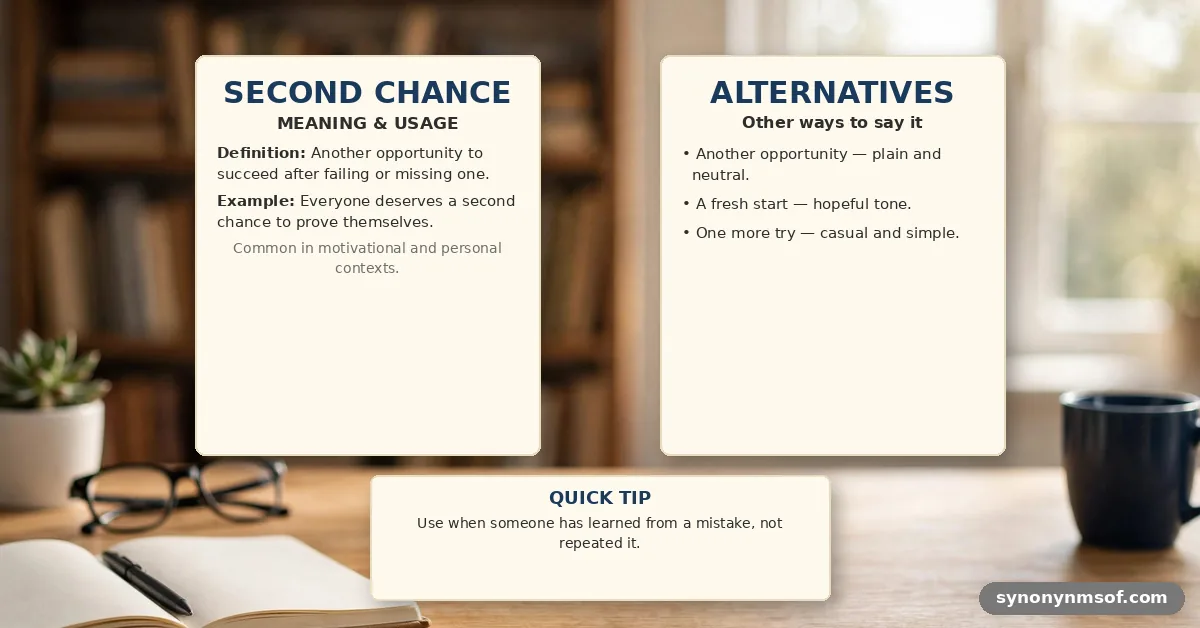
At its core, a second chance is the provision of a new opportunity after an initial failure. It implies that the first attempt did not yield the desired result, yet the circumstances allow for a different outcome on the next try. The dictionary definition often centers on the idea of a reprieve or an additional window of time to prove one’s worth.
Merriam-Webster and other linguistic resources characterize this as a shift in momentum. It is not merely a do-over; it is a chance to apply the lessons learned from the previous mistake. This concept resonates because everyone deserves to be evaluated by their capacity for change rather than a single moment of poor judgment.
Cultural narratives frequently lean on this theme to build tension and resolution. From literary arcs where a protagonist recovers from a tragic fall to corporate policies that allow for employee retraining, the idea is deeply embedded in our social fabric. It acknowledges that human fallibility is constant, yet our ability to adapt is equally powerful.
Linguistic Nuances and Synonyms
The words we choose to describe this experience shape how others perceive our intentions. Using the phrase “a second chance” is direct, but sometimes it carries a heavy emotional weight that might not fit every professional context. You might find that alternative phrasing helps you communicate your intent with more precision.
Common synonyms and related expressions

* Another opportunity: A neutral way to suggest a continuation of a project.
* A clean slate: Implies that past errors are erased, often used in legal or disciplinary settings.
* A fresh start: Focuses on the forward-looking nature of the change.
* A path to redemption: More dramatic, often used in moral or personal contexts.
* A trial period: A formal, structured approach to evaluating improvement.
Choosing the right word involves assessing the power dynamic between the parties. If you are asking for a second chance from a superior, you want to sound humble yet competent. If you are offering one, your language should convey clarity regarding your expectations for future performance.
Professional Applications and Expectations
In the workplace, a second chance rarely comes free. It is usually conditional, tied to specific performance metrics or behavioral adjustments. Employers often view this as an investment in talent they have already vetted, provided the individual shows a genuine commitment to improvement.
When an employee asks for a new opportunity, they must move beyond simple apologies. They need to demonstrate an understanding of what went wrong and how they will prevent it from happening again. This transition from apology to action is what makes the request persuasive rather than desperate.
Key elements of a successful request
* Accountability: You must own the mistake without offering excuses.
* Analysis: Explain what you learned from the failure.
* Action Plan: Present a concrete strategy for how the work will improve.
* Appreciation: Express gratitude for the trust being placed in you.
Comparing Approaches to Renewal
Different situations require different levels of formality. The following table illustrates how the context changes the way you should approach the request or the offer.
| Scenario | Tone | Goal |
|---|---|---|
| Project Failure | Professional and Direct | Restore confidence in work quality |
| Interpersonal Conflict | Empathetic and Sincere | Repair the relationship dynamic |
| Policy Violation | Formal and Contractual | Demonstrate adherence to standards |
| Personal Growth | Reflective and Honest | Commit to a new behavioral path |
Legal and Institutional Programs
Many institutions now implement formal “second chance” programs to assist individuals returning from incarceration or those who have faced significant career gaps. These programs recognize that systemic barriers often prevent people from finding work after a setback. By providing a structured environment, these organizations create a path for people to contribute their skills effectively.
These initiatives often focus on skill acquisition and mentorship. Participants get the chance to learn new software, refine their communication, or gain certifications that were previously out of reach. The focus is on the future rather than the past, allowing participants to build a portfolio that reflects their current capabilities.
Organizations that adopt these policies often see higher retention rates. Employees who feel supported during a difficult transition period tend to develop a stronger sense of loyalty to the firm. This creates a mutually beneficial cycle where the institution gains a dedicated worker and the individual gains a stable career.
Interpersonal Dynamics and Forgiveness
Outside of the office, the concept of a second chance is deeply personal. It requires the person granting the opportunity to let go of past grievances. Without this release, the new start is stifled by the weight of old arguments or lingering resentment.
Forgiveness does not mean ignoring the harm that was done. It means deciding that the relationship or the future potential is worth more than holding onto the past. When you grant this, you are effectively wiping the board clean and choosing to judge the other person on their current actions.
Conversely, those seeking a second chance must be patient. You cannot force someone to trust you immediately. Rebuilding that trust is a slow, methodical process that requires consistent, positive behavior over an extended period.
Common Mistakes When Seeking Renewal
Many people fail to secure a second chance because they approach the conversation with the wrong mindset. One common error is focusing too much on the “why” rather than the “how.” Explaining the reasons for a failure is useful, but dwelling on them can sound like you are dodging responsibility.
Another mistake is assuming that a second chance is an entitlement. It is an act of grace or a business decision, not a right. Approaching the request with a sense of entitlement will almost always alienate the person you are trying to convince.
Pitfalls to avoid
* Defensiveness: Resisting feedback or criticism during the process.
* Repetition: Making the same mistake twice undermines any claim to growth.
* Vague Promises: Saying “I will do better” is less effective than “I will implement X process to ensure Y result.”
* Rushing: Expecting immediate forgiveness or total restoration of status.
Frequently Asked Questions
Is it professional to ask for a second chance?
Yes, provided you do so with a clear plan for improvement. Professionalism is defined by how you handle failure, and taking responsibility is a hallmark of a mature, competent professional. Avoid emotional language and focus on the business impact of your proposed changes.
What is the best way to express that I need another opportunity?
Be direct and brief. Acknowledge the error, state clearly that you have identified the cause, and explain the specific steps you are taking to rectify the situation. Keeping the conversation focused on the future shows that you are ready to move forward.
How do I know if someone deserves a second chance?
Look for evidence of genuine change. If the person is taking responsibility and showing consistent improvement, they may be a good candidate. If they continue to repeat the same behaviors or blame others, they have not yet learned the necessary lessons.
What is the difference between a second chance and a clean slate?
A second chance often implies a specific, singular opportunity to fix a known issue. A clean slate suggests a broader reset, where past mistakes are set aside entirely to allow for a new beginning. Both are tools for growth, but they are used in different contexts.
Refining Your Future
The pursuit of a second chance is a fundamental part of the human experience. Whether you are seeking to repair a professional relationship or looking to start over in a new area of your life, the key lies in your ability to learn and adapt.
You must demonstrate that you have evolved beyond the person who made the initial mistake. By focusing on accountability, clear communication, and consistent action, you can turn a setback into a turning point.
Remember that renewal is a process rather than a single event. It requires patience from both sides and a commitment to maintaining the new standard you have set.
As you move forward, keep your focus on the opportunities ahead rather than the errors of the past. If you approach these moments with sincerity and a plan, you will find that most people are willing to support your growth.
SEO Title: Second Chance: Meaning, Usage, and Examples
Meta Description: Learn what a second chance really means, how to use it in professional settings, and how to effectively ask for or offer a fresh start to others.
Suggested URL Slug: second-chance-meaning-usage-examples
Primary Keyword: second chance
Secondary Keywords: another opportunity, fresh start, professional development, accountability, growth