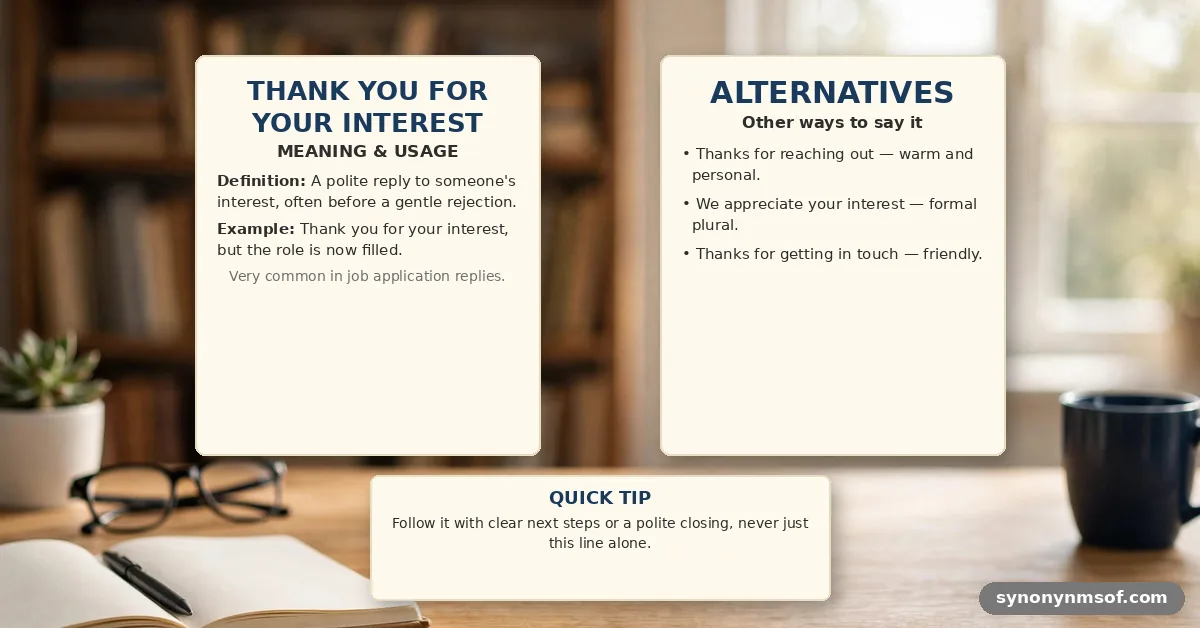

Receiving a message that says “thank you for your interest” is a common milestone in professional correspondence. Whether you are applying for a new job, inquiring about a service, or reaching out to a company for the first time, this phrase acts as a standard acknowledgment. It confirms that your communication has reached its destination and that the recipient recognizes your curiosity.
While it may seem like a simple pleasantry, understanding the nuances behind this expression helps you gauge the status of your inquiry. By learning how to interpret this language, you gain clarity on your next steps and learn how to maintain a productive, professional connection with the people you engage.
At its core, this phrase serves as a polite gatekeeper in business communication. It acknowledges that you have taken the time to reach out, while simultaneously setting a boundary. When a company uses this language, they are thanking you for the effort you expended, but they are not necessarily committing to a deeper engagement at that moment.
The phrase is often used to buy time for the recipient. It signals that your email has been received and is being processed, which prevents the sender from feeling ignored.
In many automated systems, this is the standard response to inquiries about products, services, or job openings. It confirms that the line of communication is open, even if the specific outcome of your outreach remains uncertain.
The Context of Professional Tone

The tone of this message is almost always formal and neutral. It is designed to be respectful without being overly familiar, which is vital when dealing with strangers or potential clients. When you see this in an email, it usually indicates that the person or entity is operating in a structured, corporate environment.
You should view this as a positive sign of professional etiquette. It shows that the person on the other side of the screen values your attention and wants to maintain a polite rapport.
Even if the news that follows is not what you hoped for, the initial acknowledgment preserves the relationship for future interactions. Recognizing this tone helps you avoid misinterpreting a standard business courtesy as a personal rejection or a promise of immediate action.
Common Scenarios for Usage
There are several distinct situations where you will encounter this language. Each scenario carries slightly different implications, and understanding them helps you manage your expectations effectively.
- Job Applications: Recruiters use this to confirm they have received your resume.
- Service Inquiries: Sales teams use it to acknowledge your curiosity about a product.
- Partnership Outreach: Business development managers use it to signal that they are reviewing your proposal.
- Information Requests: Support staff use it when they need time to gather details for your query.
- Event Registrations: Organizers use it to confirm your spot while they finalize logistics.
Examples of Professional Application
Seeing the phrase in action provides the best context for its usage. Below is a table that breaks down how this language changes based on the specific business situation.
| Scenario | Example Sentence | Implication |
|---|---|---|
| Job Rejection | Thank you for your interest in the role, but we have decided to move forward with other candidates. | The process has concluded for you. |
| Product Inquiry | Thank you for your interest in our latest software suite; a representative will contact you shortly. | A follow-up is expected soon. |
| General Outreach | We appreciate your interest in our company and will keep your details on file. | No immediate action is planned. |
| Service Information | Thank you for your interest in our consulting services; here is the brochure you requested. | Information is being provided immediately. |
How to Respond to These Messages
Your response should always mirror the professional nature of the original email. If you receive a message that includes “thank you for your interest,” you are essentially being invited to continue the conversation or accept the current status of the relationship.
If the email was automated, a brief reply is often unnecessary unless you have a specific question. If the email came from a human, a simple, polite acknowledgment goes a long way.
You might say, “Thank you for the update,” or “I appreciate you getting back to me.” This keeps the door open without appearing pushy or desperate for an immediate response.
The Importance of Timing
Timing is everything in professional communication. When someone uses this phrase, they are often managing a high volume of inquiries, so patience is a virtue. If you receive this in a job application, it is usually a sign that you should wait for the internal timeline of the HR department to play out.
Avoid sending multiple follow-ups immediately after receiving an acknowledgment. If you haven’t heard back within the specified timeframe, a single, polite check-in is acceptable. By respecting their process, you demonstrate that you are a professional who understands how to manage expectations and communicate effectively within a corporate structure.
Common Mistakes to Avoid
Many people make the mistake of reading too much into this phrase. They might view it as a sign of success when it is actually just a standard acknowledgement of receipt. Do not assume that because someone is “glad you are interested,” they are ready to sign a contract or hire you on the spot.
Another error is failing to reply when a reply is clearly required. If a sales representative asks for more details after thanking you, failing to provide those details will kill the momentum of the deal. Keep your communications crisp, clear, and relevant to the original topic to ensure the conversation moves forward smoothly.
Frequently Asked Questions
Is thank you for your interest always a rejection?
No, it is not. It is simply a polite way to acknowledge that your request has been received. While it often precedes a rejection in the context of job applications, in sales or general inquiries, it is a neutral starting point for a conversation.
What is the best way to express urgency politely?
If you need a faster response, you can supplement the formal acknowledgment by adding a brief, polite sentence. For example, “I appreciate your interest in my inquiry; please let me know if you need any further information to expedite the process.”
What is the difference between at your earliest convenience and as soon as possible?
“At your earliest convenience” is a softer, more professional way to request a task be completed without imposing a strict deadline. “As soon as possible” is more direct and can sometimes come across as demanding, depending on the tone of the rest of the email.
Should I use this phrase in my own emails?
Yes, it is a very effective tool for professional correspondence. Using it when someone reaches out to you shows that you are organized and appreciative of their time, which helps build a positive reputation for you and your company.
Maintaining Professional Relationships
Mastering the use of professional phrases is essential for building a successful career. When you use “thank you for your interest” correctly, you show that you understand the nuances of business etiquette and respect the time of others. This approach helps you maintain strong professional relationships, even when the outcome of a specific interaction is not what you originally anticipated.
Always remember that every email is an opportunity to leave a lasting impression. By staying polite, clear, and patient, you set yourself apart as a communicator who values quality interactions.
If you continue to refine your language, you will find that your professional network grows stronger and your inquiries are met with more consistent, helpful responses. Do not hesitate to reach out to contacts with clear, well-phrased messages that reflect your goals and your professional standards.
SEO Title: Thank You for Your Interest: Meaning, Usage & Examples
Meta Description: Learn the professional meaning of thank you for your interest. Discover how to use this phrase effectively in emails and job applications with examples.
Suggested URL Slug: thank-you-for-your-interest-meaning-examples
Primary Keyword: Thank You for Your Interest
Secondary Keywords: thank interest, professional, tone, best use, phrase, scenario, company, job, appreciate interest, thanks, formal, emails, examples