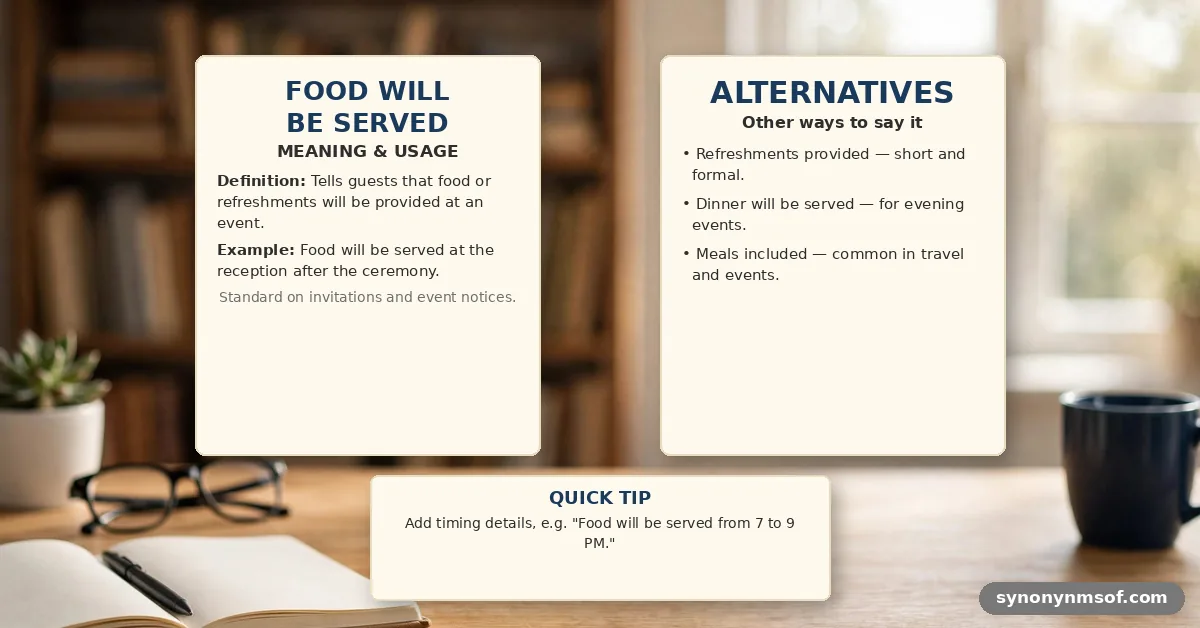

When an invitation notes that food will be served, guests immediately understand that they do not need to eat before arriving. This phrase serves as a practical indicator for event planning, ensuring that attendees know what to expect regarding sustenance. Whether you are hosting a formal gala or a casual office gathering, managing expectations about dining is crucial for a successful event.
Understanding the nuances of this language helps you communicate clearly with your invitees. By using the right phrasing, you prevent confusion and ensure that your guests arrive prepared. This guide explores the best ways to convey that a meal or refreshments will be available at your next gathering.
Understanding the Meaning and Professional Intent
The phrase indicates that the host has arranged for nourishment to be provided during the event. It is a functional statement that removes ambiguity for guests who might otherwise wonder if they should grab a bite elsewhere. In a professional context, it signals that the event includes a scheduled break or a dedicated period for dining.
Why Clarity Matters

Ambiguity regarding catering often leads to guest discomfort. If someone attends a long afternoon seminar expecting a full lunch, but only light snacks are provided, their experience may suffer. Explicitly stating that food will be served allows attendees to manage their own energy levels and dietary needs effectively.
Setting the Right Tone
The tone you choose depends on the nature of your event. A formal corporate dinner requires different language than a casual backyard barbecue. By choosing specific words, you define the atmosphere before the first guest even walks through the door.
Categorizing Event Dining Options
Different events necessitate different levels of service. You should align your language with the actual experience you are providing to your guests. Using a vague term when a substantial meal is expected can lead to frustration, just as over-promising can lead to disappointment.
- Full Meal: Use for events where a complete lunch or dinner is provided, often with multiple courses.
- Light Refreshments: Ideal for afternoon meetings where only coffee, tea, and small snacks are available.
- Hors d’oeuvres: Perfect for cocktail hours or evening networking events where guests stand and socialize.
- Buffet Style: Suggests an informal, self-serve setup where guests choose their portions.
Effective Ways to Announce Catering
Choosing the right phrasing is about more than just accuracy; it is about hospitality. You want to make your guests feel welcome and well-cared for from the moment they read the invitation. Below is a comparison of common ways to communicate these details based on the formality of the event.
| Phrase | Best Use | Formality Level |
|---|---|---|
| Dinner will be served | Evening galas or formal banquets | High |
| Lunch will be provided | Professional conferences or workshops | Medium |
| Light refreshments available | Brief meetings or open houses | Medium |
| Join us for a bite | Casual team gatherings | Low |
Contextual Guidance for Different Events
When you are planning a corporate event, your language should reflect the brand’s identity. If you are hosting a client, emphasize the quality of the service. For internal team building, focus on the social aspect of the dining experience.
Communicating with Clients
Clients appreciate precision. Use clear, professional language to indicate that a meal is part of the agenda. Phrases such as “A formal dinner will be served following the presentation” work well to set expectations for a high-end experience.
Internal Team Gatherings
For internal staff meetings, you can be slightly more relaxed. “Lunch will be served in the conference room” is perfectly acceptable. It conveys the necessary information while maintaining a friendly, approachable atmosphere for your colleagues.
Common Mistakes to Avoid
One common error is failing to mention dietary restrictions. If you say food will be served, you should also include a brief note asking guests to disclose allergies. This simple addition shows that you are a thoughtful host who values guest safety.
Another mistake is being too vague about the timing. If you promise food but do not specify when, guests may arrive hungry and find themselves waiting. Always pair your announcement with a clear schedule, such as “Dinner will be served at 7:00 PM.”
Variations for Different Settings
You can adapt your language to suit the specific vibe of your event. For a wedding or a milestone celebration, you might choose more elegant wording. For a community fundraiser, you might focus on the social benefit of the gathering.
Consider how the food itself is presented. If you are serving finger food, acknowledge it. Guests appreciate knowing if they should expect a plated meal or if they will be grabbing items from a tray while standing.
FAQ
Is it professional to say food will be served?
Yes, it is a standard and professional way to inform guests that they do not need to eat beforehand. It is clear, concise, and eliminates guesswork for attendees.
How do I ask about dietary restrictions?
You should include a small note at the bottom of the invitation or RSVP form. For example, “Please let us know if you have any dietary restrictions so we can accommodate your needs.”
What is the difference between provided and served?
Served implies a more formal, perhaps plated or wait-staff-assisted experience. Provided is a broader term that suggests food is available, regardless of whether it is a buffet or a sit-down meal.
How do I announce light snacks?
Use the phrase “Light refreshments will be served” to indicate that you are offering enough to satisfy a craving but not a full meal.
Final Thoughts on Event Hospitality
Communicating dining details clearly is a hallmark of good hosting. Whether you use the classic approach of stating that food will be served or opt for a more descriptive invitation, your goal is to make the guest experience as smooth as possible. By being transparent about what is available, you allow your attendees to focus on the event itself rather than their own logistics.
Take the time to consider your audience and the specific nature of your gathering. A well-crafted invitation sets the stage for a successful event and demonstrates that you have considered every aspect of your guests’ comfort. If you have questions about how to best frame your event details, feel free to review these guidelines before you send out your next round of invitations.
SEO Title: Food Will Be Served: Meaning, Usage, and Examples
Meta Description: Learn the best ways to communicate catering details on invitations. Discover the meaning, usage, and examples for ensuring your guests are well-informed.
Suggested URL Slug: food-will-be-served-meaning-usage-examples
Primary Keyword: Food Will Be Served
Primary Keyword: Food Will Be Served
Secondary Keywords: formal, event, dining, lunch, guests, provided, available, examples, meaning, tone