
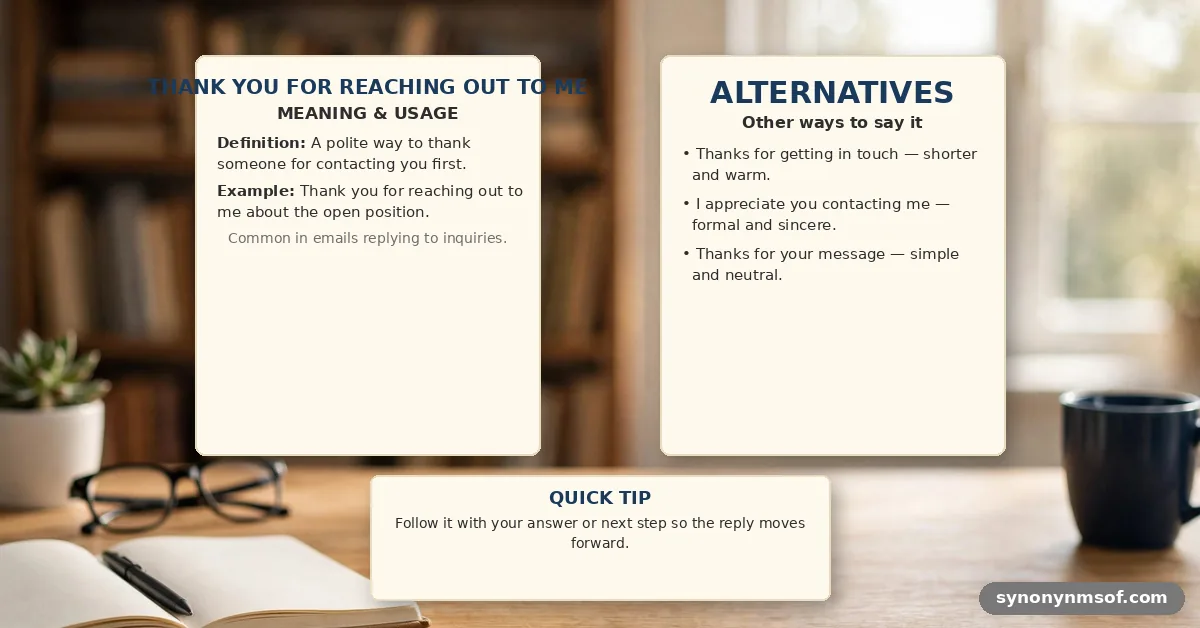

When you receive a cold email or a query from a potential client, sending a thoughtful reply is the first step toward building a lasting connection. Using a phrase like “thank you for reaching out to me” serves as a polite acknowledgement that validates the sender’s effort while setting a professional tone for the conversation. This simple opening helps establish rapport immediately, showing that you value the time someone spent initiating contact.
Mastering this correspondence is essential for anyone looking to foster better relationships in their career. By selecting the right words, you ensure your communication remains both welcoming and efficient, whether you are responding to an inquiry or a networking request.
The Core Meaning of Reaching Out
At its heart, the phrase is a recognition of initiative. When someone sends an unsolicited message, they are often stepping out of their comfort zone to offer a proposal or ask for guidance. Acknowledging this action demonstrates that you are approachable and respect the sender’s time.
It functions as a bridge between the initial inquiry and your subsequent response. Without this acknowledgment, a reply can feel abrupt or dismissive. By starting with a note of gratitude, you soften the exchange and create a positive environment for whatever information you need to share next.
Why Professional Acknowledgement Matters

In a digital inbox crowded with automated responses and spam, a human touch stands out. When you use this specific language, you signal that the message was read by a person, not a bot. This small detail can be the difference between a discarded email and a new business partnership.
People often worry about appearing too formal or, conversely, too casual. This phrase hits the “sweet spot” of professional etiquette. It is flexible enough for a high-stakes corporate environment while remaining warm enough for a creative freelancer.
When to Use This Greeting
Determining the right time to use this phrase depends on the context of the interaction. It is most effective when you have not previously spoken to the sender or when there has been a long gap in communication.
- New business inquiries: Use it when a prospective client asks for a quote or service details.
- Networking requests: It works well when someone connects with you to discuss industry trends or potential collaborations.
- General questions: It is appropriate for answering students or peers who seek your expertise on a specific topic.
- Follow-ups after events: Use it if someone sends a message after meeting you at a conference or workshop.
Matching Your Tone to the Recipient
You should always adjust the level of formality based on who is on the other side of the screen. A cold email from a recruiter requires a different level of polish than a quick message from a former colleague.
If you are unsure of the relationship, lean toward the standard, professional version. You can always shift to a more personal tone once the conversation gains momentum. Reliability in your communication style builds trust over time.
Formal Alternatives for Specific Situations
Sometimes, you need to vary your language to avoid repetition or to match a specific corporate culture. While the standard phrase is excellent, there are nuances that might better suit your needs.
| Phrase | Best Used For | Tone |
|---|---|---|
| I appreciate you contacting me regarding… | Formal proposals | Professional |
| Thanks for getting in touch about… | Casual networking | Friendly |
| It is a pleasure to hear from you. | Senior-level inquiries | Polite/Respectful |
| Thank you for your interest in… | Specific projects | Direct |
Common Mistakes to Avoid
Even with the best intentions, it is easy to fall into traps that make your email sound robotic or insincere. Avoid over-complicating the opening with excessive praise, as this can make you seem desperate for their attention.
Keep your sentences concise and focused on the next step. If you spend three paragraphs thanking someone, they may lose interest before reaching your actual answer. Balance your gratitude with clear, actionable information.
Being Too Vague
A major error is using a generic opening without mentioning the subject of the email. Always add a brief reference to the topic at hand, such as “Thank you for reaching out to me regarding the upcoming marketing project.” This proves you actually read their message.
Avoid using placeholders that you might forget to fill in. If you use a template, double-check that the name and company details are accurate. A personalized touch is always better than a perfectly polished but generic script.
Navigating Digital Communication
Writing for email requires an understanding of brevity and clarity. Your goal is to provide value while respecting the recipient’s time. When you open with a thank you, you establish that you are a considerate communicator.
Use short paragraphs to make your email scannable. Most people will skim your message before deciding how to respond. By keeping your points distinct, you ensure that your main message is not lost in a sea of text.
Following Up Effectively
If you need to delay your response, mention that early in the email. You might say, “Thank you for reaching out to me; I am currently reviewing your proposal and will get back to you by Thursday.” This manages expectations while keeping the tone positive.
Communication is a two-way street that relies on consistent feedback. By setting a clear timeline, you show that you value the other person’s schedule as much as your own. This builds a reputation for reliability in your professional circle.
FAQ
Is it professional to say thank you for reaching out?
Yes, it is highly professional and widely accepted. It is a standard way to acknowledge an inquiry without sounding overly stiff or formal.
What is the difference between saying reach out and contact me?
“Reaching out” implies a slightly more personal or proactive effort, whereas “contacting” is purely functional. “Reaching out” is often preferred in modern, collaborative business environments.
How do I respond if I cannot help the person?
You should still start with the polite acknowledgment. You can then gently explain why you cannot fulfill their request, which maintains the relationship for the future.
Can I use this phrase in a text message?
It is usually too formal for a casual text. In a text, you might prefer something shorter like “Thanks for the message” or “Good to hear from you.”
The Importance of Professional Courtesy
Maintaining a high standard of communication is a hallmark of a successful career. When you consistently use phrases like “thank you for reaching out to me,” you demonstrate that you are a person who values connections.
This approach creates a positive ripple effect throughout your professional network. People remember those who treat them with respect and efficiency.
Start by auditing your current email templates to ensure they align with your personal brand. If they feel too cold or too informal, adjust the language to better reflect your style. Practicing these small adjustments will eventually become second nature.
As you continue to engage with new people, remember that your words are the primary way others perceive your professional identity. Keep your responses clear, warm, and intentional to foster long-term growth.
SEO Title: Thank You for Reaching Out to Me: Meaning & Examples
Meta Description: Learn the professional meaning of “thank you for reaching out to me.” Get examples and tips for using this phrase effectively in your email communication.
Suggested URL Slug: thank-you-for-reaching-out-meaning-examples
Primary Keyword: Thank you for reaching out to me
Secondary Keywords: appreciate, thank reaching, message, usage, professional, communication, meaning, examples, contacting, someone, effort, time, email, thanks reaching, getting touch, formal, personal.