
When you use the phrase if time permits, you are offering a polite way to suggest a task without demanding immediate priority. This subtle expression helps manage expectations by acknowledging that the recipient has other commitments on their schedule.
Mastering this phrasing is essential for maintaining a professional tone in your daily communication. By choosing the right words, you show respect for a colleague’s workload while still keeping your request on their radar.
Whether you are working with clients or teammates, understanding how to balance urgency with courtesy is a key skill. This guide provides a detailed explanation of how to use this phrase effectively.
You will learn when to use it, how to adjust your tone, and which alternatives work best in specific scenarios. Improving your email etiquette starts with small shifts in language like this.
Understanding the Meaning of If Time Permits
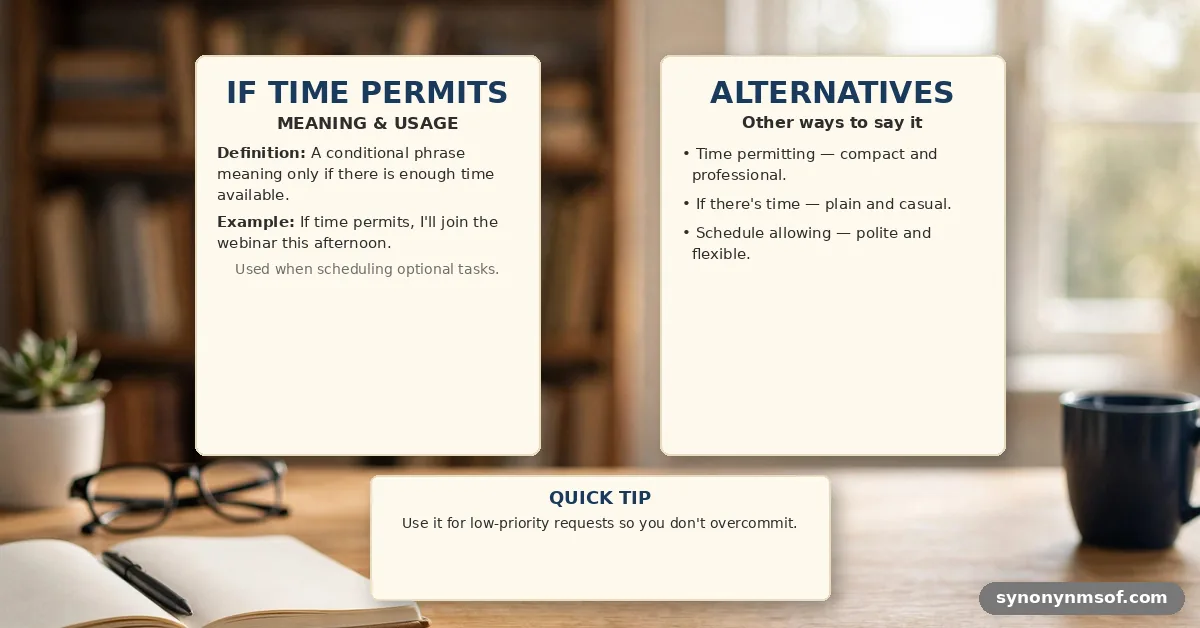
At its core, the expression means that a request should be fulfilled only if the recipient has a gap in their current workload. It acts as a soft buffer, removing the pressure that often comes with direct deadlines. When you use this phrase, you aren’t saying the task is unimportant; you are simply validating that other projects might take precedence.
The phrase is a conditional statement. It suggests that the action is secondary to the recipient’s primary responsibilities. This is a common way to handle low-priority requests that you would like completed but don’t strictly require by a specific hour or day.
Why Tone Matters in Requests

Communication is as much about the relationship as it is about the information. If you sound too demanding, you risk straining professional bonds. Using polite qualifiers helps ensure your message is received as a request rather than a command.
Softening language is particularly important when emailing superiors or busy stakeholders. They often juggle multiple, competing priorities. By giving them an out, you actually increase the likelihood that they will eventually address your request when they find a moment of bandwidth.
When to Use This Phrase
You should reach for this language when you have a non-urgent task that needs attention eventually. It works well for administrative duties, secondary research, or feedback on non-critical documents. It is rarely the right choice for items that have a hard, immovable deadline.
Consider the difference between a task that is essential to a project’s success and one that is merely helpful. If a task is essential, do not use conditional language. If it is helpful but not critical, then you have the perfect scenario for using this expression.
Examples in Professional Email
Consider how these examples shift the energy of a request. They move from a cold demand to a collaborative, considerate inquiry.
- “Please review the attached draft if time permits before our Friday meeting.”
- “If time allows, could you provide some initial feedback on the slide deck?”
- “Whenever you have a break in your schedule, I would appreciate your thoughts on this proposal.”
- “Please update the client database if your current project load permits.”
Categorized Alternatives for Professional Use
Sometimes you need more variety in your vocabulary to keep your emails from sounding repetitive. Different situations call for different levels of formality. Below are alternatives categorized by their specific nuance.
Polite and Soft Alternatives
These options are best for close colleagues or when you want to be exceptionally accommodating. They prioritize the relationship and the recipient’s comfort above all else.
At your earliest convenience is a classic, though it can sometimes sound a bit stiff. When you have a moment is more casual and works well for quick questions via chat or email. No rush on this is a very direct way to tell someone they don’t need to drop everything.
Direct and Professional Alternatives
These phrases maintain a high level of formality while still being clear about the timeline. They are ideal for client communication where you want to appear organized and respectful of their time.
Whenever your schedule allows is a great neutral choice. As your bandwidth permits is popular in corporate environments because it acknowledges that everyone has a finite amount of energy. If your schedule allows is a simple, effective variation that avoids any ambiguity.
Comparing Formal Phrases
Choosing the right phrase often depends on the urgency of the task and the seniority of the person you are messaging. Use the table below to decide which option fits your specific communication goal.
| Phrase | Formality Level | Urgency |
|---|---|---|
| If time permits | Moderate | Low |
| At your earliest convenience | High | Flexible |
| As soon as possible | Moderate | High |
| Whenever you have a moment | Low | Very Low |
Common Mistakes to Avoid
The most common mistake is using conditional language for urgent tasks. If you need something done by 5:00 PM today, do not say “if time permits.” This leads to confusion and missed deadlines, as the recipient might assume they have more time than they actually do.
Another mistake is using these phrases with people who report to you. If you are a manager, your team might interpret “if time permits” as “this is optional.”
If you need the work completed, be clear and provide a specific deadline. Clarity is always more professional than excessive politeness when it comes to delegating tasks.
Selecting Based on Recipient
Tailor your language based on the power dynamic of the situation. When writing to a client, you want to be as accommodating as possible. Phrases like whenever your schedule allows show that you value their time and are not pressuring them.
When writing to a manager, you want to be respectful but clear. If your bandwidth permits is a great way to signal that you understand they have a heavy workload. It shows emotional intelligence and keeps the lines of communication open.
FAQ
Is if time permits professional?
Yes, it is highly professional and widely used in corporate settings. It conveys respect for the recipient’s time and is much better than sounding demanding.
What is the best way to express urgency politely?
If something is truly urgent, do not use conditional phrases. Instead, state the deadline clearly and provide the reason for it. For example, “I need this by 3:00 PM to ensure we meet the client’s requirements.”
What is the difference between at your earliest convenience and if time permits?
At your earliest convenience implies that the task should be done as soon as they are free. If time permits implies that the task is secondary and should only be done if there is extra space in their schedule.
Can I use this phrase for verbal communication?
Absolutely. It sounds just as natural in a meeting or a phone call as it does in an email. It helps keep the tone of your conversation collaborative rather than authoritative.
Final Thoughts on Professional Communication
Refining how you ask for help is a simple way to improve your professional reputation. Using phrases like if time permits allows you to maintain a balance between getting your work done and respecting the people around you.
It shows that you are considerate of others’ schedules, which builds trust over time. When you communicate with clarity and kindness, people are generally more willing to go the extra mile for you.
Start by auditing your sent folder to see how often you use these qualifiers. You might find that you rely on the same phrases too often, or that you aren’t using them enough.
Experiment with the alternatives provided here to see which ones feel most natural to your personal style. Keep your requests clear, your tone respectful, and your expectations realistic to foster better relationships in any workplace.
SEO Title: If Time Permits: Meaning, Usage, and Examples
Meta Description: Learn the professional meaning of if time permits, how to use it correctly in emails, and discover the best alternatives for workplace communication.
Suggested URL Slug: if-time-permits-meaning-usage
Primary Keyword: if time permits
Primary Keyword: if time permits
Secondary Keywords: professional ways to say as soon as possible, polite ways to say as soon as possible, communication, formal, schedule, tone