
Understanding the common phrase “talk to you soon” requires looking at both social context and professional etiquette. By exploring the meaning, examples, and alternatives of this expression, you can better manage expectations in your daily communication. Whether you are sending a quick text or finalizing a business email, choosing the right closing matters.
This article provides a breakdown of how to use this phrase effectively. You will learn when it serves as a genuine promise of contact and when it functions merely as a polite social buffer. Mastering these nuances helps prevent misunderstandings in your digital and verbal exchanges.
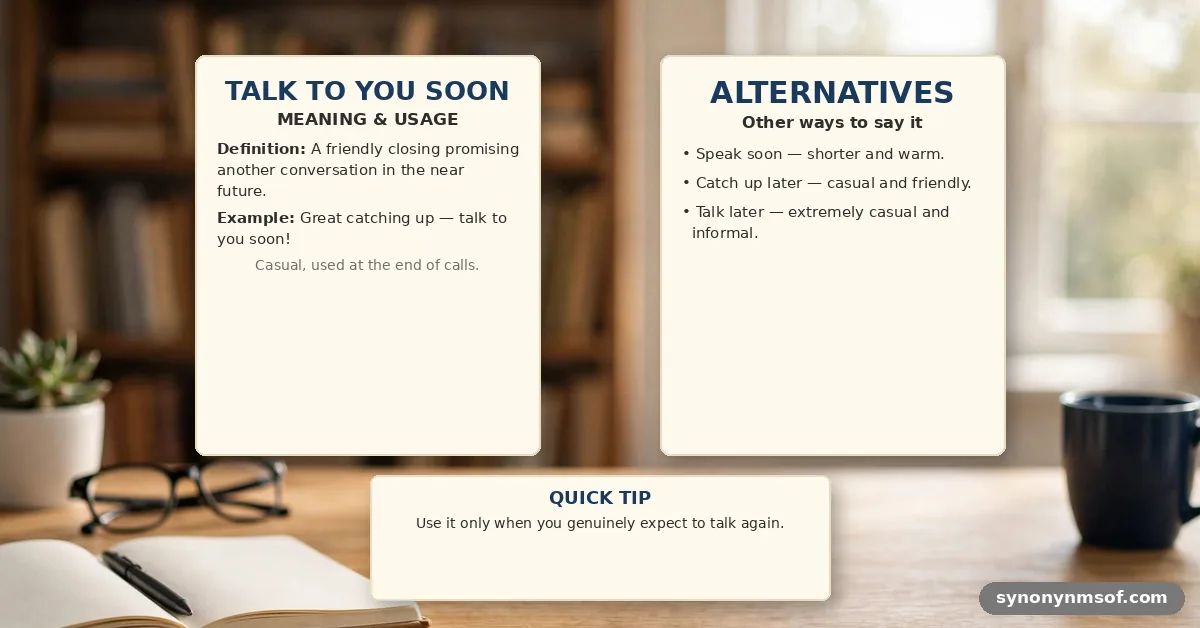
The phrase “talk to you soon” acts as a bridge between the end of one interaction and the expectation of another. It signifies a desire to maintain a connection without committing to a specific date or time. In many cases, it serves as a polite way to exit a conversation that has reached its natural conclusion.
When used in a professional setting, it often implies a follow-up is necessary but not immediate. It functions as a soft promise to reconnect once a task is completed or a decision is made. Unlike saying “I will call you at 2:00 PM,” this phrase provides flexibility for both parties involved.
In personal relationships, the meaning shifts based on the intimacy of the speakers. If a close friend says it, they likely intend to reach out within a day or two. If an acquaintance uses it, it might simply mean they hope to cross paths again in the future, with no specific timeline in mind.
The Bible offers wisdom on the importance of clear communication and keeping one’s word. Proverbs 10:19 suggests that those who talk too much often sin, while those who hold their tongue are wise. By choosing precise phrases rather than vague promises, you honor the time and expectations of the person on the other end.
Professional Versus Casual Usage

The appropriateness of this sign-off depends heavily on the power dynamic and the platform you are using. In a formal email to a client or a supervisor, “talk to you soon” can sometimes come across as too informal or dismissive. It lacks the professional weight of a specific call-to-action or a clear timeline.
If you are communicating with a teammate or a peer, the phrase is generally acceptable. It matches the quick pace of modern messaging tools like Slack or Microsoft Teams. Use it when you have established a rapport and do not need to adhere to strict corporate formalities.
When to avoid the phrase
- During the first round of salary negotiations with a recruiter.
- When responding to a serious complaint from a customer.
- In legal correspondence where specific deadlines are required.
- When ending a relationship that you do not intend to pursue further.
If you are unsure of the tone, default to a more specific closing. Replacing “talk to you soon” with “I will provide an update by Thursday” removes all ambiguity. This level of clarity builds trust and shows that you respect the other person’s schedule.
Comparing Common Closing Phrases
Choosing the right closing depends on the desired outcome of the interaction. The following table compares common sign-offs by their level of formality and the implied urgency they create for the reader.
| Phrase | Formality Level | Implied Urgency |
|---|---|---|
| Talk to you soon | Casual | Low |
| I will follow up by EOD | Professional | High |
| Let’s connect next week | Neutral | Medium |
| Speak with you shortly | Formal | High |
| Until next time | Casual/Friendly | None |
As shown in the data, “talk to you soon” sits at the lower end of the urgency spectrum. Use it when you want to keep the door open but do not want to be held to a firm deadline. When you need to ensure a response or a meeting, opt for a phrase with higher urgency.
Alternatives for Formal Correspondence
In a business environment, you often need to sound professional while remaining approachable. If “talk to you soon” feels too light, there are several polished alternatives that convey the same intent. These options show you are organized and focused on the next steps.
Consider using “I look forward to our next discussion” when you have a scheduled meeting on the horizon. This phrase emphasizes the value you place on the upcoming interaction. It sounds more deliberate and shows that you are prepared for the conversation.
Another strong alternative is “I will reach out once I have more information.” This clearly sets the stage for the next phase of the project. It relieves the other person of the need to check in, as they know you are managing the timeline.
If you want to be polite but firm about your availability, try “Let’s touch base next Tuesday.” This provides a concrete window for the next interaction. It prevents the back-and-forth of scheduling that often follows vague promises to talk later.
Casual Alternatives for Friends and Family
When you are chatting with friends, the pressure to be formal disappears. You can use phrases that reflect your personal style and the closeness of the relationship. These alternatives often emphasize the joy of the friendship rather than the utility of the contact.
A simple “See you later” is a classic for a reason. It is short, sweet, and implies that a face-to-face meeting is likely. If you prefer digital contact, “Catch you on the flip side” adds a playful tone to your goodbye.
For those times when you are genuinely excited to speak again, use “Can’t wait to hear more about this.” This shows interest in their life and validates the previous conversation. It is a great way to end a call or a text thread on a high note.
Ecclesiastes 3:1 reminds us that there is a time for every purpose under heaven. Recognize that some conversations are meant to be brief, while others are meant to be long. Knowing when to end a chat gracefully is just as important as knowing how to start one.
What It Means When Someone Says It to You
When you receive the message “talk to you soon,” it is easy to overanalyze the intent. Most of the time, the sender is simply being polite. They likely enjoyed the conversation but have other tasks to attend to at that moment.
If the person is a colleague, they might be using it as a transition marker. It means they have finished their portion of the task and will reconnect when they have more data. Do not read it as a hidden rejection or a sign of laziness.
Sometimes, people use this phrase because they are busy and want to end the conversation without being rude. If you feel they are being dismissive, look at the pattern of their behavior. If they consistently say “talk to you soon” but never follow up, they may be struggling with time management.
It is helpful to view this phrase as a placeholder. It fills the silence at the end of an interaction.
Instead of waiting for them to reach out, take the initiative if you have a specific goal in mind. Send a follow-up message if a week passes without contact.
The Importance of Context

Context determines whether a phrase is perceived as warm or cold. If you say “talk to you soon” after a heated debate, it might sound sarcastic or dismissive. Ensure that your tone matches the content of the conversation before using this sign-off.
In a text message, the absence of tone makes it harder to interpret meaning. Adding an emoji can soften the blow if you are worried about sounding too abrupt. A simple smiley face or a wave can change the entire feel of the message.
Consider the medium as well. An email signature is a permanent record of your communication style.
If you use “talk to you soon” in every email, you might appear repetitive. Rotate your sign-offs to keep your communication fresh and professional.
Reflect on how you feel when others use these phrases with you. Do you find “talk to you soon” comforting or annoying? Use that self-awareness to guide your own choices in your daily life and work interactions.
Managing Expectations with Timelines
The biggest issue with vague phrases is the difference in expectations. One person’s definition of “soon” might be an hour, while another’s might be a month. Avoid this gap by defining the timeline explicitly whenever possible.
If you tell a client “I will talk to you soon,” follow it up with a specific timeframe. Say, “I will talk to you soon, likely by Wednesday morning.” This small addition creates a sense of reliability and trust.
Reliability is a key component of professional success. When you consistently meet the timelines you set, people stop worrying about the vagueness of your sign-offs. They know that your words are backed by action and intent.
If you find yourself using “talk to you soon” to buy time, be honest with yourself. It is better to say “I need a few days to think about this” than to make a promise you cannot keep. Honesty is always the best policy in communication.
The Role of Cultural Differences
Language is not universal, and neither is the way we end conversations. In some cultures, ending a conversation with a specific promise to talk is seen as a social obligation. Failing to follow up can be interpreted as a slight against the other person.
In other cultures, “talk to you soon” is a mere pleasantry, similar to “how are you?” It is expected that the person will not actually reach out unless there is a specific reason. Being aware of these differences prevents unnecessary hurt feelings.
If you are working with international teams, take note of how they end their meetings. Mirroring their communication style can help build a stronger rapport. It shows that you are observant and respectful of their social norms.
When in doubt, ask for clarification. If a foreign colleague says “talk to you soon,” you can respond with “I look forward to it, should I expect an email from you by Friday?” This confirms the expectation without being pushy.
Common Mistakes to Avoid
One common mistake is using the phrase when you have no intention of talking again. This is often done to avoid conflict or awkwardness. It is usually better to offer a polite but firm exit that does not leave the door open.
Another mistake is relying on this phrase too heavily in your personal life. If you only ever tell your partner “talk to you soon” instead of making plans, the relationship will suffer. Use specific invitations to show you care about the person.
Do not use the phrase as a crutch for poor planning. If you are unprepared for a meeting, saying “talk to you soon” will not fix the issue. Take responsibility for your schedule and your communications.
Finally, avoid using the phrase in a way that sounds patronizing. If you are speaking to someone in a position of authority, ensure your tone is respectful. “Talk to you soon” can sound like you are the one setting the agenda, which might not be appropriate.
Developing Your Own Communication Style
Your communication style is a reflection of your personality. Some people are naturally concise, while others prefer a warmer, more descriptive approach. Both styles are valid, but both require intentionality.
If you are naturally concise, you might find “talk to you soon” to be a waste of words. You might prefer “best” or “regards” instead. That is perfectly fine, provided you are still being polite to the recipient.
If you are naturally warm, you might be tempted to over-explain your sign-offs. You might say, “I really hope we can talk to you soon because I have so much to tell you.” While this is friendly, it can be overwhelming for the recipient.
Find the balance that works for you. Experiment with different phrases and see how people respond. You will quickly learn which sign-offs align with your professional and personal goals.
Frequently Asked Questions
What is a good alternative for talk to you soon in a formal email?
A professional alternative is “I look forward to our next conversation.” You can also use “I will follow up with you on [Day/Date]” to provide more clarity and set a specific expectation for the next contact.
Is it rude to say talk to you soon to a boss?
It depends on your relationship and company culture. In a casual office, it is likely fine, but in a formal environment, it is better to use a more structured sign-off that shows you are tracking progress on your tasks.
What does it mean if a guy says talk to you soon?
Often, it means he enjoyed the interaction and wants to keep the connection alive. However, because it is a vague phrase, it is best to judge his interest by his actual actions, such as how often he initiates contact or sets up concrete plans.
Can I use talk to you soon in a job interview follow-up?
It is generally better to be more formal after an interview. Use something like “I look forward to hearing from you regarding the next steps in the hiring process” to maintain a professional tone throughout the recruitment cycle.
Why do people use this phrase instead of specific dates?
People use it to keep their schedules flexible and to avoid the pressure of a hard deadline. It serves as a social buffer that allows them to end a conversation politely without committing to a specific time they might not be able to honor.
Conclusion
Mastering the use of “talk to you soon” is about finding the balance between warmth and clarity. While it is a common and useful expression, understanding the meaning, examples, and alternatives allows you to communicate with greater precision. By choosing your words carefully, you demonstrate respect for others and manage expectations effectively in every interaction.
Start by evaluating your current communication habits. Consider whether your sign-offs reflect your true intent or if they are simply habits you have picked up over time.
If you want to build stronger relationships, lean into more specific, actionable closings that demonstrate your commitment to the people you connect with. Effective communication is a skill that improves with practice, so keep refining your approach to ensure your words always hit the right note.