
Ending your emails with please let me know if you have any questions is a standard practice, but relying on it exclusively can make your correspondence feel repetitive. While this classic sign-off is perfectly acceptable in most corporate settings, you might occasionally want to vary your tone to better match the specific recipient or the complexity of the information provided.
Learning how to adjust this phrase allows you to project more confidence, warmth, or professional distance depending on the situation. By diversifying your language, you ensure your communication remains fresh, engaging, and tailored to the needs of your colleagues, clients, or managers, ultimately strengthening your professional relationships through clear and thoughtful interaction.
Professional emails often serve as the backbone of workplace communication. The final sentence of your message acts as the last impression you leave on the reader. When you invite feedback, you demonstrate that you value the recipient’s understanding and are willing to provide further support.
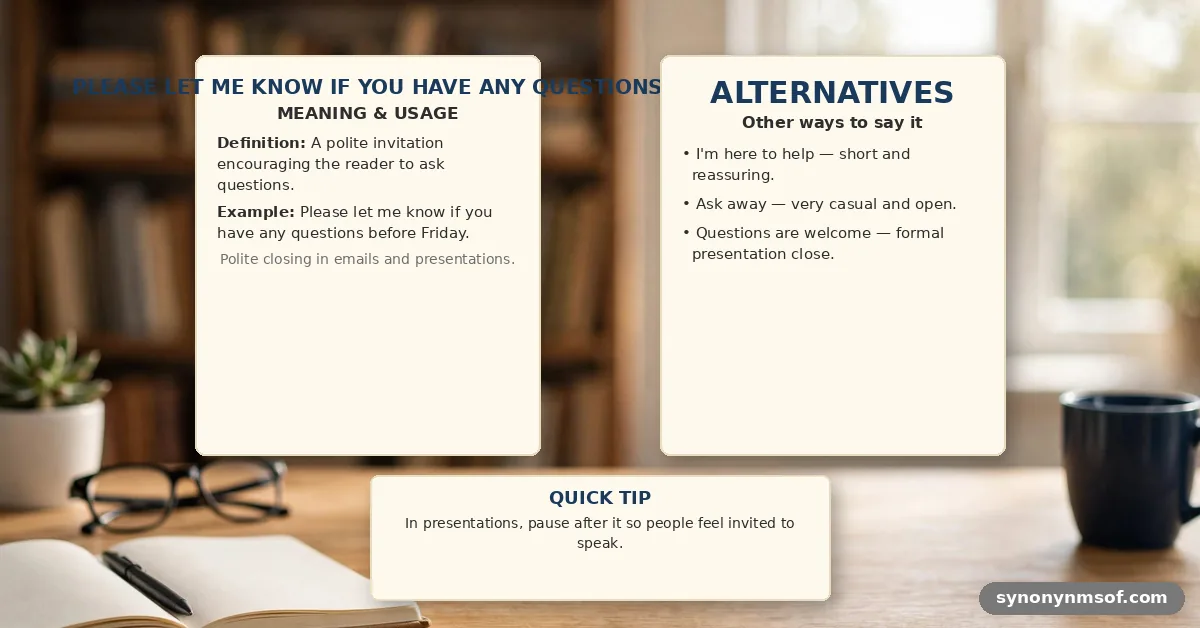
Using a standard phrase like please let me know if you have any questions signals that the door to communication is open. It creates a space for the recipient to clarify any points they found confusing or to request additional data. This simple act of courtesy prevents misunderstandings before they spiral into larger project issues.
However, overusing a single phrase can lead to “email fatigue.” If you send dozens of messages a day using the exact same sign-off, your emails may start to feel robotic. Mixing up your phrasing helps maintain a human element in your digital interactions.
When to Keep It Simple

Sometimes, standard phrases are the best choice. In high-volume, transactional email environments, brevity and clarity are your most valuable assets. You want the reader to understand exactly what you need without having to parse complex language.
If you are dealing with a new contact or a formal stakeholder, sticking to a tried-and-true expression is often safer. It shows that you respect professional norms and aren’t trying to be overly clever with your writing. These phrases provide a predictable rhythm that busy professionals appreciate.
- It maintains a clear, professional boundary.
- The recipient immediately recognizes the intent of the closing.
- It prevents ambiguity regarding the next steps in a conversation.
- Standard phrasing is less likely to be misinterpreted by non-native speakers.
Professional Alternatives to Try
When you want to sound more proactive or formal, you can swap out the generic sign-off for something more specific. The goal is to match the level of assistance you are actually offering. If you have provided a dense report, your closing should reflect that you are ready for a deep dive.
If you are sending a quick update, your closing should be equally light. You might choose a phrase that focuses on the recipient’s needs rather than just asking if they have questions. This shift in perspective can make your emails feel more service-oriented.
Phrases for Formal Situations
Formal communication requires a certain level of decorum. When writing to executives or external clients, you should avoid overly casual shorthand. Using “should” or “please do not hesitate” adds a layer of polish that is appropriate for high-stakes correspondence.
Consider using “should you require any further information, please reach out.” This sounds sophisticated and emphasizes your availability.
Another strong option is “please let me know if I can provide any further clarification.” This specifically invites the reader to ask for more detail if the initial explanation didn’t hit the mark.
Phrases for Collaborative Teams
When you work with a close-knit team, you can afford to be more relaxed. You don’t need to be stiff to be professional. Phrases that sound more conversational can help build rapport and make your team members feel more comfortable reaching out.
“Happy to walk through this if anything is unclear” is a great, low-pressure way to invite feedback. It frames the interaction as a partnership rather than a formal request. Similarly, “just let me know if you need a hand with this” works well for project-based tasks where you are offering active support.
Comparing Your Options
Choosing the right phrase depends on the urgency and the relationship you have with the reader. Use this table to decide which tone fits your current email draft best.
| Phrase | Formality Level | Best Used For |
|---|---|---|
| Please let me know if you have any questions. | Standard | General day-to-day emails. |
| Should you require additional details, please reach out. | High | Formal reports or legal documents. |
| Happy to discuss this further if needed. | Medium/Friendly | Project updates or brainstorming. |
| I am available if you need any clarification. | Professional | Complex instructions or policies. |
| Let me know if you want to hop on a quick call. | Casual | Close teammates or quick fixes. |
Common Pitfalls to Avoid
Even with the best intentions, some phrasing can come across as demanding or passive-aggressive. Avoid phrases that imply the recipient should have questions, as this can sound condescending. You want to offer help, not suggest that the reader is incapable of understanding your work.
Be careful with phrases like “I assume you have no questions.” This is almost always a bad idea in professional writing. It effectively shuts down the conversation and makes the reader feel unwelcome if they actually do have a concern.
Also, avoid being overly verbose. Adding five sentences of “if you need anything else, just say the word, and I will be here, and I can help you” is unnecessary.
Keep it concise. Your reader will appreciate that you respect their time as much as your own.
The Importance of Context
Always consider the medium. An email to a client might require a more formal structure than a message sent via Slack or Microsoft Teams. Instant messaging platforms favor shorter, more direct language.
If you are emailing a manager, you might want to frame your offer of help around their goals. Instead of just asking for questions, try “please let me know if this meets your requirements.” This shows you are focused on the outcome, not just the process of sending an email.
Think about the amount of work you are asking the recipient to do. If you have sent a long, complicated brief, acknowledge that it might take time to digest. Using a phrase like “I know this is a lot of information, so please let me know if you want to chat through any parts of it” shows empathy.
FAQ
Is it professional to say please let me know if you have any questions?
Yes, it is the industry standard for professional correspondence. It is polite, clear, and universally understood across all levels of business communication.
What is the best way to express urgency politely?
Instead of demanding a response, focus on the timeline. You can say, “Please let me know if you have any questions, as I would like to move forward by Wednesday.” This sets a clear expectation without sounding rude.
What is the difference between at your earliest convenience and as soon as possible?
At your earliest convenience is more formal and polite, suggesting you respect the recipient’s schedule. As soon as possible is more direct and can occasionally sound demanding depending on the context of your email.
How do I reply when someone asks me if I have any questions?
If you have questions, be specific and list them clearly. If you don’t, a simple “Everything is clear, thank you for the information” is perfectly professional and keeps the thread moving efficiently.
Maintaining Professional Relationships
Choosing how to end your emails is a small but meaningful way to refine your professional communication. While standard phrases like please let me know if you have any questions work in almost every situation, tailoring your language helps you stand out as a thoughtful and considerate communicator. By being intentional with your words, you create a more positive experience for your recipients and ensure your message is received as intended.
Start paying attention to the closing lines in the emails you receive. Notice which ones make you feel supported and which ones feel like filler.
Experiment with these alternatives in your own writing and see how they change the tone of your professional interactions. Whether you are writing to a superior or a peer, your commitment to clear, respectful, and varied language will always be noticed and appreciated.
SEO Title: Please Let Me Know if You Have Any Questions: Alternatives
Meta Description: Learn better ways to end your emails. Discover professional, polite alternatives to “please let me know if you have any questions.”
Suggested URL Slug: professional-alternatives-to-please-let-me-know-if-you-have-any-questions
Primary Keyword: Please Let Me Know if You Have Any Questions
Secondary Keywords: professional ways to say, polite ways to say, email etiquette, communication tips, professional writing