
Understanding the nuance behind the phrase “It was nice talking to you” helps clarify social boundaries and professional expectations. While it often serves as a polite closing, its true intent fluctuates based on the context of the conversation and the existing relationship between the speakers.
Exploring the meaning and examples of this common closing remark provides clarity on when to use it and how to interpret it when you hear it from others. Whether you are aiming to end a formal business call or wrap up a casual chat, knowing the weight of your words ensures your social interactions remain clear and intentional.
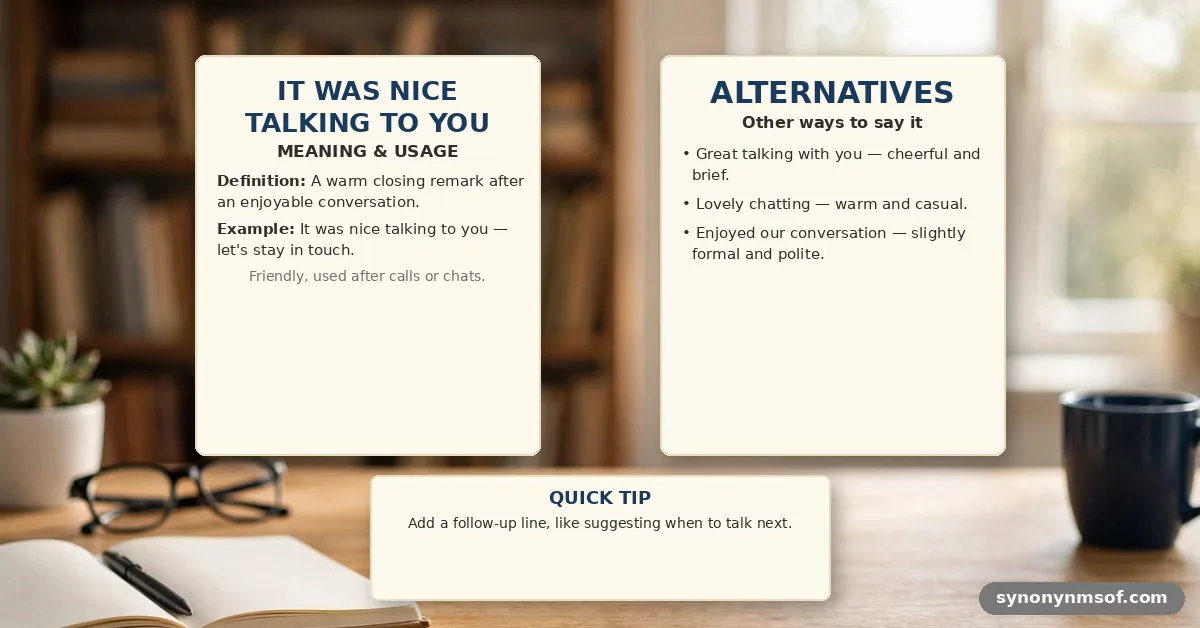
At its simplest level, this phrase is a socially accepted way to signal that a conversation has reached its natural end. It functions as a verbal “period” that prevents awkward lingering or abrupt silences.
Most speakers use it to convey genuine appreciation for the time spent exchanging ideas. It acts as a bridge between the active engagement of a discussion and the exit, ensuring that the listener feels valued rather than dismissed.
In some instances, however, it serves as a polite deflection. When a person wants to exit a conversation that has become unproductive or uncomfortable, this phrase provides a safe, non-confrontational exit strategy.
Professional Contexts and Usage

In the workplace, the phrase serves as a standard sign-off that maintains professional decorum. It is especially effective at the end of introductory networking calls or brief check-ins where you need to signal that you have other tasks to attend to.
When used in a professional email or phone call, it typically implies that the speaker is satisfied with the information exchanged. It reinforces a positive working relationship without requiring an extensive follow-up.
Managers often use this phrasing to conclude one-on-one meetings to maintain a friendly, approachable tone. It reassures the employee that the interaction was productive and that they are not in trouble for the duration of the meeting.
Casual and Social Nuance
In social settings, the emotional weight of this remark changes significantly. If a friend says this to you after a long catch-up, it is an expression of warmth and emotional connection.
When a potential romantic partner says it, the meaning can be more complex. It often signals a desire to maintain a friendly distance or, conversely, a sincere hope to continue the conversation at a later date.
Context clues like tone of voice and body language are essential here. A brief, clipped delivery often suggests the person is ready to move on, while a lingering, warm tone suggests they genuinely enjoyed the moment.
The Anatomy of a Reply
Knowing how to respond to this remark is just as important as knowing when to say it. A simple, reciprocating statement is usually the safest and most effective path.
If you are in a professional environment, keeping your response brief and polite is ideal. You want to match the energy of the person who initiated the closing.
Effective Response Options
- “I enjoyed it as well, thank you for your time.”
- “Likewise! Let’s stay in touch regarding the project.”
- “It was great catching up. Have a productive rest of your day.”
- “I’m glad we had the chance to discuss this. Talk soon.”
Alternative Ways to Say It
Sometimes you need variety to avoid sounding repetitive or overly formal. Using different phrasing can help tailor the tone to the specific person you are addressing. Variety also means spelling your words correctly, so check whether it is puting or putting.
For a more casual tone, you might focus on the enjoyment of the specific topic discussed. This shows that you were paying attention to the substance of the talk rather than just the social ritual.
For a more formal tone, you might focus on the utility of the conversation. Highlighting the value of the exchange shows that you respect the other person’s time and expertise.
Interpreting Tone and Intent
The meaning of the phrase is highly dependent on the “how” rather than the “what.” A fast, monotone delivery often suggests the speaker is checking a box on their social to-do list.
A slower, more deliberate delivery indicates that the speaker is savoring the memory of the conversation. You should look for cues such as eye contact, smiling, or a slight pause before the phrase is uttered.
If the person immediately turns away or checks their phone, the phrase was likely a functional tool for ending the interaction. If they linger and continue to make eye contact, the remark is likely a genuine expression of sentiment.
Table of Conversational Contexts

To better understand the variations in usage, consider the following breakdown of scenarios. This table illustrates how the intent shifts based on the setting and the relationship.
| Context | Primary Intent | Expected Outcome |
|---|---|---|
| First Interview | Professional closure | Mutual respect and follow-up |
| Casual Date | Polite exit or interest | Future interaction or soft rejection |
| Customer Service | Efficient resolution | Satisfactory end to the inquiry |
| Old Friend | Emotional validation | Strengthened social bond |
Managing Uncomfortable Conversations
There are times when you need to end a conversation that is going poorly. In these moments, the phrase acts as a polite shield to prevent further friction.
It is helpful to combine the phrase with a reason for your departure. This makes the excuse feel less like a rejection and more like a logistical necessity.
For example, saying “It was nice talking to you, but I need to get back to my work” is firm but polite. It sets a boundary without being rude or aggressive.
Cultural Variations and Expectations
The way we use this phrase changes depending on where you are in the world. In some cultures, social pleasantries are viewed as an essential part of the interaction.
In other cultures, people prefer to get straight to the point. Overusing this phrase in a highly direct culture might be perceived as insincere or overly wordy.
If you are speaking with someone from a different background, try to observe their conversational habits. If they are concise, keep your sign-offs concise as well to match their communication style.
The Role of Digital Communication
In text messages and emails, the phrase loses its vocal cues, making it harder to interpret. This is why it is often accompanied by emojis or exclamation points to signal warmth. Written words carry extra weight without vocal cues, which is why it pays to learn the difference between sang or sung.
If you receive this phrase via text, it is often a sign that the conversation has reached a natural lull. It is usually best to accept the closing rather than forcing the conversation to continue.
When sending it yourself, consider adding a specific reference to the chat. This confirms that you weren’t just using a generic template.
Biblical Perspectives on Speech
The Bible often emphasizes the importance of our words and how they impact our relationships. Proverbs 15:23 notes that a word spoken in due season is good.
This suggests that knowing when to end a conversation is a form of wisdom. Just as there is a time to speak, there is a time to gracefully conclude a discussion.
Colossians 4:6 reminds us that our speech should always be seasoned with grace. Using polite phrases like this, even when we are ready to leave, reflects a character of kindness and consideration for others. Polished speech avoids common mix-ups too, so learn the difference between segway or segue.
Avoiding Common Pitfalls
One major pitfall is using this phrase as a way to avoid conflict. If you are ending a conversation because you are angry, saying this can come across as passive-aggressive.
Another mistake is using it too early. If you cut someone off mid-sentence to say this, it implies that you do not value their input.
Always ensure that the person has finished their thought before you initiate the closing. A conversation feels much more complete when both parties feel they have had their say.
Frequently Asked Questions
What does it mean when someone says it was nice talking to you?
It usually means they have enjoyed the interaction and are signaling that it is time to end the conversation. It can be a genuine expression of enjoyment or a polite way to wrap up a meeting.
What do you reply when someone says it was nice talking to you?
The best response is to echo the sentiment by saying, “It was nice talking to you, too” or “I enjoyed it as well.” You can add a brief mention of the topic you discussed to make it feel more sincere.
Is there another way of saying it was nice talking to you?
Yes, you can use phrases like “I really enjoyed our chat,” “Thanks for the great conversation,” or “It was a pleasure catching up with you.” The choice depends on how formal or casual you want to be.
When a guy says it was good talking to you, what does it mean?
If a man says this, he is likely expressing that he found the conversation pleasant. If he is interested in you, he may follow up with a plan to talk again soon, but if he is just being polite, it is simply a standard social closing.
Conclusion
Mastering the nuances of social interaction involves knowing exactly how to end a conversation with grace. When you use the phrase “It was nice talking to you: Meaning and Examples,” you are participating in a long-standing social tradition that balances respect with the need for efficiency. By paying attention to context, tone, and the preferences of the person you are speaking with, you can ensure that your departures are as positive as your greetings. Small word choices add up, so double-check whether it is scrapped or scraped.
Whether you are navigating a high-stakes business meeting or catching up with a close friend, the way you sign off leaves a lasting impression. Use these insights to refine your communication style and foster stronger, more intentional connections with everyone you meet. If you found this breakdown helpful, consider observing how others use similar phrasing in your own daily interactions to continue learning.