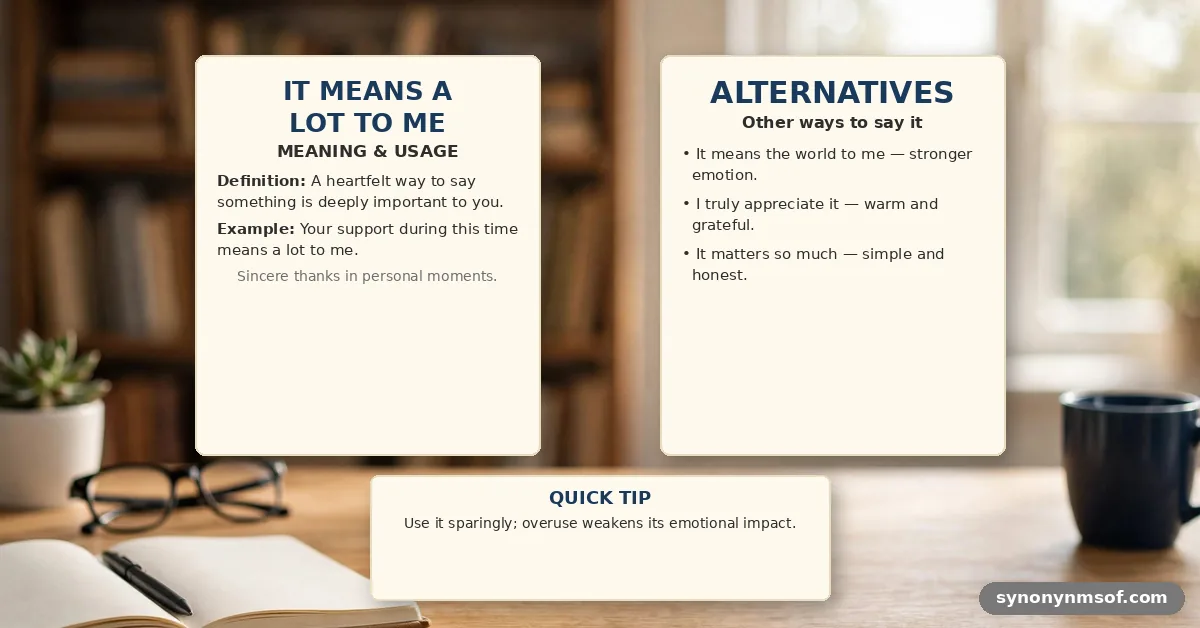

When someone tells you, “It means a lot to me,” they are expressing that an action, gift, or sentiment has created a significant emotional impact on their life. Understanding the nuance of this phrase, along with exploring its meaning and examples, helps you navigate delicate interpersonal exchanges with greater clarity.
Whether you are on the receiving end of this statement or looking for ways to convey deep gratitude, knowing how to interpret these words is vital. By examining the context behind such expressions, you will gain a better grasp of how human connection is reinforced through simple, sincere language that bridges the gap between intention and impact.
At its core, the phrase “it means a lot to me” serves as a verbal marker of high personal value. It signals that the recipient has moved beyond a superficial “thank you” to acknowledge that a specific interaction has touched their core priorities or emotional needs. When you hear this, you are being told that your contribution is not merely useful, but personally significant.
The phrase functions as a bridge between a tangible act and an intangible feeling. It transforms a simple task—like helping a friend move or listening to a colleague’s problem—into an investment in the relationship itself. This distinction is why the phrase carries more weight than standard social pleasantries like “thanks” or “I appreciate it.”
Why Context Dictates the Meaning
The intensity of the sentiment depends entirely on the history between the two people involved. If a stranger says it after you hold a door, it is a polite acknowledgement of a small kindness. However, if a long-time partner says it after you support them through a difficult career transition, the weight is profound and life-altering.
This variance is why you must look at the non-verbal cues accompanying the words. A steady gaze, a slight pause, or a softening of the voice often accompanies a genuine declaration of deep meaning. Without these markers, the phrase can sometimes feel like a reflexive response rather than a reflection of true emotional depth.
Common Examples of High-Impact Scenarios

Certain situations trigger this response more frequently because they involve vulnerability. When you step into someone’s life during a moment of crisis or transition, the likelihood of hearing this phrase increases. Recognizing these patterns allows you to see why specific gestures resonate so strongly with others.
- Providing emotional support during a loss: Being present when someone is grieving often leads to this response.
- Acknowledging a long-term effort: Recognizing a friend’s hard work on a project they care about deeply.
- Giving a thoughtful, personalized gift: Items that show you have been paying attention to someone’s specific interests.
- Defending someone in their absence: Standing up for a colleague or friend when they are not in the room to defend themselves.
- Mentorship and guidance: Offering career or life advice that helps someone overcome a major obstacle.
Comparing Gratitude Expressions
Choosing the right words can be difficult when you want to show sincerity. While “it means a lot” is powerful, it occupies a specific space in the hierarchy of appreciation. The following table compares this phrase to other common expressions of gratitude to help you select the most appropriate response for any given situation.
| Expression | Emotional Intensity | Best Used For |
|---|---|---|
| “Thanks for that.” | Low | Routine, transactional tasks. |
| “I really appreciate it.” | Medium | Helpful gestures in professional settings. |
| “It means a lot to me.” | High | Personal milestones and emotional support. |
| “You have no idea how much this helps.” | Very High | Crisis situations or life-changing events. |
The Role of Vulnerability in Communication
The phrase “it means a lot to me” is inherently vulnerable because it forces the speaker to admit they have a need. By acknowledging that your action fulfilled that need, they are effectively lowering their guard. This vulnerability is the primary reason the statement creates such a strong bond between two people.
Avoiding this phrase often stems from a fear of appearing needy or overly emotional. However, withholding such positive feedback can leave the other person wondering if their help was even noticed. Sharing your appreciation openly fosters a culture of mutual support that strengthens social bonds.
Reframing the Narrative
In the book of 1 Thessalonians 5:18, the writer encourages believers to give thanks in every circumstance. This principle suggests that expressing gratitude is not just for major events, but a consistent practice. When you view “it means a lot to me” as a form of this practice, it becomes a way to sanctify the mundane interactions of your daily life.
By shifting your focus to the value of others’ contributions, you invite more positivity into your environment. This practice requires intentionality, as it is easy to take help for granted. When you articulate that something holds deep meaning, you are essentially affirming the worth of the person who provided it.
How to Respond When Someone Says This to You

Receiving this level of appreciation can sometimes feel awkward. You might be tempted to deflect the praise by saying, “Oh, it was nothing,” or “Don’t mention it.” These responses, while humble, can inadvertently minimize the other person’s genuine feeling of gratitude.
Instead, try to accept the compliment with grace by acknowledging their feelings. A simple, “I am so glad I could help you,” or “I know how important this is to you, so I wanted to be there,” validates their experience. This allows the connection to deepen without the pressure of needing to downplay your contribution.
Grammar and Usage Nuances
A common question is whether the phrase should be “it means a lot to me” or “it means a lot for me.” While both are often used interchangeably, “to me” focuses on the emotional impact, whereas “for me” often relates to the utility of the action. If you are describing a gift that changed your perspective, “to me” is the grammatically superior choice.
You may also wonder if this phrase is a valid substitute for “thank you.” It is not a direct substitute, but rather an intensifier.
Use it when you want to elevate the conversation beyond a simple acknowledgment of service. It should be reserved for moments where the emotional stakes are high enough to justify the weight of the words.
The Neuroscience of Gratitude
Recent psychological studies suggest that expressing deep gratitude triggers the release of dopamine and serotonin in the brain. When you tell someone that their actions mean a lot to you, you are not just being polite; you are chemically reinforcing the bond between you. This is why such expressions feel good to both the giver and the receiver.
This neurochemical reaction is a biological reward system for social cooperation. Humans are hardwired to thrive in communities, and acknowledging contributions is a fundamental part of maintaining those communities. Using phrases that convey deep meaning is, therefore, a natural extension of our evolutionary need for connection.
Cultural Variations in Expressing Meaning
Different cultures handle the expression of deep gratitude in varied ways. In some societies, direct verbal affirmation is less common, and gratitude is expressed through reciprocal acts or subtle gestures. In others, public and explicit declarations of appreciation are the norm and are expected in social settings.
If you are interacting with someone from a different background, be mindful of their comfort level with verbal displays of emotion. Someone who is less accustomed to such phrases might feel overwhelmed by a direct “it means a lot to me.” Always adapt your communication style to ensure the recipient feels respected rather than pressured.
The Impact of Digital Communication

In the digital age, text messages and emails have become the primary vehicles for expressing gratitude. While these formats are convenient, they can sometimes strip away the emotional weight of a sentiment. A typed sentence on a screen carries less gravity than a face-to-face conversation where tone and body language are present.
To ensure your message conveys the intended meaning, consider adding context to your text. Instead of just writing “it means a lot to me,” try adding a specific detail about why it was helpful. This extra layer of information provides the “why” that is often missing from a brief digital message, making the sentiment feel more authentic.
Professional Settings and Boundaries
Using high-emotion language in a corporate environment requires a careful balance. You want to show appreciation without crossing professional boundaries. A well-placed comment about a project’s significance can build morale, but overusing “it means a lot to me” can lead to a perception of excessive emotionality in a purely business context.
Focus your high-impact gratitude on moments that involve mentorship, career advancement, or significant team achievements. These are the areas where expressing personal value is both appropriate and highly effective. When the stakes are lower, stick to professional, clear expressions of appreciation to maintain the right level of distance.
Reflecting on Personal Growth
When you regularly identify things that “mean a lot to you,” you are effectively practicing mindfulness. This habit forces you to pause and evaluate what truly matters in your life. It moves you away from a state of constant busyness and toward a state of appreciation for the people and events that shape your character.
This practice also helps you identify which relationships are worth investing in long-term. If you find that you rarely feel that things “mean a lot” in a particular friendship or partnership, it may be a sign that the connection is lacking depth. Use this as a diagnostic tool for your own emotional landscape.
FAQ
What can I say instead of it means a lot to me?
If you want to vary your language, you can use phrases like “I am deeply moved by this,” “This has made such a difference in my life,” or “I truly value your support more than I can say.” These alternatives maintain the emotional weight while offering a fresh way to express your feelings.
What does it mean when someone says it means a lot to me?
It means that your action or gesture has transcended the ordinary and touched a part of their life that they value highly. They are acknowledging that you have provided them with something—whether it is time, emotional support, or a material gift—that has provided them with comfort, relief, or joy.
Can I say “means a lot” instead of “thank you”?
You can, but it is better to use it as an addition rather than a replacement. Saying “thank you, it really means a lot to me” provides both the acknowledgement of the act and the explanation of its significance, which is much more effective than just saying one or the other.
What to say to someone who says that means a lot?
The best response is one that accepts the compliment without minimizing it. You might say, “I am so happy I could be there for you,” or “I know how much this situation matters, and I wanted to help in any way I could.” This shows that you understand the gravity of their situation.
The Power of Sincere Expression
Mastering the art of communication requires more than just knowing vocabulary; it requires an awareness of the emotional impact of your words. When you use the phrase “it means a lot to me” with intention and sincerity, you create a lasting impression that reinforces the bonds of friendship and respect.
This expression serves as a vital tool in human interaction, helping to validate the efforts of others and deepen the quality of your relationships. By being mindful of the context and the feelings behind your words, you ensure that your appreciation is felt exactly as you intended.
Moving forward, practice identifying the moments where this phrase is most appropriate. Do not shy away from sharing your appreciation, as your vulnerability will often encourage others to open up as well.
As you refine how you express gratitude, you will likely find that these interactions become the highlights of your social and professional life. We invite you to continue exploring the ways that intentional language can change your perspective and strengthen your connections with those around you.