
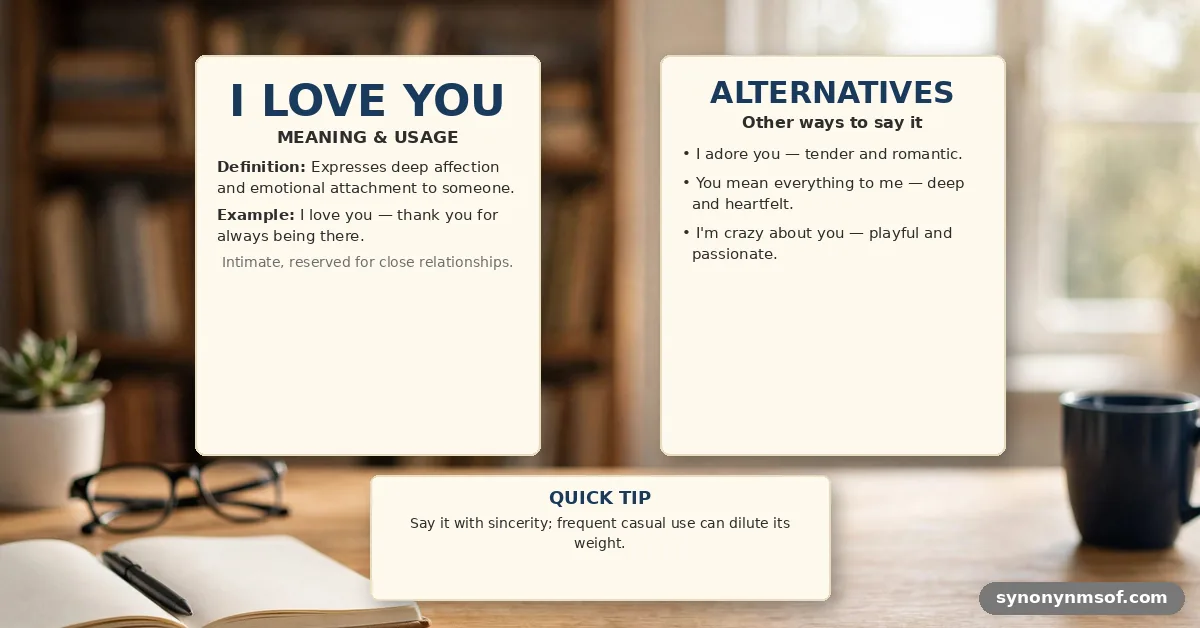

Saying “I love you” is one of the most significant moments in human communication, carrying weight far beyond its three simple words. Whether you are navigating a new romantic relationship or expressing deep appreciation for a lifelong friend, understanding the intent behind these words helps ensure your message lands exactly as you intended.
This article examines the nuances of how people express affection, helping you recognize the depth behind the phrase and how to use it effectively in your own life. By exploring the context of these declarations, you will gain the confidence to communicate your feelings with clarity and sincerity.
The Evolution of Meaning

The phrase “I love you” has shifted in meaning over centuries, moving from a formal declaration to a versatile expression of intimacy. In ancient texts, the concept of love was often categorized into distinct types, such as agape for selfless love or philia for friendship. Today, English speakers often use the same three words for partners, children, and close friends alike, which can sometimes lead to confusion.
When someone says these words, the meaning is heavily dependent on the history of the relationship and the setting. A casual “love ya” sent via text message to a friend carries a different emotional frequency than a quiet, deliberate admission during a private dinner. Understanding that the definition is fluid allows you to adjust your expectations based on the person speaking and the situation at hand.
Contextual Usage in Relationships
Timing is everything when you decide to share your feelings. Many people worry about saying it too early, fearing it might overwhelm the other person or create an imbalance in the relationship. However, there is no universal rulebook for when this transition should occur.
In many cases, the decision to speak these words follows a period of building trust and shared vulnerability. If you find yourself consistently choosing to spend your time with someone and feeling a genuine desire for their well-being, you are likely reaching the point where these words become relevant. It is rarely about hitting a specific calendar milestone, but rather about recognizing a shift in your emotional commitment.
Recognizing the Right Moment
Look for signs of mutual affection before you make a move. If the other person is already showing consistent care through their actions, they are likely ready to hear your words. You might notice them prioritizing your needs, asking about your future, or simply being present during difficult times.
Communication styles also play a major role in how love is expressed. Some people prefer to show their affection through acts of service or physical presence, while others rely on verbal affirmations. If your partner is a person who rarely says “I love you” out loud, pay attention to their actions instead of feeling rejected by their silence. Even small spelling choices count — our guide to til or till explains which form to use in your writing.
Variations in Delivery
Not everyone delivers their feelings in the same way. The way a person says these words can reveal as much as the words themselves. Consider the following common delivery styles and what they might suggest about the speaker’s emotional state:
- The Casual Drop: Often used between friends or family, this is a lighthearted way to reinforce a bond without making it overly heavy.
- The Direct Confession: A serious, eye-to-eye statement usually reserved for defining a new romantic chapter.
- The Written Note: Writing these words in a letter or card allows the speaker to articulate their thoughts without the pressure of an immediate, live reaction.
- The Action-Backed Declaration: Saying it while performing a thoughtful gesture, which emphasizes that the words are supported by commitment.
Comparison of Relationship Stages
The weight of these words changes as a relationship matures. What begins as a spark of attraction often evolves into a stable, long-term commitment, and the usage of “I love you” reflects that growth.
| Stage of Relationship | Typical Intent | Expected Response |
|---|---|---|
| Early Dating | Expressing strong interest | Mutual or cautious validation |
| Established Couple | Deepening emotional bond | Reciprocal commitment |
| Long-term Partnership | Maintenance and reassurance | Comfortable acknowledgement |
The Role of Cultural Expectations

Cultural background significantly influences how we interpret these words. In some cultures, expressing love verbally is common and expected, while in others, it is considered a private matter to be shown through behavior rather than speech. If you are in an intercultural relationship, you might find that your partner expresses love in ways you do not immediately recognize.
Learning to identify these cultural cues is part of growing closer to another person. If you feel like something is missing, try having an open conversation about how you both prefer to receive affection. This American Psychological Association guide on healthy relationships offers further insight into how communication patterns shape our connections with others.
When Words Fall Short
Sometimes, saying “I love you” is simply not enough. Words can be empty if they are not backed by consistent behavior, such as respect, honesty, and support. If you hear these words but see a pattern of behavior that contradicts them, it is important to prioritize the reality of the situation over the promise of the language.
Love is an action as much as it is a feeling. A person who says they love you but consistently ignores your boundaries is not demonstrating the type of care that builds a sustainable relationship. Be mindful of whether the words are being used to manipulate a situation or to genuinely bridge an emotional gap.
Common Misunderstandings
One of the most frequent sources of tension is the difference in intensity when two people exchange these words. One person might be ready to say it after a month, while the other might need six months to feel the same depth. This does not necessarily mean the relationship is doomed, but it does require patience and open dialogue.
Avoid assuming that a lack of verbal response means a lack of feeling. Some people have been raised in environments where emotions were kept quiet, and they may struggle to verbalize their inner life even when they feel deeply. Give them space to express themselves in their own way, and look for their version of love in their daily choices.
FAQ
Is it okay to say I love you first?
Yes, it is perfectly fine to be the first person to speak these words. If you feel ready and the relationship feels stable, expressing your truth can be a liberating experience that helps define the future of your connection.
What should I do if my partner doesn’t say it back?
If you don’t receive the response you were hoping for, try not to panic. It may simply mean your partner needs more time to process their emotions, and it is a good opportunity to have an honest conversation about where you both stand.
Can I use these words with friends?
Absolutely. Using these words with friends is a healthy way to show appreciation for the people who support you, provided the context makes it clear that the affection is platonic.
Why do some people find it hard to say?
Many people find it difficult because they fear vulnerability or rejection. Past experiences can make the act of saying “I love you” feel like a risk, even when the person feels safe and happy in their current relationship.
Reflecting on Your Own Language
The way you use these words defines the culture of your relationships. Whether you choose to say them frequently to keep the connection warm or reserve them for special moments to maintain their gravity, the key is consistency. The same care applies to everyday word pairs — our guide to specially or especially clears up a common mix-up.
When your words match your actions, you build a foundation of trust that allows those around you to feel secure. Think about the people in your life who make you feel truly seen and consider how you might communicate that to them today. Pronoun choices matter too — see our guide to theirself or themself for help picking the correct reflexive pronoun.
Ultimately, the power of this phrase rests in the sincerity of the person speaking. By being mindful of your intent and the way your words are received, you can navigate your personal connections with greater clarity. Keep listening to the people you care about, and don’t be afraid to let your own version of “I love you” shine through in both your words and your actions. Keep polishing your language with resources like our breakdown of treck or trek.