
When you tell someone you look forward to the meeting, you are signaling professional enthusiasm and readiness. This simple phrase serves as a bridge between the initial scheduling phase and the actual conversation, helping to establish a positive tone. Mastering its use ensures your correspondence remains polite, clear, and appropriately leveled for your specific audience.
At its core, this expression confirms your attendance while adding a touch of warmth. It moves beyond a robotic confirmation of a calendar invite, showing that you value the time being set aside. Understanding exactly when and how to deploy this language will help you build stronger rapport with colleagues, clients, and potential employers.
The Core Meaning and Intent
The primary function of saying you look forward to a meeting is to express anticipation. It tells the other person that you are prepared and that you view the upcoming interaction as a productive use of time. In a professional environment, this helps de-escalate any potential stress associated with high-stakes discussions.
Consider the psychological impact of your word choice. When you use this phrase, you aren’t just confirming a time; you are validating the other person’s effort in organizing the event.
It shifts the dynamic from a mandatory obligation to a collaborative opportunity. This is why it remains a staple in business communication globally.
Why Tone Matters
Your tone dictates how the recipient perceives your commitment. A cold, brief confirmation can sometimes feel dismissive, even if that wasn’t your intent. By including a polite expression of anticipation, you soften the delivery and foster a more human connection.
Even in formal settings, a little bit of warmth goes a long way. It suggests that you are a reliable partner who respects the collaborative process. When you avoid overly stiff or archaic language, you make your message more accessible and easier to read.
Variations in Professional Contexts
The way you phrase your anticipation depends heavily on who you are addressing. You wouldn’t use the exact same words for a prospective employer as you would for a long-time teammate. Tailoring your language ensures you sound professional without appearing robotic or insincere.
For high-level executive correspondence, keep it concise and direct. For internal team syncs, you have more room for casual phrasing. The key is to match the energy of the person you are emailing while maintaining your own professional standard.
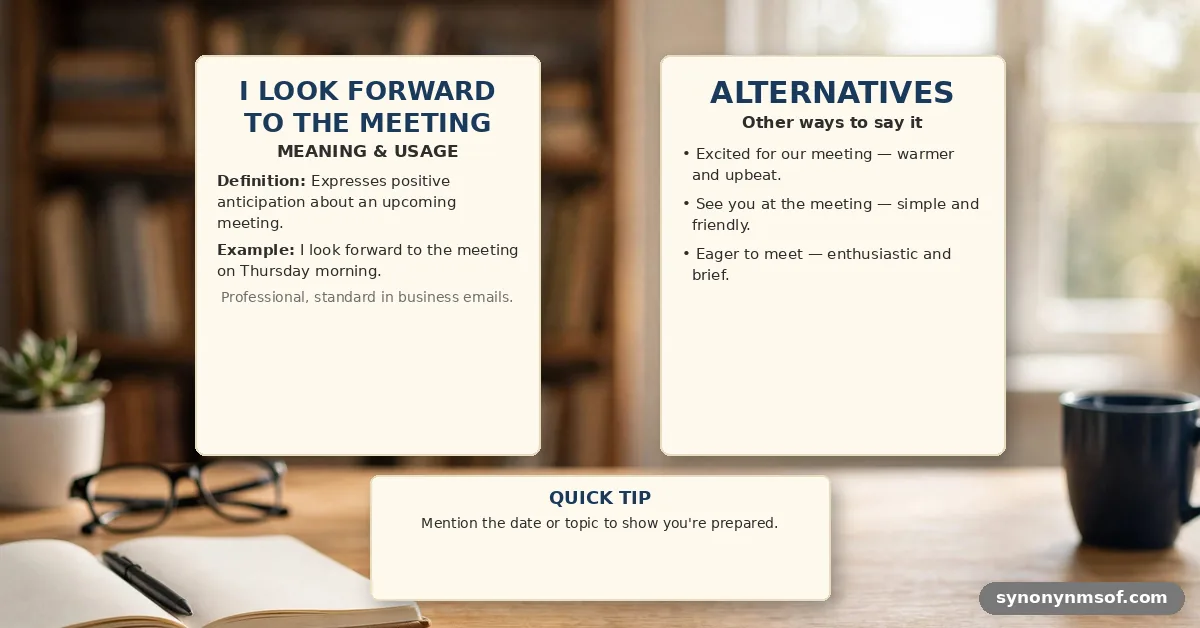
- Formal: I look forward to our meeting on Tuesday to discuss the project timeline.
- Standard: I’m looking forward to our meeting; let me know if you need anything beforehand.
- Casual: Excited to catch up at our meeting later this week!
- Direct: I look forward to meeting with you to finalize these details.
Common Grammatical Pitfalls
Many writers struggle with the grammatical structure of this phrase. The most common error is misusing the preposition that follows the verb. Remember that “look forward to” is a phrasal verb, and the “to” must be followed by a noun or a gerund (a verb ending in -ing).
For example, saying “I look forward to meet you” is technically incorrect in standard English. You should instead say “I look forward to meeting you.” This small adjustment makes your writing sound polished and demonstrates a firm grasp of English syntax.
Avoiding Redundancy
Sometimes, people add unnecessary words that clutter the sentence. You don’t need to say “I am looking forward to the meeting with you” if the context already makes it clear you are speaking to the recipient. Simple is usually better.
If you are unsure about a specific construction, read it aloud. If the sentence feels clunky or awkward, it likely needs a trim. A clean, direct sentence is always better than a long, winding one that hides your intent.
Comparing Communication Styles
Different industries favor different levels of formality. Understanding where your field sits on this spectrum will help you choose the right words every time. The table below outlines how different levels of formality change the way you express this sentiment.
| Context | Recommended Phrase | Tone |
|---|---|---|
| Executive Boardroom | I look forward to our discussion. | Highly Formal |
| Client Interaction | I look forward to meeting with you. | Polite/Professional |
| Internal Team Project | Looking forward to our sync later! | Casual/Friendly |
| Job Interview | I look forward to our upcoming meeting. | Respectful/Formal |
When to Use Specific Phrases
Timing is everything when you are confirming an appointment. You should generally use these expressions when you are finalizing the details of a meeting or sending a reminder. If you send them too early, it can seem eager; too late, and it might feel like an afterthought.
If you are arranging a first-time meeting with a new contact, use the phrase to establish a positive first impression. This is a crucial moment for setting the tone of your future working relationship. You can find more advice on professional etiquette at the Grammarly Business Writing Guide for further refinement of your skills.
Managing Expectations
Using this phrase can also serve as a subtle “nudge” for the other person to prepare. By stating you are ready for the meeting, you signal that you have already done your homework. It encourages the other party to come to the table equally prepared.
Be careful not to over-promise. If you aren’t actually prepared, saying you look forward to the meeting can backfire if you show up empty-handed. Always ensure your actions match the enthusiasm you expressed in your email.
Handling Remote and Virtual Meetings
Virtual meetings often feel less personal than face-to-face interactions. Because of this, it is even more important to use friendly, clear language to bridge the digital gap. Including a small note about the upcoming meeting helps establish a human connection through the screen.
Instead of just saying “I’ll see you on Zoom,” try adding the phrase to make the invitation feel intentional. It makes the digital meeting feel like a deliberate effort to connect rather than just another calendar block to get through. This small habit builds a culture of respect within distributed teams.
The Role of Anticipation in Networking
Networking relies heavily on building genuine interest. When you are reaching out to someone for an informational interview, the way you frame the meeting is vital. Using “I look forward to the meeting” shows that you respect their time and are genuinely interested in what they have to say.
Avoid using this phrase if you are actually feeling dread or apprehension about the meeting. If you are forced to have a difficult conversation, it is better to be neutral and professional rather than falsely enthusiastic. Authenticity is the bedrock of long-term professional relationships.
FAQ
Is it grammatically correct to say I look forward to meet you?
No, that is incorrect. You should say I look forward to meeting you, because the verb forward to must be followed by a noun or a gerund ending in -ing.
Can I use this phrase in a very formal email?
Yes, it is perfectly acceptable in formal business correspondence. It conveys respect and readiness, which are both highly valued in professional settings.
What if I am not actually excited about the meeting?
You can choose a more neutral but still professional alternative, such as “I have our meeting scheduled for Tuesday” or “I am prepared for our discussion on Thursday.”
Does the phrase change if I am meeting a group?
The phrase remains the same, though you can adjust it to “I look forward to meeting with all of you” if you want to be more inclusive of the entire group.
Conclusion
Mastering the way you communicate your availability and interest is a fundamental skill in any career. By using “I look forward to the meeting” with intention, you signal to your peers and clients that you are a thoughtful, prepared, and respectful collaborator. Whether you are navigating a high-stakes interview or a routine team check-in, the right choice of words helps you maintain a strong professional presence.
Remember that language is a tool for building relationships, not just a way to exchange information. Use these phrases to express genuine interest, and you will find that your meetings become more productive and pleasant for everyone involved. Start applying these variations to your daily correspondence today to see the difference in how your colleagues respond to your invitations.