
When you find yourself saying I hope you understand, you are often attempting to bridge a gap between a difficult decision and the person receiving that news. This phrase serves as a verbal buffer, softening the impact of a refusal, a delay, or a boundary you have set. While it is common, it carries a specific weight that can either signal empathy or, if used incorrectly, sound condescending.
Mastering the nuances of this expression will help you maintain professional relationships while ensuring your message remains clear and firm. This article explores how to use the phrase effectively, when to choose an alternative, and why your tone matters so much.
The Core Meaning and Intent

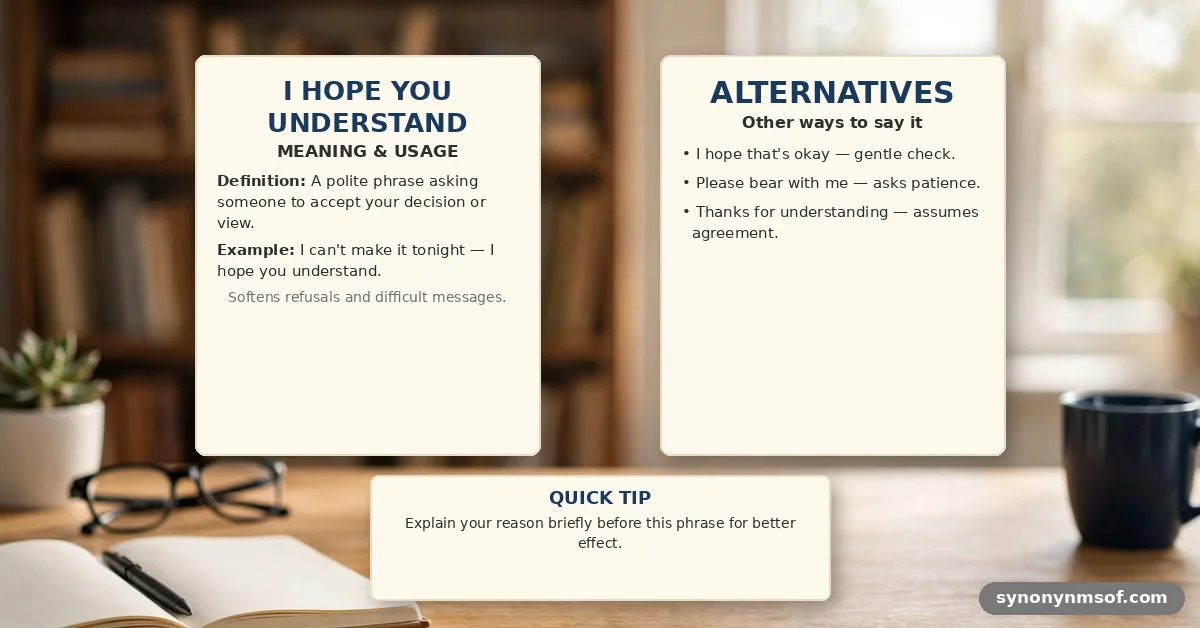
At its heart, the phrase is an appeal for empathy. You are acknowledging that the information you are delivering—perhaps a denied request or a change in project scope—might be frustrating or disappointing to the recipient. By using this language, you are asking the other person to look at the situation from your perspective.
However, the phrase often carries a secondary, unspoken meaning. It can function as a polite way to close a discussion, signaling that the decision is final and you are not looking for further debate.
This is where the risk of sounding patronizing arises. If the recipient feels their concerns are being dismissed, the phrase can inadvertently harden their resolve rather than soothe it.
Is It Truly Professional?
Whether this expression is professional depends entirely on the context and the power dynamic at play. In a peer-to-peer setting, it can come across as a sincere request for patience. When used by a manager toward a subordinate, it can sometimes feel like a top-down dismissal of the employee’s input.
The main issue is that it can sound like you are assuming the other person is unreasonable. If you frame your explanation well, the phrase acts as a bridge.
If you use it as a standalone sentence without providing context, it sounds like an ultimatum. Always pair it with a clear, concise explanation of why the decision was necessary.
Better Ways to Frame Your Message
There are many ways to convey the same sentiment without risking a negative reaction. Sometimes, you simply need to shift the focus from your hope that they understand to your appreciation for their cooperation. This small change in focus shifts the dynamic from one of expectation to one of partnership.
- I appreciate your patience while we work through these constraints.
- Thank you for your flexibility regarding this change in plans.
- I am grateful for your support as we navigate these requirements.
- Please let me know if you would like to discuss the reasoning behind this decision.
- I hope this explanation clarifies why we have moved in this direction.
Choosing the Right Tone for Your Scenario
Selecting the right words requires assessing your relationship with the recipient. If you have a long-standing, trust-based relationship, you can afford to be more direct. In new or formal business settings, you should lean toward phrases that emphasize gratitude rather than an expectation of understanding.
If you are dealing with a client, avoid the phrase entirely. Clients expect solutions and transparency, not requests for them to emotionally process your limitations.
Instead of asking them to understand, explain the facts clearly and offer a path forward. This keeps the focus on the task rather than the interpersonal friction.
Comparison of Communication Approaches
The table below illustrates how different phrasing impacts the perceived tone of your message. Use this to gauge which option fits your specific situation.
| Phrase | Perceived Tone | Best Used With |
|---|---|---|
| I hope you understand. | Defensive or final | Internal peers |
| Thank you for your patience. | Professional and appreciative | Clients or stakeholders |
| I value your cooperation. | Collaborative | Team members |
| I appreciate your flexibility. | Respectful | Managers or supervisors |
Common Pitfalls in Professional Writing
One major mistake is using this phrase to avoid explaining yourself. If you write, “We cannot approve your request; I hope you understand,” you have essentially shut down the conversation without providing the “why.” This creates a vacuum that the other person will naturally fill with frustration.
Another error is using the phrase when you have made a mistake. If a project is delayed because of your oversight, saying “I hope you understand” sounds like you are asking them to forgive your incompetence.
In these cases, own the error, offer a solution, and thank them for their patience. Do not ask them to understand a failure that could have been avoided.
When Empathy Meets Boundaries
Setting boundaries is a necessary part of any career, but how you communicate those boundaries determines how they are received. When you must say no, provide a brief, honest explanation for your decision. If you can, offer an alternative or a timeline for when the request might be reconsidered.
This approach shows that you respect the other person’s time and needs. It transforms a simple refusal into a professional interaction. When you follow up with a note of appreciation, you keep the door open for future collaboration, even if the current situation is not ideal for the other party.
FAQ: Common Questions
Is it professional to say I hope you understand?
It is generally acceptable, but it is rarely the most professional choice. It can sound slightly condescending if not backed by a solid explanation. It is almost always better to express gratitude for someone’s patience or cooperation instead.
What is the best way to express urgency politely?
Instead of relying on phrases that ask for understanding, be specific about the timeline. Use phrases like, “Please let me know your thoughts by Tuesday,” or “We need to finalize this by EOD to meet our deadline.” Clarity is far more polite than vague requests for empathy.
What is the difference between at your earliest convenience and I hope you understand?
The first is a request for action, whereas the second is a request for emotional alignment. One is about logistics and the other is about feelings. Use “at your earliest convenience” when you need a task done, and use more appreciative language when you are delivering difficult news.
How do I reply to someone who says this to me?
If someone says this to you, they are likely trying to signal that a decision is final. The best response is to acknowledge receipt of the information without necessarily agreeing with it. You might say, “I appreciate the clarification,” or “Thank you for letting me know.”
Navigating Future Conversations
Effective communication is not just about the words you choose but the trust you build through your tone. When you navigate difficult situations, focus on being clear, concise, and professional. While you might feel the urge to say I hope you understand, consider whether you are truly asking for empathy or just closing a conversation.
By replacing that phrase with expressions of gratitude, you show respect for the other person’s perspective. You turn a potentially contentious moment into a display of professional maturity. Practice these alternatives in your next email, and you will likely find that your colleagues and clients respond with much greater openness and respect.
SEO Title: I Hope You Understand: Meaning & Examples
Meta Description: Learn how to use the phrase I hope you understand effectively. Discover professional alternatives, tips on tone, and how to maintain workplace trust.
Suggested URL Slug: i-hope-you-understand-meaning-examples
Primary Keyword: I Hope You Understand
Secondary Keywords: professional, tone, communication, appreciate, empathy, situation