
The phrase “get well soon” is something most of us say automatically.
A friend catches the flu.
A coworker has surgery.
A loved one goes through a difficult recovery.
And almost instinctively, we type:
“Get well soon.”
Simple. Familiar. Safe.
But if you’ve ever sat beside someone who was genuinely struggling — physically or emotionally — you probably know that those three words can sometimes feel too small for what you actually want to say.
That’s why people search for better alternatives.
Not because “get well soon” is wrong, but because illness, recovery, and vulnerability are emotional experiences. And during emotional moments, words matter more than usual.
In this guide, we’ll explore the true meaning of get well soon, thoughtful alternatives, professional and personal recovery messages, emotional psychology, cultural differences, what not to say, and how to genuinely comfort someone without sounding generic.
Because sometimes support isn’t about finding perfect words.
It’s about making someone feel less alone.
What Does “Get Well Soon” Mean?
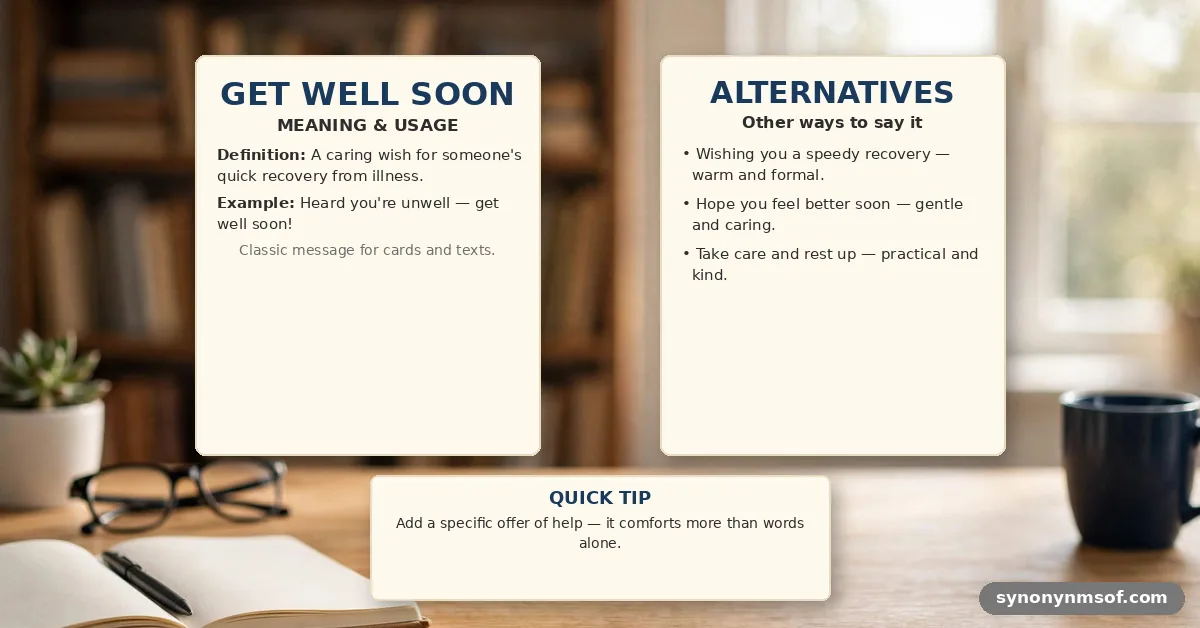
At its core, “get well soon” is a caring expression used to wish someone a quick recovery from illness, injury, surgery, or emotional hardship.
It communicates:
- Compassion
- Concern
- Encouragement
- Hope
- Emotional support
The phrase is short, but its emotional purpose is important:
“I care about what you’re going through, and I hope you feel better soon.”
Why This Phrase Matters More Than People Think
When someone is sick, injured, or emotionally exhausted, they often feel isolated.
Life slows down.
Normal routines disappear.
Even small gestures start to matter more.
I remember visiting a relative after surgery years ago. Dozens of people had sent flowers, but the thing they kept rereading was a simple handwritten note that said:
“Take your time healing. We’re all thinking about you.”
Not dramatic.
Not poetic.
Just human.
That’s the real power behind recovery messages.
People remember sincerity more than perfection.
Is “Get Well Soon” Always Appropriate?
Usually, yes.
But context matters.
It Works Well For:
- Minor illnesses
- Short-term recovery
- Surgery recovery
- Workplace messages
- Casual support
It May Feel Insensitive For:
- Chronic illnesses
- Terminal conditions
- Long-term health struggles
- Serious emotional trauma
In those situations, phrases focused on support rather than “quick recovery” often feel more compassionate.
Quick Comparison Table: Best Alternatives to “Get Well Soon”
| Phrase | Tone | Best Situation |
| Wishing you a speedy recovery | Professional | Workplace |
| Take all the time you need | Gentle | Serious recovery |
| Thinking of you | Emotional | Difficult situations |
| Hope you feel better soon | Casual | Minor illness |
| Sending healing thoughts | Warm | Emotional support |
| Rest and recover well | Caring | Surgery recovery |
| I’m here for you | Deeply supportive | Serious illness |
| Praying for your healing | Spiritual | Personal relationships |
Heartfelt Alternatives to “Get Well Soon”
Sometimes a more thoughtful phrase feels more personal.
Here are some meaningful alternatives.
Wishing You a Speedy Recovery
Professional, warm, and widely accepted.
Example:
“Wishing you a speedy recovery and hoping you’re back on your feet soon.”
Thinking of You
Simple but emotionally comforting.
Example:
“Thinking of you and hoping today feels a little easier.”
Sending Healing Thoughts
Soft and compassionate.
Example:
“Sending healing thoughts your way.”
Take Care of Yourself
Gentle and nurturing.
Example:
“Please take care of yourself and focus on resting.”
Hope You Feel Better Soon
A more conversational version.
Example:
“Hope you feel better soon — we miss you already.”
Take All the Time You Need
Especially comforting during long recoveries.
Example:
“Take all the time you need to recover properly.”
Professional Get Well Soon Messages
Many people struggle with workplace recovery messages because they want to sound caring without becoming overly personal.
Here are examples that strike the right balance.
For Coworkers
“Wishing you a smooth and speedy recovery. Looking forward to seeing you back when you’re ready.”
For Employees
“Take the time you need to focus on your health. Wishing you strength and recovery.”
For Clients
“Sending best wishes for your recovery and hoping for better days ahead.”
For Bosses or Managers
“Wishing you a full recovery and continued good health.”
Professional messages work best when they feel sincere but respectful.
Emotional Recovery Messages for Friends and Family
Close relationships allow for deeper emotional support.
Supportive Example
“I know this hasn’t been easy, but you don’t have to go through it alone.”
Encouraging Example
“You’re stronger than you realize, even on difficult days.”
Comforting Example
“Rest, heal, and let people take care of you for once.”
Warm Example
“I can’t wait to see you healthy and smiling again.”
The emotional tone matters more than fancy wording.
Funny Get Well Soon Messages
Humor can genuinely help during recovery — when used appropriately.
A little laughter often reduces stress and emotional heaviness.
Funny Examples
- “The office is way less interesting without you.”
- “Recover quickly. We’re running out of people to blame.”
- “Your germs have officially overstayed their welcome.”
- “Even your immune system needs coffee apparently.”
- “Get well soon. Netflix can only entertain you for so long.”
Humor works best when:
- You know the person well
- The illness isn’t extremely serious
- The relationship already includes playful communication
What NOT to Say to Someone Who’s Sick
This is something many articles completely ignore.
Good intentions can still create emotional discomfort.
Avoid:
- “At least it’s not worse.”
- “Everything happens for a reason.”
- “You’ll be fine.”
- “Stay positive.”
- “I know exactly how you feel.”
These phrases often unintentionally minimize pain.
Instead, focus on empathy and presence.
Better Alternatives
- “I’m sorry you’re dealing with this.”
- “That sounds really hard.”
- “I’m here if you need anything.”
- “You don’t have to go through this alone.”
The Psychology Behind Recovery Messages
Here’s something fascinating:
Supportive communication can actually affect emotional healing.
Research consistently shows that emotional support helps reduce:
- Stress
- Anxiety
- Feelings of isolation
- Emotional fatigue
When people feel cared for, recovery often feels less overwhelming psychologically.
Words don’t replace medicine.
But they absolutely affect emotional resilience.
Why Personalized Messages Matter More
Most people receive dozens of generic messages during illness.
The ones they remember are specific.
Generic
“Get well soon.”
Better
“I know how frustrating it must be to slow down like this. Hoping each day feels a little lighter.”
Generic
“Take care.”
Better
“Please don’t rush recovery. Your health matters more than productivity.”
Personalization creates emotional connection.
Get Well Soon Messages for Different Situations
After Surgery
“Wishing you a smooth recovery and plenty of rest after surgery.”
For Mental Health Struggles
“You don’t need to pretend you’re okay. Take things one day at a time.”
For Serious Illness
“Sending you strength, comfort, and support through every step of recovery.”
For Children
“Hope you feel better soon so you can get back to having fun.”
For Long-Term Recovery
“Healing takes time, and that’s okay.”
Cultural Differences in Recovery Wishes
Different cultures approach illness and recovery differently.
Western Cultures
Often direct:
- Get well soon
- Feel better soon
South Asian and Middle Eastern Cultures
Support may include prayers and blessings.
Japanese Culture
Support often focuses on endurance and patience.
European Cultures
Messages may sound more reserved but still caring.
Understanding cultural tone can make support feel more respectful and personal.
Social Media and Modern Recovery Messages
Digital communication changed how people express care.
Now support often comes through:
- Text messages
- Voice notes
- Instagram comments
- Group chats
- Video calls
But thoughtful messages still stand out because they feel intentional.
A heartfelt paragraph often means more than a quick reaction emoji.
Why Short Messages Sometimes Work Best
Not everyone has the emotional energy to read long messages during recovery.
Sometimes simplicity feels comforting.
Examples
- “Thinking of you today.”
- “Rest well.”
- “You’re not alone.”
- “Sending strength.”
- “Take it one day at a time.”
Short doesn’t mean shallow.
Sometimes gentle simplicity feels safest.
Common Mistakes People Make
Making Recovery About Themselves
Avoid turning conversations into your own experiences immediately.
Forcing Positivity
People don’t always need motivation. Sometimes they need acknowledgment.
Giving Unsolicited Advice
Too much advice can feel overwhelming.
Disappearing After the First Message
Real support often means checking in consistently.
Expecting Quick Responses
People recovering physically or emotionally may not have energy to reply immediately.
How to Make Someone Feel Truly Supported
The best recovery messages usually do one of three things:
They Offer Comfort
“I’m thinking about you.”
They Offer Practical Support
“Let me know if I can help with anything.”
They Offer Presence
“You don’t have to handle this alone.”
Support isn’t about perfect wording.
It’s about emotional safety.
Final Thoughts on Get Well Soon
The phrase get well soon remains meaningful because it reflects something deeply human:
The desire to ease another person’s suffering, even in small ways.
Whether you choose a simple “feel better soon,” a heartfelt recovery message, or a deeply personal note, what matters most is sincerity.
People rarely remember perfect sentences during difficult times.
But they do remember who showed up with kindness.
And sometimes a few caring words can provide more comfort than we realize.
FAQs
What does “get well soon” mean?
It’s a caring phrase used to wish someone a quick recovery from illness, injury, or surgery.
Is “get well soon” professional?
Yes. It’s commonly used in workplace emails and professional communication.
What are better alternatives to “get well soon”?
Alternatives include:
- Wishing you a speedy recovery
- Thinking of you
- Sending healing thoughts
- Hope you feel better soon
What do you write in a get well soon card?
Write something supportive, warm, and sincere. Personal details make messages feel more meaningful.
Is it okay to say “get well soon” for serious illness?
Sometimes, but gentler phrases focused on support may feel more appropriate for long-term or serious conditions.
What’s a short get well soon message?
Examples include:
- Thinking of you
- Rest and recover
- Sending strength
- Feel better soon
How do you comfort someone who is sick?
Listen, acknowledge their feelings, and offer support without forcing positivity.
Can humor help during recovery?
Yes, when appropriate. Light humor can reduce stress and help people feel emotionally lighter.
What should you avoid saying to sick people?
Avoid minimizing phrases like:
- “At least it’s not worse”
- “Everything happens for a reason”
- “Stay positive”
Why are recovery messages important?
Supportive words help people feel less isolated and emotionally supported during difficult times.