
When you send a message, receiving a reply is a relief. Saying thank you for getting back to me serves as a bridge, acknowledging the time and effort someone spent to provide you with an answer. This simple phrase acts as a lubricant for professional relationships, signaling that you value the communication loop.
It is more than just a polite filler; it confirms that you have received the necessary information and are ready to move forward. Understanding the right way to use this expression helps you maintain a tone of respect and clarity in your daily correspondence.
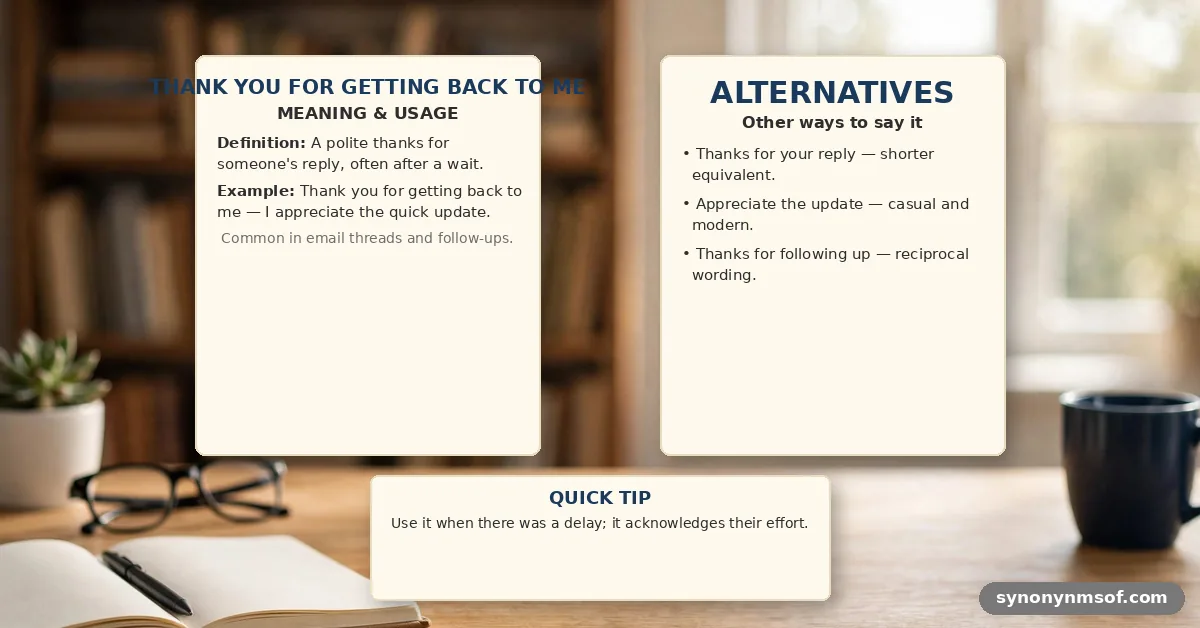
At its core, this phrase expresses gratitude for a response to an inquiry or a pending request. It tells the other person that their effort in providing a reply has not gone unnoticed. By using it, you acknowledge that their time is valuable and that their input was necessary for your progress.
This expression functions as a professional bookmark. It closes the previous cycle of waiting while opening the door for the next stage of the conversation. Whether you are dealing with a client, a manager, or a colleague, using this language demonstrates that you are attentive and appreciative of the ongoing dialogue.
Why It Matters in Professionalism
Professionalism relies heavily on how we acknowledge contributions. Failing to thank someone for a detailed reply can make you appear dismissive or ungrateful. When you incorporate this phrase, you establish yourself as someone who respects the flow of information.
It also provides a sense of closure. If you sent a complex query, receiving a reply brings a conclusion to that specific task. Acknowledging it ensures both parties are on the same page regarding the status of the project or question.
When to Use This Expression

You should use this phrase whenever someone provides you with information you requested. It is particularly effective after a delay, as it shows you are still tracking the conversation. It works well in various settings, from formal client emails to quick internal chats.
Consider the following scenarios where this phrase is highly effective:
- After receiving answers to a list of specific questions you sent earlier.
- When a colleague finally shares a document you needed to complete a task.
- Following a period of silence where you were waiting for a decision or update.
- When a recruiter reaches out to you regarding your job application.
Variations for Different Contexts
While the standard phrase is versatile, you can adjust your language based on the formality of the situation. Some moments call for brevity, while others benefit from a more detailed expression of gratitude. Matching your tone to the recipient creates a stronger connection.
Formal vs. Casual Alternatives
If you are writing to a superior or a high-level client, lean toward phrases that sound polished and precise. If you are speaking with a close teammate, you can keep it light. The goal is to ensure the gratitude feels authentic rather than robotic.
| Phrase | Best Used For | Formality Level |
|---|---|---|
| Thank you for your prompt reply. | Professional clients | High |
| I appreciate you getting back to me. | General office use | Medium |
| Thanks for the update. | Close colleagues | Low |
| Thank you for taking the time to explain. | Complex queries | High |
The Role of Gratitude in Email
Including a note of appreciation at the beginning of an email sets a positive tone for the entire message. It shows that you are not just jumping straight into your next demand. By starting with a “thank you,” you soften the transition into the next part of your request or update.
This approach also encourages the other person to continue helping you. When people feel that their time is appreciated, they are often more willing to engage in future requests. It humanizes the digital exchange, turning a cold task into a collaborative effort.
Avoiding Common Pitfalls
One common mistake is using this phrase when the response was actually unhelpful or delayed by an unreasonable amount of time. If you are frustrated, adding a sarcastic “thanks for getting back to me” will likely damage the relationship. Always ensure your tone matches the actual content of the reply.
Another issue is overusing the phrase in short, rapid-fire message chains. If you are sending five messages back and forth in ten minutes, you do not need to thank the person for every single reply. It can make your emails feel cluttered and repetitive.
Structuring Your Response
When you reply to someone, try to combine your thanks with the next actionable step. This keeps the momentum going without needing extra emails. A good structure includes the acknowledgment, a brief comment on the information received, and your next move.
For example, instead of just saying “thanks,” you might say, “I appreciate you getting back to me with those figures. I will review them now and send over the final report by tomorrow morning.” This provides clear value and shows you are moving the project forward.
FAQ
Is it professional to say thank you for getting back to me?
Yes, it is perfectly professional. It is a standard, polite way to acknowledge receipt of information and maintain a positive working relationship.
What is the best way to express urgency politely?
If you need a quick turnaround, try saying, “I appreciate your help with this, and if you have a moment to review it by [time], that would be very helpful.” This keeps the tone collaborative rather than demanding.
What is the difference between at your earliest convenience and as soon as possible?
The former sounds more formal and deferential, while the latter is more direct. Use “earliest convenience” when you want to show respect for the other person’s schedule.
How should I respond if someone was slow to reply?
Focus on the present rather than the past. Simply say, “Thank you for the update,” and move directly into the next task to keep the conversation productive.
Final Thoughts
Choosing the right way to acknowledge a message is a small detail that makes a significant difference in how you are perceived. Using phrases like thank you for getting back to me helps you build a reputation as a thoughtful communicator who values the time of others. By being intentional with your words, you turn routine emails into opportunities to strengthen your professional network.
Keep your tone consistent, your gratitude sincere, and your next steps clear to ensure every exchange is as effective as possible. When you master these small adjustments, your communication becomes a powerful tool for building lasting success in any workplace.
SEO Title: Thank You for Getting Back to Me: Meaning & Usage
Meta Description: Learn the meaning of thank you for getting back to me and how to use this phrase professionally in email and workplace communication.
Suggested URL Slug: thank-you-for-getting-back-to-me-meaning
Primary Keyword: Thank You for Getting Back to Me
Secondary Keywords: professional ways to say
Secondary Keywords: professional ways to say thanks, email etiquette, gratitude in communication, polite reply