
When you encounter the phrase please note in an email or a formal report, it serves as a linguistic signal designed to grab your attention. It functions as a polite yet firm directive, ensuring the reader focuses on critical details that might otherwise be overlooked in a lengthy message. Mastering the effective use of this expression helps you convey important information without sounding overly aggressive or dismissive.
By understanding the nuance behind how we frame our written requests, you can ensure your communication remains both respectful and clear. This article explores the precise application of these words, providing the tools you need to refine your professional correspondence and improve your overall impact.
Understanding the Function of Please Note
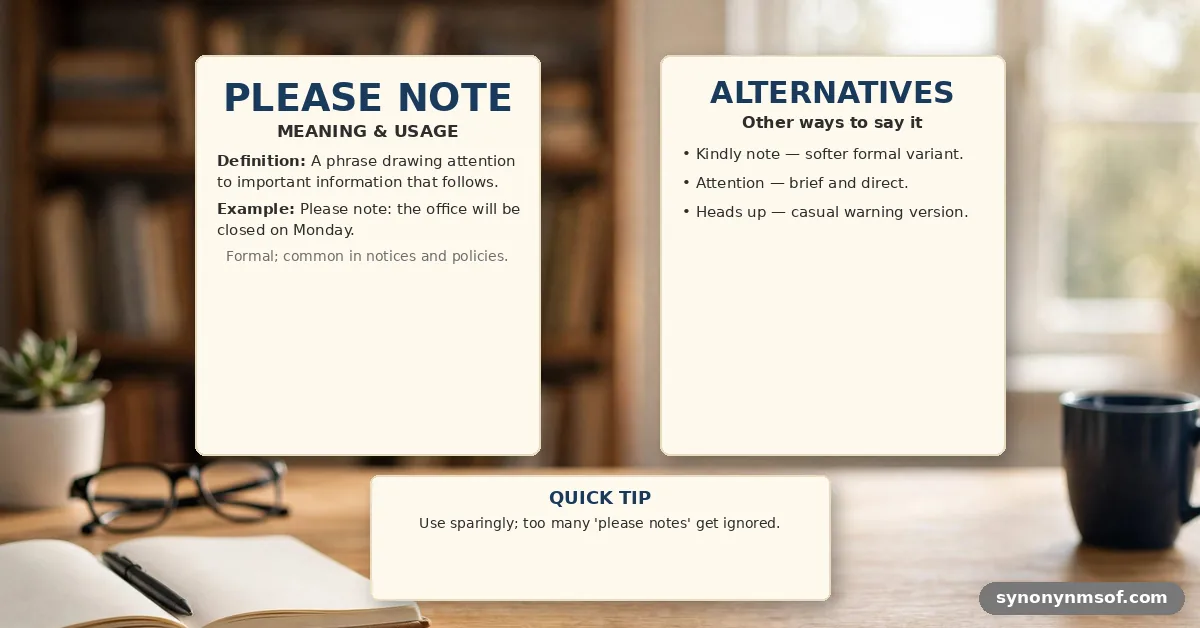
The phrase please note acts as a verbal highlighter in professional writing. It tells the reader that the following information is not just secondary context, but rather something they must be aware of to complete a task or understand a policy. Because it combines a polite request with a direct instruction, it occupies a specific space in business etiquette.
Using this phrase correctly prevents misunderstandings. If you bury a deadline or a change in requirements in the middle of a paragraph, it is easy for a busy recipient to miss it. By starting a sentence with this term, you create a natural pause that signals the importance of the upcoming content.
However, you should use it sparingly. If every sentence in your message begins with this phrase, the impact is lost and the tone becomes repetitive. You want the reader to recognize that when you use it, you truly have something significant to convey.
Grammar and Punctuation Essentials
When you incorporate these words into your writing, punctuation plays a vital role in maintaining the professional flow. Most style guides suggest following the phrase with the word that to connect it to the main clause. This construction makes the sentence feel complete and authoritative.
Punctuation Best Practices

You should generally place a comma after the phrase if it serves as an introductory element. For example, writing “Please note, that the office will be closed” is common, though some modern style guides argue the comma is optional. Consistency remains the most important factor in your decision.
Avoiding Common Errors
Do not use the phrase to mask a lack of clarity. If your main point is buried in jargon or complex sentences, no amount of highlighting will save the message. Always ensure that the information following the phrase is concise and easy to digest.
Formal Alternatives for Different Contexts
Sometimes you might feel that the standard phrase is too common or perhaps a bit too directive for a specific situation. In those cases, you can look for another word or phrase to achieve the same goal. The key is to maintain a tone that matches your relationship with the recipient.
- Please be advised: This is highly formal and often used in legal or official corporate communication.
- Kindly be aware: This offers a softer, more collaborative tone that works well with colleagues.
- It is important to remember: This shifts the focus from your instruction to the objective reality of the situation.
- For your information: This is best for neutral updates where no immediate action is required.
- Please keep in mind: This is a helpful way to introduce a constraint without sounding like you are giving an order.
Professional Applications and Examples
Seeing the phrase in action helps clarify why it is such a staple in workplace communication. You can use it to highlight a shift in meeting times, a change in project scope, or a reminder about upcoming deadlines. The following table provides a quick reference for how to select the right intensity for your message.
| Phrase | Intensity | Best Use Case |
|---|---|---|
| Please note | Moderate | General business updates |
| Please be advised | High | Policy changes or formal warnings |
| Kindly be aware | Low | Friendly reminders between peers |
| It is worth noting | Neutral | Adding context to a report |
Managing Tone in Written Communication
Your choice of words dictates how your message is received. When you are writing to a client, you want to be clear but also supportive. Using a phrase like “Please note that the final invoice is due on Friday” is much more effective than simply saying “Send the money by Friday.”
Adjusting for Hierarchy
If you are writing to a superior, you may want to soften your approach. Instead of a direct command, try framing the information as a helpful update. You might say, “I wanted to ensure you were aware of the timeline adjustment.”
Maintaining Professional Distance
When communicating with external partners, sticking to standard, clear phrasing is usually safest. Avoid overly casual language or slang that might be misinterpreted. The goal is to provide value and clarity while keeping the relationship on a professional footing.
When to Avoid the Phrase
There are times when using this phrase can actually work against you. If you are delivering negative news, starting with a directive can sound cold or dismissive. In those cases, it is often better to use a more empathetic opening.
Situations Requiring Sensitivity
If you are informing someone of a mistake they made, avoid using this phrase as a preface. It can feel like you are scolding the reader. Instead, use a collaborative approach that focuses on solutions rather than just pointing out errors.
The Danger of Overuse
If you use it in every email, your readers will eventually tune it out. Reserve it for information that truly requires the reader to stop and process a specific detail. The impact of your writing depends on your ability to prioritize information effectively.
FAQ Section
Is please note professional?
Yes, it is a standard and widely accepted phrase in professional communication. It is considered polite and effective when used to draw attention to important information.
What is the best way to express urgency politely?
You can use phrases like “I would appreciate your prompt attention to this matter” or “If possible, please review this by end of day.” These options provide a clear timeline while remaining respectful of the recipient’s schedule.
What is the difference between at your earliest convenience and please note?
The phrase “at your earliest convenience” is a request for action, whereas “please note” is a request for awareness. You use the former when you need someone to do something, and the latter when you need them to understand something.
Can I use please note in a sentence without the word that?
Yes, you can write “Please note: the office is closed.” Using a colon is a perfectly acceptable way to structure the sentence if you prefer a more direct, clipped style.
Conclusion
Mastering the use of please note allows you to guide your reader through complex documents and emails with ease. By choosing when to use this specific phrase, you demonstrate respect for the recipient’s time and clarity in your own professional objectives. Remember that the goal of any written correspondence is to ensure your message is understood exactly as you intended.
As you continue to refine your writing, think of how your language impacts your professional relationships. Using these terms effectively helps you maintain a balance between authority and courtesy.
If you find yourself struggling to find the right words, keep your sentences simple and focus on the most important information. Practicing these small adjustments will lead to more effective communication in all your future endeavors.
SEO Title: Please Note: Meaning, Usage, and Examples
Meta Description: Learn how to use please note effectively in professional writing. Discover grammar tips, formal alternatives, and examples to improve your communication.
Suggested URL Slug: please-note-meaning-usage-examples
Primary Keyword: please note
Secondary Keywords: professional ways to say as soon as possible, polite ways to say as soon as possible, business communication, writing tips, email etiquette