
When you say I appreciate your help, you are signaling more than just a polite nod; you are acknowledging the specific effort someone invested in your success. This simple phrase acts as a bridge in professional communication, turning a transactional exchange into a lasting relationship built on mutual respect.
Whether you are closing a complex project or simply thanking a colleague for a quick favor, knowing how to tailor your gratitude ensures your message hits the right note every time. By mastering the nuance of this expression, you can deepen your professional network and ensure that your colleagues feel truly valued for the time they contribute to your goals.
The Core Meaning and Professional Impact

At its heart, telling someone I appreciate your help serves as a formal validation of their time and expertise. It moves the conversation beyond basic pleasantries by highlighting that you recognize the labor involved in their assistance. When you use this phrase, you establish yourself as someone who values collaboration rather than just outcomes.
Professional relationships often stagnate when help is taken for granted. By consistently expressing gratitude, you reinforce a culture of reciprocity. This simple act of acknowledgment can make someone significantly more likely to assist you again in the future.
The phrase is versatile because it works in both high-stakes environments and casual team chats. It conveys a level of sincerity that generic “thanks” often lacks. By being specific about what you appreciate, you provide feedback that helps the other person understand their value to your workflow.
When to Use This Expression
The best use of this phrase occurs immediately after someone has invested time in solving a problem for you. It functions best as a concluding remark in an email or a direct message. You should aim to send it within a day of receiving the assistance to ensure the sentiment remains relevant.
Think about the context of the support you received. If a colleague spent hours troubleshooting a software bug for you, a quick note expressing gratitude is essential. It signals that you didn’t just notice the fix, but you also respected the time they took away from their own tasks to provide that support.
You can also use this phrasing proactively when asking for a significant favor. Framing your request with a note of appreciation for their potential effort sets a positive tone from the start. It shows that you do not view their assistance as an obligation or a given right.
Categorized Alternatives for Professional Contexts
Sometimes you need to vary your language to avoid repetition or to better match the specific situation. Depending on the level of formality required, you might choose a phrase that sounds more polished or one that feels more personal.
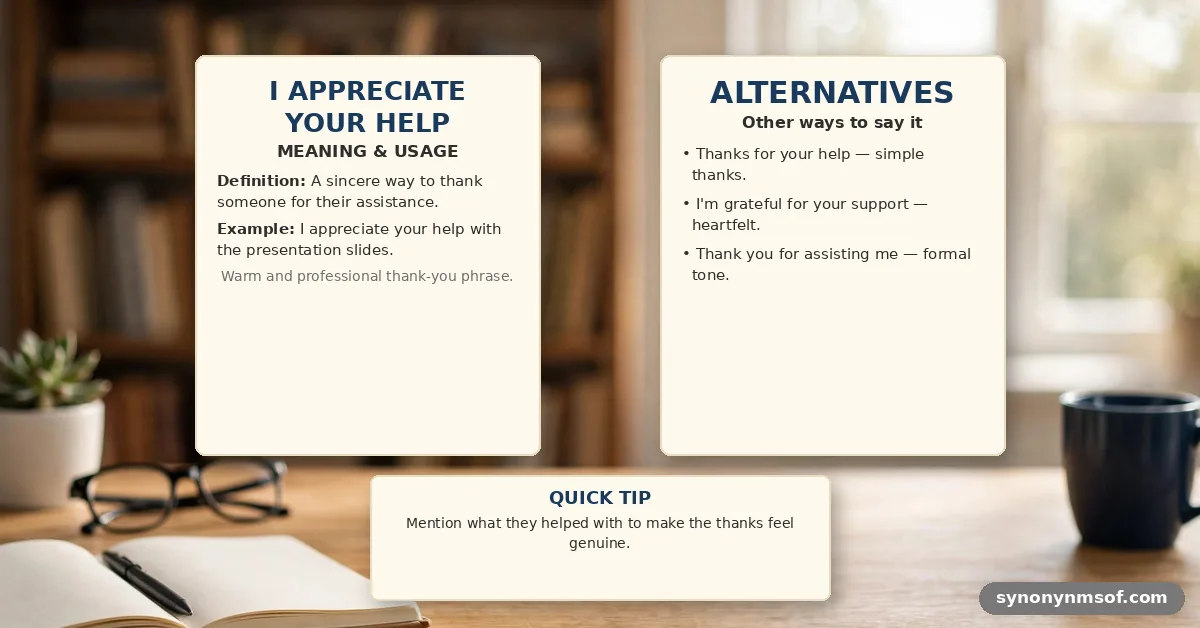
- Polite and Sincere: Thank you for your time and guidance on this project.
- Direct and Efficient: Your assistance with this matter was invaluable.
- High-Level Professional: I am very grateful for your expertise during this transition.
- Support-Focused: I truly value the support you provided to the team today.
These alternatives help you maintain a fresh voice while still conveying the same level of respect. Choosing the right words depends on your existing rapport with the person. A close teammate might prefer something short, while a client might appreciate a more formal, structured sentence.
Comparing Ways to Express Gratitude
Choosing between these options often comes down to the urgency and the relationship dynamic. Use this table to determine the best approach for your specific email or conversation.
| Phrase | Best Use Case | Tone |
|---|---|---|
| I appreciate your help. | Standard professional tasks | Neutral/Balanced |
| Thank you for your support. | Long-term projects/Mentorship | Warm/Respectful |
| Your assistance is appreciated. | Formal client communication | Highly Formal |
| Thanks for the quick turnaround. | Urgent, time-sensitive work | Direct/Casual |
Common Mistakes to Avoid
One common error is using these phrases in a way that sounds hollow or robotic. If you send a “thank you” template for every single interaction, the recipient may stop feeling the impact of your words. Always try to add a small detail about what specifically helped you.
Avoid mixing professional gratitude with demanding language. For example, do not say “I appreciate your help, but please hurry up next time.” The second half of that sentence negates the sincerity of the first half entirely.
Another mistake is failing to match the medium to the message. A complex, heartfelt expression of gratitude is better suited for a thoughtful email than a Slack message. Reserve your most sincere language for moments where the effort provided was truly significant.
The Role of Specificity in Appreciation
Specificity is the secret ingredient that transforms a generic message into a powerful professional tool. Instead of just saying you appreciate their help, explain exactly what that help allowed you to do.
Did it save you two hours of work? Did it help you solve a client complaint?
Mentioning the result shows that you are paying attention to the impact of their work. It validates their skills and confirms that their time was spent effectively. People are much more likely to remember a thank you that highlights their specific contribution.
If you are unsure how to be specific, focus on the emotion or the relief you felt. Saying “I was worried about the deadline, and your help really put me at ease” is incredibly powerful. It builds a human connection that goes beyond the professional transaction.
Navigating Difficult Conversations with Gratitude
Sometimes you need to express gratitude even when the situation is less than ideal. Perhaps a colleague helped you fix a mess that you created, or a client provided feedback that was difficult to hear. In these moments, expressing appreciation is even more important.
It shows that you are professional enough to look past the friction and focus on the value provided. Using the phrase “I appreciate your help in clarifying these points” during a tense meeting can diffuse conflict. It signals that you are open to growth and value their perspective.
Keep your tone measured and calm. If you sound defensive, the appreciation will come across as forced. Focus on the positive contribution they made, even if the surrounding circumstances were challenging.
FAQ
Is it professional to say I appreciate your help?
Yes, it is a standard and highly effective way to express gratitude in any professional setting. It strikes a perfect balance between being polite and remaining focused on the work at hand.
What is the best way to express urgency while still being polite?
You can combine your appreciation with a clear request. For instance, “I would greatly appreciate your help with this by Friday, as it will allow us to meet our deadline.”
How do I write a short appreciation message?
Keep it focused on the recipient. Use a clear subject line, state what they did, express your appreciation, and close with a professional sign-off.
What is the difference between at your earliest convenience and as soon as possible?
“At your earliest convenience” is considered more formal and polite, as it respects the other person’s schedule. “As soon as possible” can come across as demanding or urgent, which may not always be appropriate depending on the relationship.
Final Thoughts on Professional Gratitude
Mastering the art of saying I appreciate your help is a subtle but vital skill for anyone looking to build a sustainable career. It is about more than just checking a box for politeness; it is about recognizing the humanity of your coworkers and clients.
When you take the time to acknowledge the effort others put into your projects, you foster an environment where people feel seen and valued. This leads to stronger partnerships and more effective collaboration over the long term.
Start incorporating these variations into your daily communication today. Notice how your colleagues respond when you are specific about the value they provide.
By consistently showing genuine appreciation, you will find that your professional network becomes more supportive and responsive. Keep your messages sincere, keep them timely, and watch how your workplace relationships begin to thrive.
SEO Title: I Appreciate Your Help: Meaning, Usage & Examples
Meta Description: Learn how to effectively use the phrase I appreciate your help in professional settings. Explore examples, alternatives, and tips for better communication.
Suggested URL Slug: i-appreciate-your-help-meaning-examples
Primary Keyword: I appreciate your help
Secondary Keywords: professional, tone, appreciation, assistance, thanks, support, gratitude