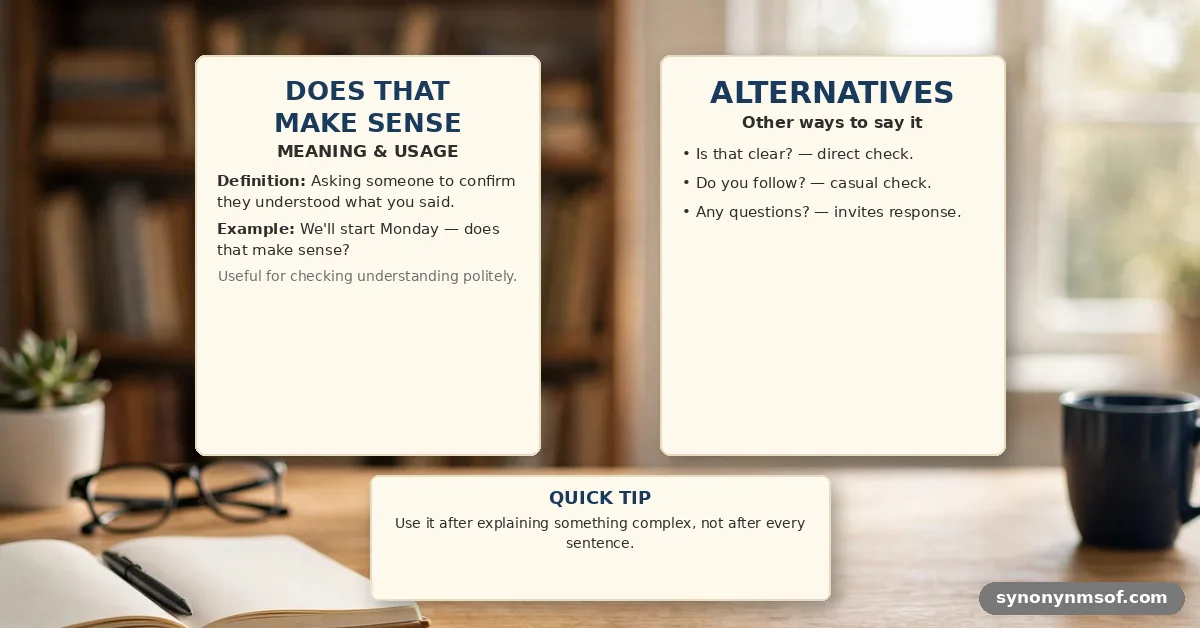

Asking whether someone understands you by saying, “Does that make sense?” is a standard way to check for clarity during a conversation. While it is a common phrase, its reception depends heavily on your relationship with the listener and the setting of your discussion. You might use it to ensure a colleague follows a complex project plan or to confirm a friend understands a personal update.
Understanding how to use the phrase properly helps you avoid sounding condescending while maintaining clear communication in your daily interactions. This article explores the nuances of the phrase, providing you with better ways to confirm understanding in both professional and casual environments.
The Core Meaning of the Phrase

At its heart, the phrase is a check for alignment. When you ask if something makes sense, you are inviting the listener to evaluate the logic or coherence of your explanation. It is a request for feedback that serves as a bridge between your intent and their perception.
Most people use it as a polite way to ensure no confusion persists. If you have just explained a difficult concept, it is a way to shift the burden of clarity from the listener back to yourself. You are essentially asking, “Have I explained this clearly enough for you to follow?”
The phrase is deeply rooted in the need for mutual understanding. In a workplace, it functions as a tool to prevent errors caused by miscommunication. It helps confirm that the instructions you provided are actionable and logical.
Why Tone Matters in Professional Settings
While the phrase is widely used, it can occasionally strike the wrong chord. If used repeatedly in a meeting, it might sound as though you are questioning the intelligence of your peers. This is why the context of your delivery is just as important as the words themselves.
When you ask a supervisor, “Does that make sense?” it can sound like you are unsure of your own argument. It may imply that you need validation before you can move forward with your plan. In these moments, it is often better to frame the check-in around the information rather than the person.
Using the phrase with someone who reports to you requires extra care. It can inadvertently sound condescending, as if you are checking to see if they are capable of keeping up. Opting for more collaborative language often yields better results and builds stronger team rapport.
Better Alternatives for Clear Communication
If you want to ensure your message was received without risking a patronizing tone, you have several options. These alternatives shift the focus toward the content or the next steps of the project.
- “Is there anything I should clarify further?”
- “Does this approach align with your expectations?”
- “I want to make sure I’ve explained this process clearly; are there any questions?”
- “How does that sound to you?”
- “Do you have any thoughts on this proposal?”
These options show that you value the other person’s perspective. They encourage the listener to speak up if they are confused. You move from a position of checking their comprehension to a position of inviting their collaboration.
Contextual Usage: When to Use Which Phrase
Choosing the right way to confirm understanding depends on the hierarchy and the stakes involved. A quick chat with a close teammate allows for more casual language, while a presentation to a client demands a more formal approach.
When you are speaking to a client, you should avoid phrases that sound like you are testing them. Instead, focus on their comfort with the material. You might ask, “Does this plan work for your current timeline?” rather than asking if the logic makes sense.
For internal meetings, focus on actionability. If you are assigning tasks, ask, “Are the next steps clear to everyone?”
This focuses the group on the work ahead. It helps ensure that everyone understands their role without making anyone feel singled out.
Comparison Table of Communication Styles
The following table categorizes different ways to verify understanding based on the intended tone and the setting of your conversation.
| Phrase | Tone | Best Use Case |
|---|---|---|
| Does that make sense? | Casual/Neutral | Peer-to-peer or informal chats |
| Is that clear? | Direct/Authoritative | Urgent instructions or management |
| Do you have any questions? | Professional/Open | Formal meetings or presentations |
| How does that sound? | Collaborative/Soft | Brainstorming or creative sessions |
Common Pitfalls and How to Avoid Them
One major mistake people make is overusing the phrase as a filler. If you sprinkle it into every sentence, it loses its meaning and starts to sound like a nervous tic. It can make you appear less confident in the information you are sharing.
Another error is asking the question too quickly after providing a massive amount of data. If you dump a complex report on someone and immediately follow it with, “Does that make sense?”, they will likely say yes just to be polite. They haven’t had the time to process the information.
Always pause after delivering important points. Give the listener a moment to think or review the notes. This silence is a powerful tool in communication that allows the other person to actually formulate a thoughtful question.
FAQ
Is it professional to ask if something makes sense?
It is generally acceptable, but it can sound slightly informal or condescending depending on the setting. In high-stakes environments, it is safer to use phrases that invite questions or feedback on the content directly.
What is the best way to express that I need clarification?
You can be direct by saying, “Could you walk me through that part again?” or “I want to make sure I understand correctly, so could you clarify point X?” These phrases show you are engaged and responsible for your own understanding.
Why do people dislike the phrase “Does that make sense?”
Some people feel it is patronizing because it implies the speaker is the one who understands, and the listener is the one who might be failing to keep up. It can be perceived as questioning the listener’s competence.
How can I check for understanding without sounding condescending?
Focus on the material rather than the listener’s ability to grasp it. Ask, “Does this plan align with our current goals?” or “What are your thoughts on this approach?” This makes the conversation a two-way street.
Conclusion
Mastering the way you check for understanding is a simple but powerful upgrade to your daily communication. While asking if something makes sense is a common habit, choosing more specific and collaborative language can help you build better professional relationships. By focusing on the content and the needs of your audience, you ensure that your message is heard and that your listeners feel respected throughout the process.
Practice using these alternatives in your next meeting or email thread to see the difference it makes in your interactions. You will likely find that people feel more comfortable sharing their true thoughts when they are invited to contribute, rather than just being tested for comprehension. Keep your communication clear and open to feedback to ensure you always get your point across effectively.
SEO Title: Does That Make Sense: Meaning, Usage, and Examples
Meta Description: Learn if it is professional to ask “Does that make sense?” and discover better, more polite ways to ensure your message is understood by others.
Suggested URL Slug: does-that-make-sense-meaning-usage
Primary Keyword: Does That Make Sense
Secondary Keywords: make sense, grammar, professional, examples, communication, usage