
Hearing someone say “I hope you enjoyed” is a common experience that often leaves people wondering about the subtle nuances of its usage. You might hear it after a presentation, a meal, or a shared activity, and it serves as a polite bridge between an event and its conclusion.
Whether you are aiming to be professional or simply want to sound more natural in your daily communication, understanding how this expression functions is key. This article breaks down the meaning, the best way to use it, and how to adapt your tone for various social and workplace settings.
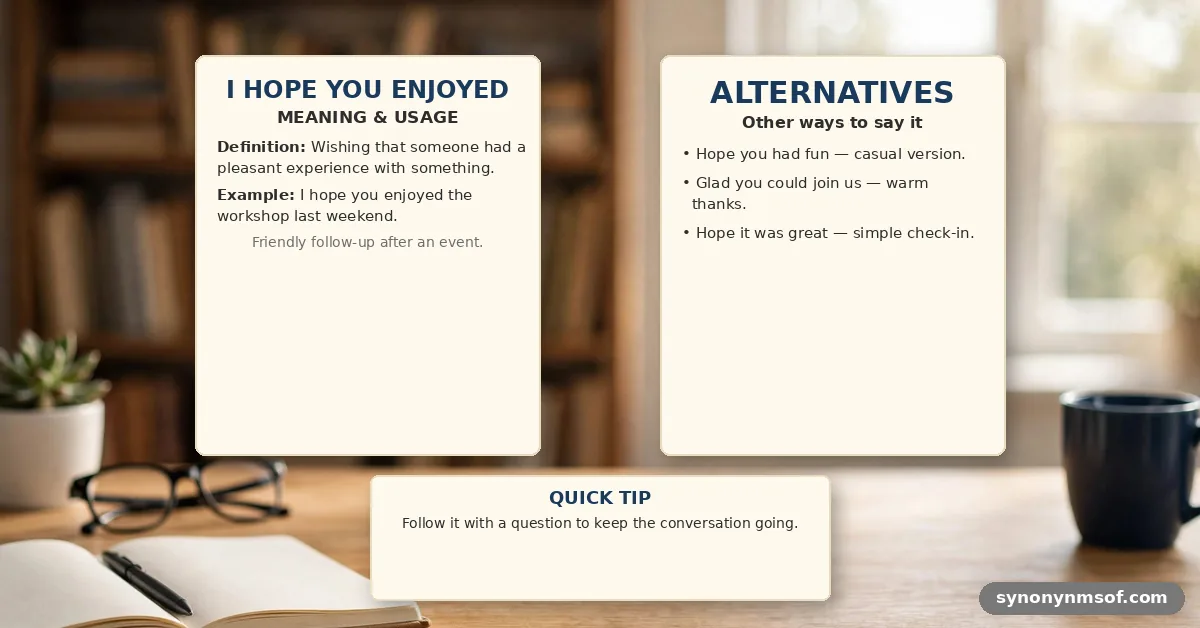
At its heart, the phrase is a polite way to acknowledge a shared experience. When someone says it, they are signaling that they value your time and want to confirm that the interaction was positive. It acts as a soft closing, transitioning the conversation away from the activity itself and toward a friendly farewell.
Grammatically, using the past tense “enjoyed” implies that the event has already concluded. It is a retrospective look at the experience you just finished together. This makes it distinct from “I hope you enjoy,” which is typically used before or during an event to offer well wishes for what is yet to come.
When to Use the Phrase

You will find the most success with this expression when the timing is right. It is best suited for the final moments of an interaction where you want to leave a lasting positive impression. Using it too early can feel premature, as if you are trying to rush the person out the door.
Consider using it in these scenarios:
- After a business meeting where you presented new ideas or a project proposal.
- At the conclusion of a meal or a social gathering you hosted for colleagues.
- Following a training session or workshop where you were the instructor.
- When sending a follow-up email after a client has completed an onboarding process.
Professional vs. Casual Applications
The tone of your communication will dictate how you frame your closing. In a professional setting, you might want to pair the phrase with a request for feedback. This keeps the conversation moving forward rather than ending it abruptly.
In casual settings, the phrase can stand alone or be paired with a simple “have a great rest of your day.” It feels warmer and less transactional when you are speaking with friends or close coworkers. You should always mirror the energy of the person you are speaking with to ensure you do not sound overly stiff or inappropriately relaxed.
Common Variations and Their Impact
Language is flexible, and you might find that slightly adjusting the phrasing changes how it is received. Sometimes, adding a specific reference to the event helps ground the sentiment. Instead of a generic closing, try making it personal to the situation you just shared.
| Phrase | Best Context | Tone |
|---|---|---|
| I hope you enjoyed the presentation. | Post-meeting | Professional |
| I hope you enjoyed your time here. | Guest visit | Polite/Warm |
| I hope you enjoyed the lunch. | Informal meeting | Casual |
| I hope you enjoyed our discussion. | Consultation | Professional |
Avoiding Awkward Phrasing
One common mistake is using the past tense when the event is ongoing. If you are halfway through a long conference, saying “I hope you enjoyed the day” can sound confusing. It suggests the person should be finished with their experience, which might not be the case.
Another trap is sounding robotic. If you repeat the same phrase to every person leaving a room, it loses its sincerity. Try to vary your language by focusing on the specific “experience” you shared rather than relying on a static script.
Navigating Feedback Loops
Sometimes, this phrase is used to elicit a response. If you are worried about whether your client actually liked your service, you might be tempted to use it as a probe. However, it is often better to be direct if you want honest feedback.
Pairing the phrase with a genuine question shows you care about the outcome. For example, “I hope you enjoyed the session; please let me know if you have any questions,” is far more effective than just hoping they had a good time. This helps you build trust and shows that you are committed to the quality of the service provided.
Cultural Nuances in Communication
In some cultures, being overly polite or focused on “enjoyment” can feel unnecessary in a strictly business context. If you are working with international partners, observe how they close their meetings. Some prefer a direct “Thank you for your time,” while others value the warm, social wrap-up.
Adaptability is the most important skill here. If you sense that the other person is in a hurry, keep your closing brief. If the conversation has been long and deep, take a moment to express your appreciation for the shared time.
FAQ
Is it grammatically correct to say I hope you enjoyed?
Yes, it is perfectly correct. It uses the past tense to refer to an event that has just wrapped up, which aligns with standard English usage.
What is the difference between I hope you enjoy and I hope you enjoyed?
The difference lies in the timing. Use “enjoy” for future or ongoing experiences, and use “enjoyed” for experiences that have reached their conclusion.
How can I make this phrase sound more professional?
Focus on the specific outcome of the meeting or event. Adding a reference to a specific goal or task, such as “I hope you enjoyed our strategy session,” makes it sound more intentional and business-focused.
Should I avoid using this phrase if the event was stressful?
If the event was difficult or high-stakes, avoid this phrase. It can sound dismissive or sarcastic if the person clearly had a hard time. In those cases, a simple “Thank you for your patience today” is a much better choice.
Final Thoughts on Professional Etiquette
Choosing the right words is about showing respect for the person you are interacting with. When you use a phrase like “I hope you enjoyed” with sincerity, you acknowledge the value of the time spent together. It is a small but powerful way to maintain positive professional relationships and leave a lasting impression.
Start by paying attention to how others close their conversations. You will likely notice that the most effective communicators are those who match their tone to the situation at hand.
By practicing these variations, you will feel more confident in your ability to wrap up any interaction with grace. I hope you enjoyed learning about these nuances and that you feel better equipped to use this common expression in your daily life.
SEO Title: I Hope You Enjoyed: Meaning, Usage, and Examples
Meta Description: Learn the meaning and best usage of “I hope you enjoyed.” Understand how to use this phrase effectively in professional and casual communication settings.
Suggested URL Slug: i-hope-you-enjoyed-meaning-usage
Primary Keyword: I hope you enjoyed
Secondary Keywords: meaning, experience, best use, usage, examples, tone, example, hope enjoy, formal, professional, avoid, used, feel, casual, phrase, communication