

The phrase “just to confirm” appears everywhere.
You’ll hear it in meetings, emails, customer service calls, workplace chats, and even personal conversations. It’s one of those phrases people use automatically because it feels polite, safe, and professional.
But here’s what most people don’t realize:
The way you use “just to confirm” can completely change how you sound.
Sometimes it makes you appear organized and thoughtful.
Other times, it can accidentally sound uncertain, passive-aggressive, or overly cautious.
That tiny phrase carries more communication psychology than most people think.
In this guide, we’ll explore the real meaning of just to confirm, professional alternatives, workplace examples, emotional tone differences, email etiquette, common mistakes, and smarter ways to communicate clearly without sounding robotic or repetitive.
Because strong communication isn’t just about accuracy.
It’s also about how people feel when they read your words.
What Does “Just to Confirm” Mean?
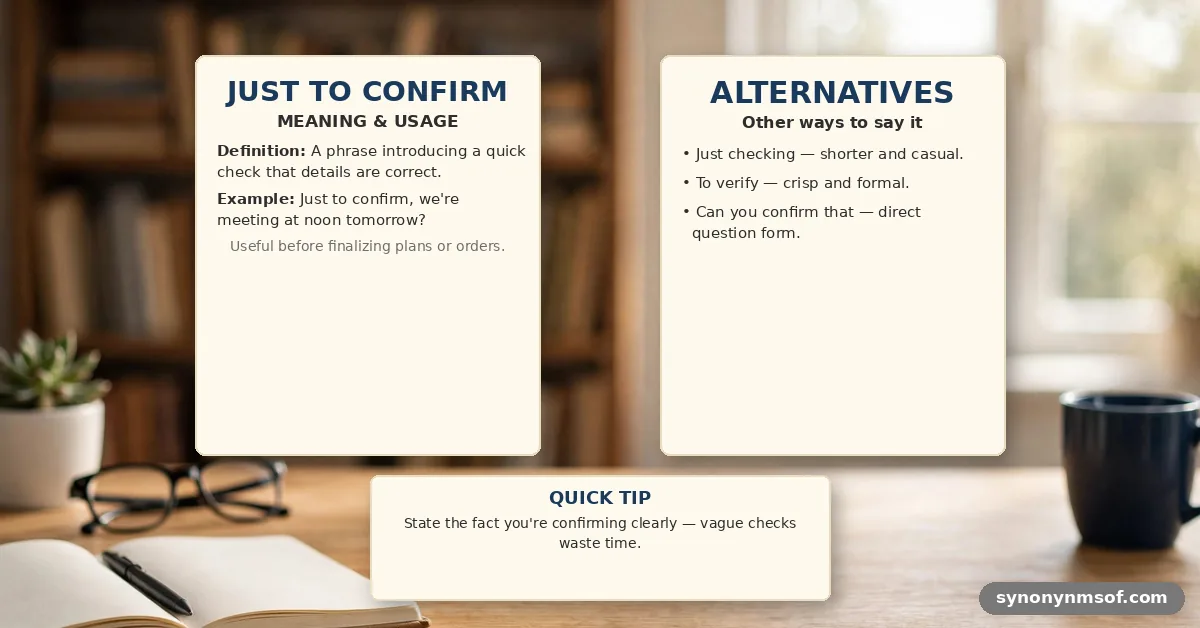
The phrase “just to confirm” means you want to verify information before moving forward.
You’re essentially saying:
“I want to make sure this information is correct.”
People use it to:
- Double-check details
- Prevent misunderstandings
- Confirm instructions
- Verify schedules or decisions
- Ensure agreement between people
Simple Example
“Just to confirm, the meeting starts at 10 AM tomorrow?”
The speaker is checking accuracy before acting on the information.
Why People Use “Just to Confirm”
Most mistakes in communication happen because people assume details instead of verifying them.
One missed date.
One misunderstood instruction.
One unclear expectation.
That’s often all it takes for confusion to spread.
I learned this the hard way during a freelance project years ago.
A client casually mentioned wanting “final revisions by Friday.” I assumed Friday evening. They meant Friday morning.
That single assumption created unnecessary stress for everyone involved.
Now, I confirm details constantly.
Not because I’m insecure.
Because clarity saves time, relationships, and energy.
Is “Just to Confirm” Polite?
Yes — in most situations, it sounds polite and professional.
The phrase softens communication while still asking for accuracy.
It Sounds Professional When:
- You’re verifying details calmly
- The wording is respectful
- The tone feels collaborative
- You avoid sounding accusatory
It Can Sound Annoying When:
- Repeated excessively
- Used to challenge someone indirectly
- Paired with frustration
- Asked unnecessarily
Compare These Examples
Professional:
“Just to confirm, should I send the updated draft today?”
Passive-Aggressive:
“Just to confirm, like I said earlier, the report was already submitted.”
Same phrase. Completely different emotional tone.
Quick Comparison Table: Alternatives to “Just to Confirm”
| Phrase | Tone | Best Use |
| To confirm | Direct | Formal emails |
| Just checking | Casual | Friendly communication |
| I want to make sure | Warm | Collaborative discussions |
| For confirmation | Formal | Business documents |
| Can you verify | Direct | Technical situations |
| If I understand correctly | Gentle | Sensitive conversations |
| Let me confirm | Professional | Workplace communication |
| To make sure we’re aligned | Collaborative | Team meetings |
Professional Alternatives to “Just to Confirm”
Repeating the same phrase constantly can make writing sound repetitive.
These alternatives help vary tone naturally.
To Confirm
Cleaner and more direct.
Example:
“To confirm, the deadline remains unchanged.”
Just Checking
Friendly and conversational.
Example:
“Just checking — are we still meeting at 3 PM?”
I Want to Make Sure
Collaborative and soft.
Example:
“I want to make sure I understood the instructions correctly.”
If I Understand Correctly
Excellent for diplomacy.
Example:
“If I understand correctly, the new policy starts next month?”
Let Me Confirm
Professional and efficient.
Example:
“Let me confirm the final pricing details before approval.”
To Make Sure We’re Aligned
Popular in modern workplaces.
Example:
“To make sure we’re aligned, the campaign launches Monday, correct?”
Why the Word “Just” Changes Tone
This is something many communication experts discuss quietly but rarely explain clearly.
The word “just” softens requests.
Without it, communication can sound more abrupt.
Compare These
“Confirm the timeline.”
Sounds commanding.
“Just to confirm the timeline…”
Sounds softer and more conversational.
That tiny word acts like social cushioning.
But there’s a trade-off.
Overusing “just” can make communication sound hesitant or overly apologetic.
The Hidden Problem With Overusing “Just”
Many professionals unintentionally weaken their communication by constantly using:
- Just
- Sorry
- Maybe
- Kind of
- Actually
Example
“Just wanted to check if maybe you had time to review this.”
Versus:
“Have you had time to review this?”
The second version sounds clearer and more confident.
That doesn’t mean “just” is wrong.
It simply works best when used intentionally.
How “Just to Confirm” Works in Emails
Email communication lacks facial expressions and vocal tone.
That’s why wording matters so much.
Professional Email Example
“Just to confirm, the presentation deck should include Q2 analytics?”
Client Communication Example
“To confirm, you’d like the revised version delivered by Thursday.”
Friendly Team Message
“Just checking to confirm everyone’s available Friday afternoon.”
Small wording choices dramatically affect how messages feel emotionally.
Examples of “Just to Confirm” in Real-Life Situations
Workplace Communication
“Just to confirm, are we prioritizing the website redesign first?”
Customer Service
“Just to confirm, you’d prefer store credit instead of a refund?”
Education
“Just to confirm, the assignment is due before midnight?”
Healthcare
“Just to confirm, should I take this medication after meals?”
Travel Planning
“Just to confirm, our flight leaves at 7 AM?”
The phrase exists because humans naturally misunderstand details sometimes.
When “Just to Confirm” Can Sound Passive-Aggressive
This deserves attention because it happens more often than people realize.
Sometimes clarification phrases become disguised frustration.
Example
“Just to confirm, the instructions were already shared last week.”
This doesn’t really sound like confirmation.
It sounds like criticism wrapped in polite language.
People are emotionally sensitive to implied blame.
Especially in workplace communication.
Better Ways to Confirm Without Sounding Defensive
Instead of sounding corrective, focus on alignment.
Less Effective
“Just to confirm, that’s not what I said.”
Better
“I may have explained that unclearly — let me restate it.”
Less Effective
“Just to confirm, you misunderstood the process.”
Better
“I think we may be interpreting the process differently.”
These shifts reduce tension immediately.
The Psychology Behind Confirmation Language
Strong communicators confirm details constantly.
Not because they lack confidence.
Because they understand the cost of assumptions.
In leadership, relationships, and business, clarity prevents:
- Conflict
- Delays
- Frustration
- Financial mistakes
- Emotional misunderstandings
Interestingly, asking for confirmation often signals professionalism rather than uncertainty.
Confident people verify important details.
“Just to Confirm” in Formal Writing
In formal documentation, the phrase may sound slightly conversational.
Writers often replace it with:
- To confirm
- For confirmation
- Specifically
- As confirmed
- To verify
Example
“For confirmation, all applications must be submitted by June 1.”
This sounds cleaner in reports and policies.
Synonyms for “Just to Confirm”
Here are useful alternatives you can rotate naturally:
- To confirm
- Just checking
- For confirmation
- To verify
- If I understand correctly
- I want to make sure
- Let me confirm
- To ensure accuracy
- To make sure we’re aligned
- Am I correct in understanding
Using varied wording improves readability and tone.
How Personality Types Affect Confirmation Style
This topic rarely gets discussed, but it matters deeply.
Detail-Oriented People
Usually appreciate confirmation because they value precision.
Fast-Paced Personalities
May become impatient with too many follow-up questions.
Emotional Communicators
Can interpret repeated confirmation as doubt or criticism.
Analytical Thinkers
Typically prefer over-clarification to avoid errors.
Understanding communication styles helps your wording land more effectively.
Common Mistakes People Make
Overusing Confirmation Phrases
Repeating “just to confirm” constantly becomes distracting.
Confirming Obvious Information
Too much confirmation can create unnecessary friction.
Sounding Passive-Aggressive
Tone matters as much as wording.
Asking Vague Questions
Specific questions create clearer answers.
Avoiding Confirmation Entirely
This is often what causes bigger misunderstandings later.
How Leaders Use Confirmation Effectively
Great leaders confirm constantly.
Not because they’re confused.
Because they know assumptions are expensive.
You’ll often hear effective managers say:
- “Let’s confirm expectations.”
- “Can we align on priorities?”
- “Walk me through your understanding.”
That creates clarity, accountability, and smoother collaboration.
Practical Tips for Better Confirmation Communication
Be Specific
Instead of:
“Just to confirm…”
Try:
“Just to confirm, the launch date is July 12?”
Keep It Short
Long explanations weaken clarity.
Stay Neutral
Avoid emotionally loaded wording.
Focus on Alignment
Not proving someone wrong.
Match Tone to Context
Professional setting? Use polished wording.
Friendly conversation? Keep it natural.
Why Clear Confirmation Builds Trust
This is the deeper reason confirmation matters.
People trust communicators who create clarity.
When someone consistently confirms details respectfully:
- Projects run smoother
- Expectations stay aligned
- Relationships improve
- Misunderstandings decrease
Clear communication feels emotionally safe.
And emotional safety is one of the most underrated parts of professionalism.
Final Thoughts on Just to Confirm
The phrase just to confirm may sound small, but it plays a powerful role in communication.
Used thoughtfully, it prevents confusion, strengthens collaboration, and helps people stay aligned.
Used poorly, it can sound uncertain, repetitive, or passive-aggressive.
The key isn’t memorizing perfect phrases.
It’s understanding the emotional effect behind your words.
Whether you say:
- “Just checking”
- “To confirm”
- “I want to make sure I understand”
- “For clarity”
…the goal stays the same:
Creating communication that feels clear, respectful, and human.
FAQs
What does “just to confirm” mean?
It means you want to verify information or make sure something is correct before proceeding.
Is “just to confirm” professional?
Yes. It’s commonly used in emails, meetings, and workplace communication.
What are professional alternatives to “just to confirm”?
Professional alternatives include:
- To confirm
- For confirmation
- I want to make sure
- If I understand correctly
Is “just to confirm” polite?
Generally yes, especially when used respectfully and collaboratively.
Can “just to confirm” sound rude?
It can if paired with frustration, sarcasm, or passive-aggressive wording.
Should I use “just” in professional emails?
Sometimes. “Just” softens tone, but overusing it can make writing sound hesitant.
What are synonyms for “just to confirm”?
Common alternatives include:
- To verify
- Just checking
- To ensure accuracy
- Let me confirm
Why do people say “just to confirm”?
People use it to avoid misunderstandings and ensure everyone shares the same understanding.
Is it okay to confirm details repeatedly?
Yes, especially for important tasks or deadlines. Clarity is usually better than assumption.
How do you confirm something politely?
Use calm, collaborative wording like:
- “Just to confirm…”
- “I want to make sure I understood correctly.”
- “Could you verify…”