
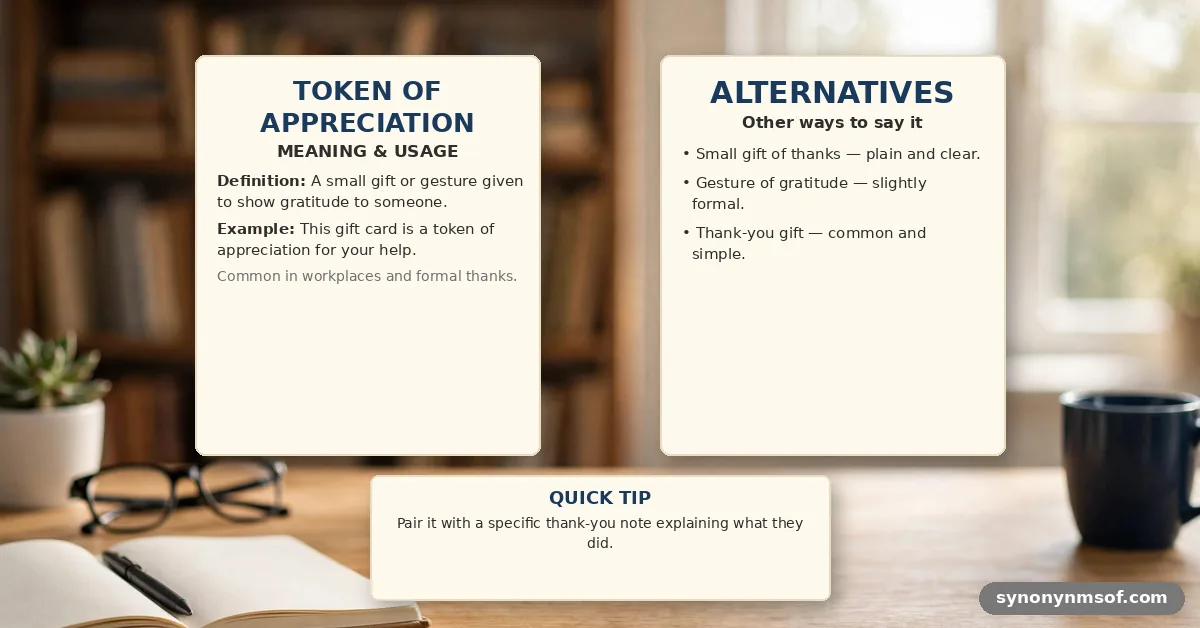

A token of appreciation is a small, thoughtful gesture used to signal gratitude when words alone feel insufficient. Whether you are acknowledging a colleague’s extra effort or thanking a client for their loyalty, these gifts bridge the gap between professional courtesy and genuine human connection. Understanding the nuance behind these gestures helps ensure your message lands with sincerity rather than feeling like a mandatory box to check.
By selecting the right item and pairing it with a heartfelt note, you transform a routine transaction into a meaningful relationship-building moment. This guide explores the definition, appropriate usage, and practical examples to help you master the art of professional gratitude.
At its core, a token of appreciation is a symbolic item or action meant to represent thankfulness. It is rarely defined by its monetary value. Instead, the focus remains on the intent behind the gift.
The meaning definition of this phrase centers on the idea that the item is a representative piece of a larger sentiment. It serves as a physical reminder of a shared experience or a specific contribution that went above and beyond standard expectations.
In a professional context, these gestures act as a social lubricant. They signal that you recognize the effort invested by the other party. When you offer something small, you aren’t trying to “pay” for the favor; you are acknowledging the value of the relationship itself.
When to Use Professional Gestures

Knowing when to deploy a token of appreciation is just as important as choosing the gift itself. Timing influences how the recipient perceives the gesture.
If you wait too long after the event, the impact of your gratitude diminishes. Aim to provide your gift within a few days of the service or milestone you are celebrating. This keeps the connection fresh and the sentiment relevant.
Consider these scenarios for offering a gesture:
- Following the successful completion of a high-pressure project.
- After a mentor provides significant career guidance or networking support.
- When a client remains patient during a difficult period of service disruption.
- During professional anniversaries or personal milestones like a promotion.
- To acknowledge a team member who covered your responsibilities while you were away.
Choosing the Right Gift
Selecting a gift requires an understanding of your recipient’s preferences and the boundaries of your professional relationship. A gift that is too extravagant can cause discomfort, while one that is too impersonal may seem like an afterthought.
Focus on utility or personal relevance. A high-quality notebook for a colleague who loves to write, or a coffee card for a client you know visits a specific shop, demonstrates that you pay attention.
Avoid items that are overly personal, such as clothing or jewelry, unless you have a close friendship outside the office. Keep your choices neutral but thoughtful. When in doubt, a handwritten note paired with a modest, high-quality consumable item is usually the safest and most appreciated path.
How to Write a Thank-You Message
A gift without a message is merely an object. Including a note turns it into a token of appreciation that resonates.
Start by clearly stating what you are thankful for. Be specific about the action, such as the extra hours they put in or the specific insight they provided during a meeting.
Avoid generic phrases like “thanks for everything.” Instead, link the action to the positive result it produced. A sentence such as, “Please accept this as a small thank you for your help on the Q3 report,” is far more effective than a vague expression of gratitude.
Comparing Methods of Gratitude
The following table categorizes different ways to express thanks based on the context and the level of formality required.
| Method | Formality | Best Used For |
|---|---|---|
| Handwritten Note | High | Mentors, senior leadership, or long-term clients. |
| Small Consumable | Medium | Coworkers, project team members, or peers. |
| Public Recognition | High | Team meetings or company-wide newsletters. |
| Digital Gift Card | Low | Remote workers or quick, informal favors. |
Common Pitfalls to Avoid
Misjudging the nature of the gift can lead to awkward situations. One of the most common mistakes is offering a token of appreciation that feels like a bribe.
Ensure your timing is clearly linked to a past action, not a future expectation. If you present a gift before a contract is signed or a decision is made, the recipient may feel pressured or compromised.
Another mistake is failing to account for company policy. Many organizations have strict rules regarding gifts to prevent conflicts of interest. Always verify that your gesture complies with internal guidelines before presenting it.
Cultural Nuances in Gratitude
Different cultures view the act of giving in unique ways. In some regions, declining a gift initially is a standard part of the social dance, and you are expected to insist politely before the recipient accepts.
In other cultures, a gift of money or a tip might be considered offensive or demeaning. Research the professional norms of the person you are thanking to ensure your gesture is received in the spirit it was intended.
When working in an international English-speaking environment, keep your language clear and professional. Using phrases like “I wanted to show my appreciation” is globally understood and avoids the potential confusion of more idiomatic expressions.
The Role of Sincerity
Ultimately, the effectiveness of any gesture relies on your sincerity. If you feel obligated to give a gift, the recipient will likely sense that lack of genuine feeling.
Focus on the relationship, not the transaction. If you aren’t feeling particularly grateful, it is often better to write a sincere, thoughtful email rather than forcing a physical gift that may feel hollow.
Authenticity is the most valuable component of any token of appreciation. When you lead with gratitude, the professional bond strengthens naturally, creating a foundation of mutual respect that lasts far longer than any physical item.
FAQ
Is a token of appreciation always a physical gift?
No, it is not. While many people associate the term with physical items, it can also encompass acts of service, public recognition, or a formal recommendation. The defining factor is that the gesture acknowledges a specific contribution.
Can cash be a token of appreciation?
In most professional settings, cash is discouraged as it can blur the lines between a professional relationship and a transactional one. Gift cards or specific experiences are generally preferred because they show you put thought into the selection process.
How do I phrase the gift when presenting it?
Use simple, direct language. You might say, “I wanted to offer this as a small token of my appreciation for your hard work on the project,” or “Please accept this as a gesture of thanks for your help.”
What if the recipient tries to refuse the gift?
If they refuse due to company policy, accept their decision gracefully. You can say, “I completely understand and respect your company’s guidelines; I just wanted to express how much I valued your input.”
Conclusion
Mastering the use of a token of appreciation is a hallmark of a thoughtful professional. By focusing on sincerity, timing, and appropriateness, you ensure that your gestures strengthen your connections rather than creating unnecessary friction. Remember that the goal is to acknowledge the value of the other person’s time and expertise.
Whether you choose a handwritten note or a small, meaningful gift, the impact of your gratitude depends on the care you put into the delivery. Start small, remain consistent, and you will find that these expressions of thanks become a natural and powerful part of your professional repertoire. Feel free to reach out if you would like more specific examples for your unique workplace culture.
SEO Title: Token of Appreciation: Meaning, Usage, and Examples
Meta Description: Learn the meaning of a token of appreciation, when to use it, and how to express professional gratitude effectively with our practical examples.
Suggested URL Slug: token-of-appreciation-meaning-usage
Primary Keyword: Token of Appreciation
Secondary Keywords: gratitude, gift, thank, professional, recognition, gesture, english, usage, examples