

Have you ever noticed how two simple words can instantly make someone feel cared for?
Whether someone sneezes, shares good news, faces a difficult time, or simply offers a kind gesture, the phrase “God bless you” has a unique way of expressing warmth and compassion. It has been part of everyday conversations for centuries and continues to hold emotional value across many cultures.
For some people, it’s a religious blessing. For others, it’s simply a heartfelt expression of kindness and goodwill. Regardless of how it’s is interpreted, the phrase communicates one powerful message: “I wish you well.”
Still, there are times when you may want to use a different expression. Perhaps you’re writing a professional email, speaking to someone with different beliefs, or simply looking for a fresh way to express your good wishes.
In this guide, you’ll learn:
- The simple meaning of God bless you
- Why people say it after someone sneezes
- Whether it’s always religious
- 28 meaningful alternatives
- When each alternative works best
- Frequently asked questions
- Tips for using these expressions naturally
Let’s begin with the meaning behind this timeless phrase.
What Does “God Bless You” Mean?
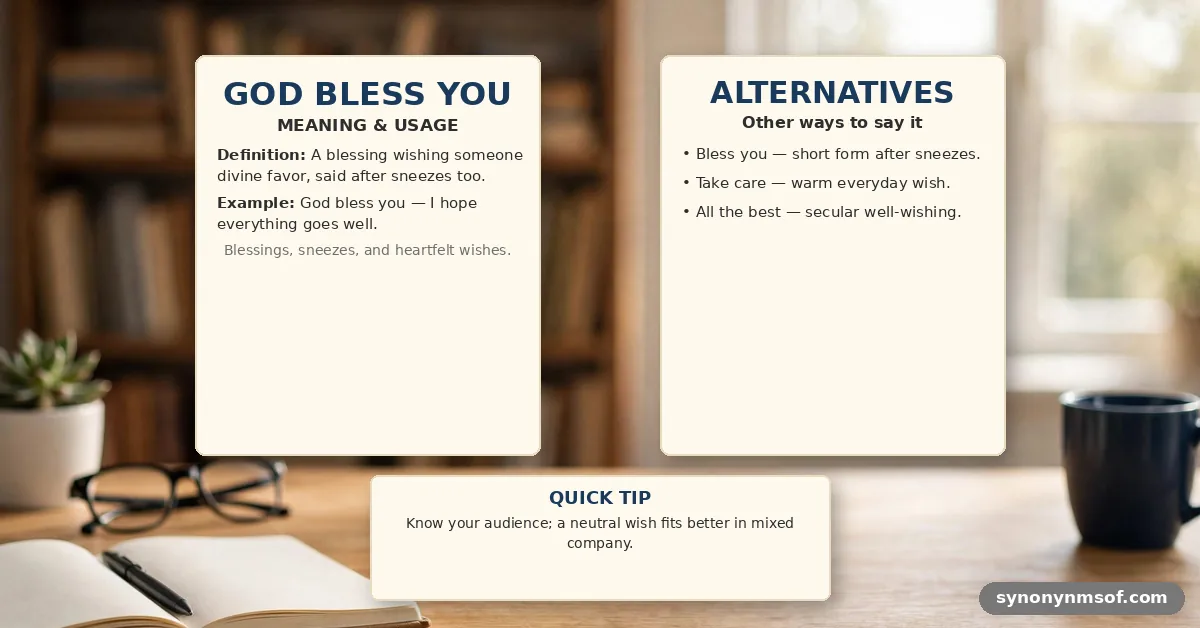
In simple words, “God bless you” is a heartfelt wish that someone experiences protection, peace, happiness, health, or success.
It’s a way of saying:
- I hope you’re safe.
- I wish you well.
- May good things happen to you.
- I’m thinking of you.
- I care about your well-being.
Although the phrase mentions God, many people use it simply as an expression of kindness rather than a strictly religious statement.
Its meaning often depends on the situation.
For example:
- After someone sneezes
- During illness
- When saying goodbye
- After receiving help
- During grief
- When offering encouragement
At its heart, it’s less about the exact words and more about showing genuine care.
See Also: Please Let Me Know If You Need Anything Else: 28 Alternatives
Why Do People Say “God Bless You” After a Sneeze?
One of the most common uses of this phrase happens after someone sneezes.
The tradition dates back hundreds of years.
Historically, many people believed sneezing could:
- indicate illness,
- make someone vulnerable to evil spirits,
- or even cause the soul to leave the body.
During outbreaks such as the plague, wishing someone “God bless you” became a way of praying for their health and protection.
Today, most people say it simply because it’s polite. Many don’t even think about its historical origins—it has become part of everyday etiquette.
Must See: Please Let Me Know: 28 Professional Alternatives & Meaning
Is “God Bless You” Always Religious?
Not necessarily.
Although the phrase has religious origins, modern usage is much broader.
Many people say it because it expresses:
- kindness,
- gratitude,
- sympathy,
- encouragement,
- compassion,
- or simple politeness.
Others may prefer more neutral expressions depending on their personal beliefs or the setting.
The key is understanding your audience and speaking with sincerity.
Quick Comparison Table
| Phrase | Tone | Best Used For |
| God bless you | Heartfelt | General blessing |
| Bless you | Casual | After sneezing |
| Take care | Friendly | Everyday conversations |
| Stay safe | Caring | Farewells |
| Wishing you the best | Professional | Emails |
| Sending prayers | Spiritual | Difficult times |
| Thinking of you | Supportive | Illness or grief |
| Wishing you peace | Gentle | Sympathy |
| Sending love | Affectionate | Family and friends |
| May good things come your way | Inspirational | Encouragement |
28 Other Ways to Say “God Bless You”
1. Bless You
Tone: Casual, Friendly
Best for: Sneezing and everyday conversations.
Example:
“Bless you! I hope you’re feeling okay.”
2. Take Care
Tone: Warm and Universal
Best for: Friends, coworkers, and family.
Example:
“Take care, and have a wonderful week ahead.”
3. Stay Safe
Tone: Caring
Best for: Travel, illness, or uncertain situations.
Example:
“Stay safe on your trip, and let me know when you arrive.”
4. Wishing You the Best
Tone: Professional and Polite
Best for: Emails, interviews, and farewells.
Example:
“Wishing you the best in your new position.”
5. Sending My Prayers
Tone: Spiritual
Best for: Difficult moments and illness.
Example:
“We’re sending our prayers for your speedy recovery.”
6. Keeping You in My Thoughts
Tone: Compassionate
Best for: Challenging life situations.
Example:
“You’re in my thoughts during this difficult time.”
7. Wishing You Peace
Tone: Gentle
Best for: Sympathy and emotional support.
Example:
“Wishing you peace and comfort in the days ahead.”
8. May Good Things Come Your Way
Tone: Inspirational
Best for: Celebrations and encouragement.
Example:
“May good things come your way—you truly deserve them.”
9. Sending Love
Tone: Affectionate
Best for: Close friends and family.
Example:
“Sending lots of love and hugs your way.”
10. Wishing You Strength
Tone: Encouraging
Best for: Recovery or personal challenges.
Example:
“Wishing you strength as you move through this difficult season.”
11. I Hope Everything Goes Well
Tone: Supportive
Best for: Everyday conversations.
Example:
“I hope everything goes well with your surgery tomorrow.”
12. May You Be Blessed
Tone: Traditional
Best for: Religious conversations.
Example:
“May you be blessed with happiness and good health.”
13. Sending Positive Thoughts
Tone: Inclusive
Best for: Mixed audiences.
Example:
“Sending positive thoughts your way today.”
14. Wishing You Health and Happiness
Tone: Warm
Best for: Birthdays, celebrations, and general well wishes.
Example:
“Wishing you health, happiness, and success in everything you do.”
15. May Peace Be With You
Tone: Calm, Spiritual, Comforting
Best for: Difficult moments, condolences, and religious conversations.
Example:
“May peace be with you and your family during this challenging time.”
16. I Wish You Every Happiness
Tone: Elegant, Sincere
Best for: Weddings, graduations, retirements, and milestone celebrations.
Example:
“I wish you every happiness as you begin this exciting new chapter.”
17. May Your Days Be Filled with Joy
Tone: Uplifting, Heartfelt
Best for: Greeting cards, celebrations, and personal messages.
Example:
“May your days be filled with joy, laughter, and wonderful memories.”
18. Sending Warm Wishes
Tone: Friendly, Thoughtful
Best for: Holidays, birthdays, and everyday encouragement.
Example:
“Sending warm wishes for a quick recovery.”
19. I Hope You Find Comfort
Tone: Gentle, Compassionate
Best for: Sympathy and emotional support.
Example:
“I hope you find comfort in the love of those around you.”
20. May Good Fortune Follow You
Tone: Inspirational, Optimistic
Best for: New jobs, travels, and fresh beginnings.
Example:
“May good fortune follow you wherever life takes you.”
21. Wishing You Comfort and Healing
Tone: Caring, Empathetic
Best for: Illness, recovery, and difficult circumstances.
Example:
“Wishing you comfort and healing during your recovery.”
22. You Have My Best Wishes
Tone: Professional, Respectful
Best for: Workplace communication and formal messages.
Example:
“You have my best wishes as you start your new role.”
23. Hoping for Brighter Days Ahead
Tone: Encouraging, Optimistic
Best for: Someone facing hardship or loss.
Example:
“I’m hoping for brighter days ahead for you and your family.”
24. May Life Be Kind to You
Tone: Poetic, Warm
Best for: Personal letters and heartfelt conversations.
Example:
“May life be kind to you wherever your journey leads.”
25. Sending Strength and Love
Tone: Deeply Supportive
Best for: Bereavement, illness, or emotional struggles.
Example:
“Sending strength and love as you navigate this difficult time.”
26. Wishing You Every Success
Tone: Professional, Encouraging
Best for: Career achievements, education, and business.
Example:
“Wishing you every success in your new adventure.”
27. May You Always Be Protected
Tone: Spiritual, Caring
Best for: Family members, close friends, and faith-based conversations.
Example:
“May you always be protected and surrounded by goodness.”
28. Take Good Care of Yourself
Tone: Warm, Personal
Best for: Everyday farewells and conversations with loved ones.
Example:
“Take good care of yourself, and don’t hesitate to reach out if you need anything.”
When Should You Say “God Bless You”?
Although it’s commonly associated with sneezing, the phrase has many thoughtful uses beyond that.
After Someone Sneezes
This is the most familiar situation. Saying “God bless you” or simply “Bless you” is considered polite in many cultures.
During Illness
When someone is recovering from surgery or dealing with health issues, the phrase offers comfort and hope.
Example:
“God bless you. I hope you feel better very soon.”
During Difficult Times
People often use the phrase to express sympathy after a loss, during hardship, or when someone is facing uncertainty.
Example:
“God bless you and your family during this difficult season.”
To Express Gratitude
Sometimes “God bless you” is another way of saying “Thank you” with heartfelt appreciation.
Example:
“Thank you for helping me today. God bless you.”
As a Farewell
Many people use it when saying goodbye to family members, friends, or neighbors.
Example:
“Take care, and God bless you.”
When Should You Avoid Saying “God Bless You”?
Although the phrase is generally appreciated, there are situations where another expression may be more suitable.
Formal Business Communication
In professional emails or corporate environments, neutral alternatives often sound more appropriate.
Instead of:
“God bless you.”
Try:
- Wishing you the best.
- Take care.
- Best wishes.
- Stay well.
With People Who May Be Uncomfortable with Religious Language
If you know someone prefers non-religious expressions, choose inclusive alternatives like:
- Thinking of you
- Sending positive thoughts
- Wishing you peace
- Take care
Automated Messages
Expressions of kindness are most meaningful when they feel personal rather than copied into every message.
Why Tone Matters More Than the Words
The same phrase can sound completely different depending on how it’s delivered.
Compare these examples:
Less sincere:
“God bless you.”
More heartfelt:
“God bless you. I truly hope everything gets easier for you soon.”
The second version feels warmer because it adds genuine empathy.
People usually remember sincerity—not perfect wording.
Frequently Asked Questions
What does “God bless you” mean?
It is a kind expression used to wish someone protection, health, peace, happiness, or well-being.
Why do people say “God bless you” after someone sneezes?
The tradition dates back centuries when sneezing was associated with illness and people believed a blessing offered protection.
Is “God bless you” always religious?
No. Although it has religious origins, many people now use it simply as a polite or caring expression.
Can non-religious people say “God bless you”?
Yes. Many people use the phrase as a cultural habit or expression of kindness rather than a religious statement.
Is it appropriate in professional settings?
It depends on the workplace. In formal or diverse environments, neutral alternatives like “Wishing you the best” or “Take care” are usually safer choices.
What’s the difference between “Bless you” and “God bless you”?
“Bless you” is shorter, more casual, and commonly said after a sneeze, while “God bless you” often feels more heartfelt or spiritual.
What are the best alternatives to “God bless you”?
Some excellent alternatives include:
- Take care
- Stay safe
- Wishing you peace
- Sending positive thoughts
- Keeping you in my thoughts
- Wishing you strength
- Sending warm wishes
- Best wishes
Is it rude not to say “God bless you” after someone sneezes?
Not at all. Social customs vary between cultures. In some places, people don’t say anything after a sneeze.
Why has this phrase remained popular for centuries?
Because it expresses universal human values—kindness, compassion, hope, and concern for others.
Can I use “God bless you” in a thank-you message?
Absolutely. Many people say it to express deep appreciation.
Example:
“Thank you for your generosity. God bless you.”
Is “God bless you” appropriate in sympathy messages?
Yes. It’s often used to offer comfort during grief or difficult times, especially if the recipient appreciates religious or spiritual language.
What is the most professional alternative to “God bless you”?
Some of the best professional options are:
- Wishing you the best
- Best wishes
- Take care
- Stay well
- All the best
These phrases convey warmth while remaining suitable for workplace communication.
Conclusion
The phrase “God bless you” has endured for generations because it speaks to something timeless: the human desire to care for one another. Whether it’s offered after a sneeze, during illness, in moments of gratitude, or when comforting someone through hardship, the words carry a sense of hope, compassion, and goodwill that transcends their simplicity.
At the same time, no single expression fits every situation. Depending on your audience and the setting, alternatives like “Take care,” “Wishing you the best,” “Sending positive thoughts,” or “Wishing you peace” may feel more natural or inclusive. Choosing the right phrase is less about following strict rules and more about matching your words to the moment.
Ultimately, the impact of any blessing comes from the sincerity behind it. People may forget the exact words you used, but they rarely forget how your kindness made them feel. Whether you say “God bless you” or one of its many thoughtful alternatives, a genuine expression of care can brighten someone’s day and strengthen human connection in ways that simple information never could.