
When you reach the end of a proposal or a draft, asking someone to please let me know what you think serves as a bridge between your work and their evaluation. It is more than a polite closing; it is a tactical invitation to engage in a dialogue. Effective communication relies on clarity, and knowing how to solicit an honest opinion can determine the speed and quality of your results.
This article explores why this specific phrase remains a staple of professional correspondence and how you can adapt it to suit different contexts, relationships, and desired outcomes. You will gain a deeper understanding of how to invite critique without sounding passive or uncertain.
The Core Meaning and Intent

At its simplest, asking for feedback is a signal that your work is ready for external review. It tells the recipient that you value their perspective and that you are prepared to adjust your trajectory based on their input. This phrase functions as an open door, inviting the other person to step into the process.
When you use this language, you are shifting the power dynamic slightly. You acknowledge the recipient’s expertise and place them in a position of authority regarding the final output. It is a sign of confidence rather than weakness, as it demonstrates a willingness to refine ideas through collaboration.
Why Tone Matters in Professional Requests
The way you structure your request changes how it is received. A blunt demand for feedback can feel aggressive, whereas a overly apologetic tone might signal a lack of confidence in your own analysis. Striking a balance requires an awareness of your relationship with the recipient.
If you are emailing a superior, you want to remain concise. If you are working with a peer, you can afford to be more casual. The goal is to ensure the recipient feels empowered to share their thoughts without feeling burdened by the request.
Defining Your Objectives
Before you send an email, decide what you actually need from the other person. Do you want a general impression, or do you need a line-by-line critique? Being specific helps the recipient provide better, more actionable data.
* General feedback: Use this for creative projects where you want a gut check.
* Specific critique: Use this for technical documents or budget proposals.
* Approval/Sign-off: Use this when you need formal authorization to proceed.
Variations for Different Scenarios
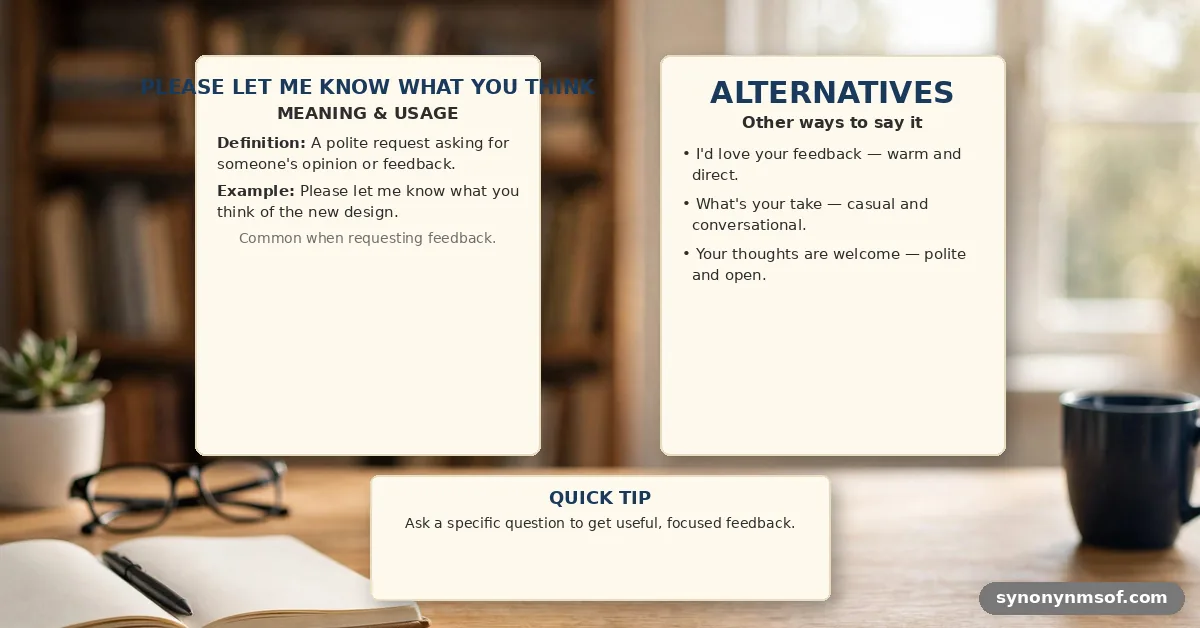
Sometimes, the standard phrase feels too repetitive or informal. Varying your language helps keep your communication fresh and ensures you match the specific context of your project. You can choose from a range of options depending on your goal.
| Context | Suggested Phrase |
|---|---|
| Formal Report | I welcome your feedback on these findings. |
| Creative Project | Do you have any suggestions for improvement? |
| Urgent Request | I would appreciate your thoughts by EOD. |
| Casual Peer Review | What is your take on this direction? |
How to Solicit Actionable Feedback

If you want high-quality responses, you must make it easy for the reader. Avoid broad, open-ended questions if you are short on time. Instead, highlight specific areas where you feel uncertain or where a second pair of eyes would be most beneficial.
For instance, you might point them toward a specific section of a document. You could also provide a few options and ask which one they prefer. This approach is supported by principles of effective workplace communication, which prioritize clear and focused inquiries.
Common Pitfalls to Avoid
Many people struggle with asking for input because they fear the answer. They might use hedging language that makes them sound unsure of their own work. Avoid phrases like “I am not sure if this is right” unless you actually need guidance on the core concept.
Another mistake is failing to provide a deadline. If you do not give the recipient a timeline, your request will likely drift to the bottom of their inbox. Always pair your request for thoughts with a target date for completion.
Structuring Your Emails for Clarity
Your request for feedback should never be the first thing a recipient sees. Start by providing the necessary context and the reason for the document’s existence. Once you have set the stage, transition naturally into your request for their opinion.
Keep your sentences short. If you have multiple questions, use bullet points to separate them. This makes it easier for the reader to address each point individually without losing track of your goals.
When to Follow Up
Following up is a necessary part of the process. If you do not hear back within a reasonable timeframe, a polite nudge is appropriate. Do not assume that silence indicates a negative reaction; it often just means the person is busy.
Keep your follow-up email brief. Acknowledge that they have a full schedule and restate the importance of their input. This keeps the relationship positive while moving your project forward.
Frequently Asked Questions
Is it grammatically correct to put a question mark after the phrase?
Yes, it is often better to use a question mark when you are directly asking someone to share their opinion. While the phrase can function as an imperative, a question mark makes the request feel more conversational and less like a command.
How do I ask for feedback without sounding insecure?
Focus on the work rather than your feelings about it. Instead of saying “I hope this is okay,” say “I am interested in your perspective on these specific points.” This moves the focus to the objective outcome of the project.
What if I disagree with the feedback I receive?
You are not obligated to implement every suggestion you get. Acknowledge the feedback, thank the person for their time, and explain your reasoning if you decide to go in a different direction. Professionalism is about maintaining the relationship even during a disagreement.
How soon should I expect a response?
This depends entirely on the nature of the request and your relationship with the recipient. If it is an urgent matter, set a clear deadline in your initial email. Otherwise, allow at least two to three business days before sending a polite follow-up.
Final Thoughts on Feedback Requests
Mastering the art of soliciting feedback is a vital skill for anyone looking to improve their professional efficiency. By using the phrase please let me know what you think with intention and clarity, you transform a generic closing into a powerful tool for collaboration. Remember that feedback is a resource, and you should treat it as such by being specific, respecting the other person’s time, and providing enough context for them to offer meaningful insights. Even seasoned professionals still mix up word forms like masters or master’s, so a quick proofread pays off.
As you integrate these practices into your daily routine, you will find that your projects move forward with greater momentum. You are not just asking for an opinion; you are building a culture of open communication. Continue to refine your approach, and do not hesitate to ask for thoughts on your own communication style to see how you can further improve your impact.