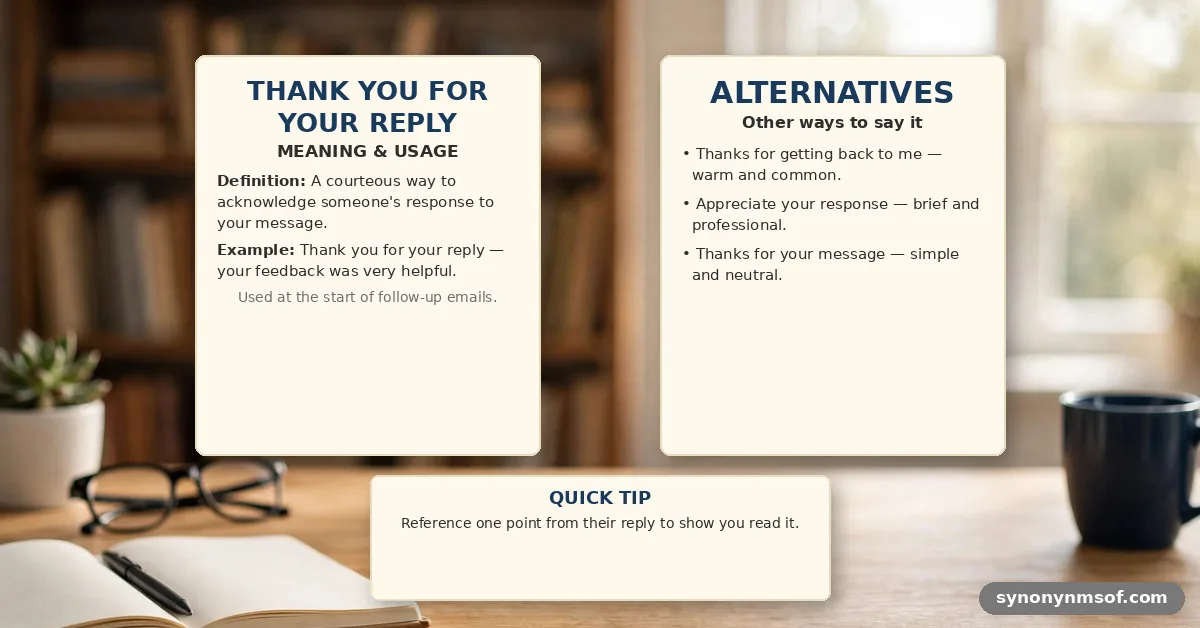

When someone sends you a message saying thank you for your reply, they are simply acknowledging that you took the time to provide information or feedback. This phrase serves as a polite bridge in professional and personal correspondence. It signals that the conversation is moving forward or that your specific contribution was received and understood.
Mastering this simple expression helps you maintain positive relationships and keeps communication channels clear. Whether you are navigating a complex business deal or just catching up with a friend, knowing exactly how to use these words effectively is a fundamental skill in modern digital interaction. You will gain a deeper understanding of tone, timing, and the nuances of workplace etiquette by exploring how these phrases function in practice.
What the Phrase Really Means
At its core, stating thank you for your reply is a functional acknowledgment. It tells the other person that their message arrived and that it provided value. It is the digital equivalent of a nod or a handshake during a face-to-face conversation.
In many cases, this phrase acts as a polite closing or a transition. It prevents the conversation from feeling abrupt or unfinished. By validating the effort the sender put into their response, you create a sense of mutual respect and cooperation.
The Role of Gratitude in Digital Communication

Gratitude serves as the social glue of the internet. When you send an email or a text, you are asking for someone’s time and attention. Acknowledging that effort with a brief note of thanks shows that you do not take their time for granted.
This is especially important in high-pressure environments. If you are waiting on a critical answer, the person who provides it has solved a problem for you. A quick note of thanks confirms that the task is complete and that no further action is required for the moment.
Professional vs. Casual Contexts
The tone you choose depends entirely on your relationship with the recipient. A corporate email requires a different level of formality than a quick text message to a coworker or a friend. Understanding this distinction is vital for maintaining your professional reputation.
Formal settings prioritize clarity and brevity. You want to acknowledge receipt without cluttering the inbox of a busy colleague. Casual settings allow for more warmth and personality, where you might include an emoji or a more relaxed sentence structure.
Formal Email Etiquette
In a formal environment, you should keep your response concise. The goal is to show appreciation while respecting the other person’s time. Avoid excessive flowery language that might obscure your message.
If you are writing to a client or a supervisor, use complete sentences. A well-structured reply suggests that you are organized and attentive. It also leaves a positive impression of your communication style.
Variations for Different Situations
Not every situation calls for the exact same phrasing. Sometimes you need to express deep appreciation, while other times a quick nod is sufficient. Here is a breakdown of how to adapt your message based on the circumstances.
- The Standard Acknowledgment: “Thank you for your reply; I have received the documents.”
- The Action-Oriented Response: “Thank you for your prompt response. I will review these notes and get back to you by Friday.”
- The Appreciation of Effort: “I really appreciate your detailed response to my questions.”
- The Casual Follow-up: “Thanks for getting back to me so quickly!”
Comparison of Response Styles
Choosing the right level of formality can be tricky. The following table provides a quick reference for when to use specific types of acknowledgments based on the context of your interaction.
| Context | Best Approach | Tone |
|---|---|---|
| Client Email | Formal/Professional | Polite, concise, and clear |
| Internal Memo | Direct/Efficient | Functional and brief |
| Text to Peer | Casual/Friendly | Warm and conversational |
| Urgent Request | Action-Focused | Urgent but appreciative |
Why Timing Matters
The timing of your reply is often just as important as the words themselves. Responding too slowly can make the other person feel ignored, while responding too quickly might signal that you did not actually read the information provided.
Strive for a balance that shows respect for the recipient’s schedule. If you need more time to process the information, it is perfectly acceptable to say so. You can acknowledge the receipt of the email and mention that you will provide a more detailed response later.
Avoiding Common Pitfalls
One common mistake is over-explaining. If you have already thanked the person, you do not need to repeat it multiple times in the same thread. This can make your communication feel repetitive and inefficient.
Another pitfall is being too vague. If you say thanks for the reply but do not confirm that you understood the content, the sender might worry that their message was incomplete. Always try to link your gratitude to the specific information you received.
How to Respond to Someone Else
If you are the one receiving the thanks, you should know how to handle the etiquette of the interaction. A simple acknowledgement is usually enough to keep the conversation running smoothly. You do not need to overthink the response.
If you want to maintain a high level of professionalism, consider using phrases that encourage further communication if necessary. Being helpful is a great way to build your personal brand. You can learn more about email etiquette guidelines to ensure your tone remains appropriate in every scenario.
When to Keep it Simple
Sometimes, the best reply is no reply at all. If the person has sent you a final piece of information and the matter is closed, a simple thank you note is often the perfect way to wrap up the thread.
Do not feel pressured to keep a conversation alive if there is nothing left to discuss. Respecting the other person’s inbox is a sign of high emotional intelligence. A clean, decisive end to a conversation is often appreciated by busy professionals.
FAQ
What is the most professional way to say thank you for your reply?
The most professional approach is to be direct and concise. A phrase like “Thank you for the information; I have received your response” is clear, polite, and appropriate for almost any business setting.
Should I use an exclamation mark in my response?
You can use an exclamation mark if the context is friendly or if you are expressing genuine excitement. However, avoid them in very formal or somber business communications to maintain a steady, professional tone.
How do I respond if I need more time to review the reply?
It is perfectly acceptable to say, “Thank you for your reply. I am currently reviewing the details and will get back to you with my feedback by [Day/Time].” This keeps the sender informed and sets clear expectations.
Is it okay to use thanks instead of thank you?
Using “thanks” is perfectly acceptable for internal emails, text messages, or communications with colleagues you know well. Reserve the full “thank you” for formal letters, clients, or people you are speaking with for the first time.
Conclusion
Understanding the nuances of how to say thank you for your reply is about more than just vocabulary; it is about building trust through consistent and clear communication. By choosing the right tone and level of formality, you show that you respect the other person’s time and effort. Whether you are sending a quick note of gratitude to a teammate or finalizing a contract with a client, these small gestures go a long way in strengthening your professional relationships.
The next time you find yourself at the end of an email chain, take a moment to consider the best way to close the loop. A thoughtful acknowledgement leaves a lasting impression and ensures that your digital interactions remain productive and positive. Start implementing these small adjustments today to improve how you connect with others in your daily work.