
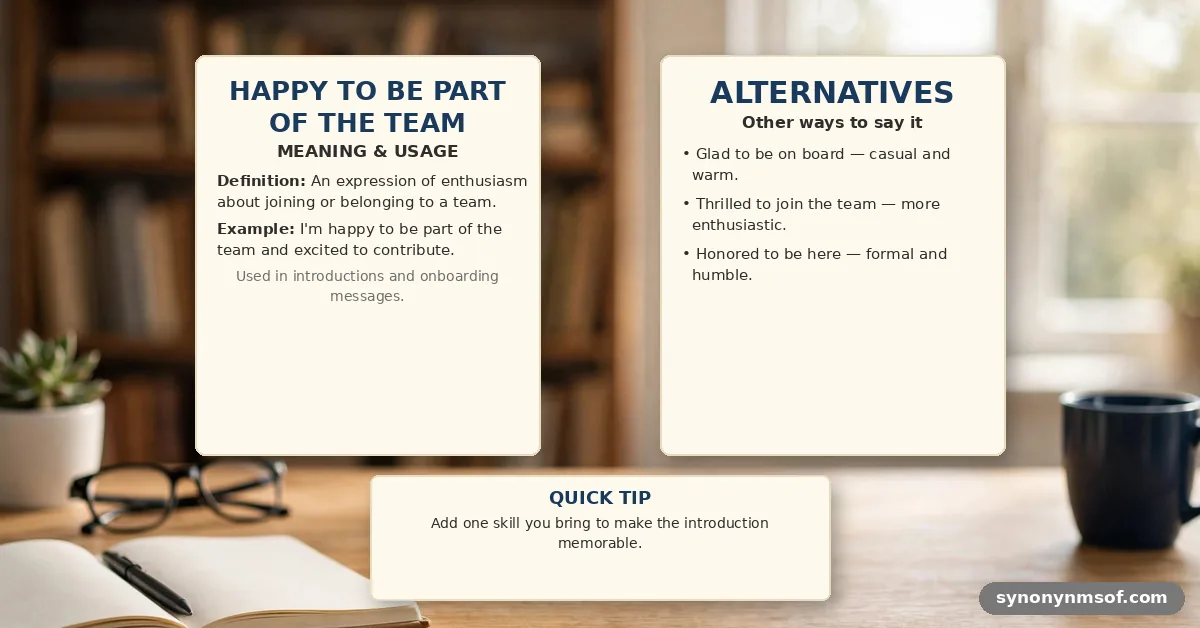

When you tell a colleague that you are happy to be part of the team, you are doing more than offering a polite pleasantry. This phrase acts as a social signal that validates your commitment to shared goals and your alignment with group culture. Whether you are joining a new project or celebrating a milestone with long-term peers, expressing genuine satisfaction in your role helps build the psychological safety necessary for high performance.
Understanding how to use this sentiment correctly allows you to project confidence and enthusiasm without sounding insincere. You will learn here how to leverage this expression to strengthen your professional reputation and foster deeper collaboration across your organization.
The Core Meaning Behind the Phrase
At its simplest, stating that you are happy to be part of the team signals mutual respect and professional gratitude. It communicates that you value the collective effort over individual gain, which is a hallmark of high-functioning groups. When you use this language, you are essentially confirming that your personal objectives align with the broader mission of the department or organization.
Why Intent Matters

The impact of these words relies entirely on the underlying intent. If you use the phrase as a generic filler, colleagues will likely perceive it as superficial or robotic. However, when you attach it to a specific accomplishment or a recent challenge you overcame together, the words carry real weight.
Building Social Capital
Regularly acknowledging your place within a group helps you build social capital. It demonstrates that you are a team player who recognizes the contributions of others. By validating the group’s existence, you invite others to view you as a reliable partner rather than an isolated worker.
When to Use This Expression
Knowing the right moment to express your satisfaction is just as important as the message itself. If you voice your enthusiasm too frequently, it may lose its power. Conversely, waiting too long can make you appear detached or uninvested in the outcome of your shared work.
- During the onboarding process when you first join a new project.
- After successfully completing a high-stakes deliverable with your peers.
- In response to positive feedback from a supervisor regarding team performance.
- When transitioning into a new role within an existing company structure.
- During difficult periods to signal your continued commitment to the group.
Professional Communication Standards
Professionalism requires a balance between warmth and clarity. You should avoid overly flowery language that obscures your actual message. If you are writing an email or a formal message, keep it concise so the recipient can focus on the sincerity of your sentiment rather than the complexity of your sentence structure.
The Role of Tone
Your tone should remain consistent with your workplace culture. In a fast-paced startup, a casual, high-energy message might be perfect.
In a more traditional corporate environment, a measured, professional note is usually the better choice. Always match your language to the expectations of your environment.
Avoiding Common Pitfalls
Avoid using the phrase as a way to avoid conflict or hide a lack of productivity. If you are underperforming, saying you are happy to be part of the team can sound like an attempt to compensate for poor results. Always ensure your actions match your words before offering verbal appreciation.
Comparing Contextual Variations
Different situations call for different levels of formality. The following table illustrates how to adjust your communication style based on the recipient and the medium.
| Scenario | Appropriate Tone | Key Focus |
|---|---|---|
| New Project Kickoff | Enthusiastic | Future goals and collaboration |
| Performance Review | Professional | Individual contribution to the group |
| Crisis Management | Steady/Reassuring | Persistence and unity |
| Peer-to-Peer Recognition | Casual/Warm | Specific shared success |
How to Express Enthusiasm Effectively
Being excited about your work is a competitive advantage. When you show genuine enthusiasm, it becomes contagious, often lifting the morale of those around you. You don’t need to be loud to show you are happy; you simply need to be present and engaged.
Connecting with Shared Goals
Focus your comments on the work itself. Instead of saying, “I am happy to be part of the team,” try saying, “I am excited to see how our strategy impacts the upcoming launch.” This pivots the conversation toward the work, which provides a more concrete foundation for your positive feelings.
The Power of Specificity

Specificity is the enemy of ambiguity. If you mention a specific task or a particular skill a colleague displayed, you prove that you are paying attention. This level of detail confirms that you are not just saying the words, but that you are truly invested in the team’s success.
Aligning with Organizational Culture
Every organization has a different way of showing appreciation. Some companies value public recognition, while others prefer quiet, one-on-one acknowledgement. Understanding these norms is part of being a successful member of any professional group.
Observing Team Dynamics
Before you express your feelings, observe how others communicate. Do they use Slack channels to celebrate wins?
Do they prefer handwritten notes for significant milestones? Aligning your communication style with these habits ensures your message is well-received.
The Importance of Authenticity
If you do not feel happy to be part of the team, do not force it. Authenticity is easy to spot, and insincerity can damage your reputation more than silence. If there are issues, address them constructively rather than masking them with forced positivity.
Psychological Benefits of Team Membership
Human beings are wired for connection. According to research from the Harvard Business Review, feeling like a valued member of a group is a primary driver of long-term professional satisfaction and reduced burnout. When you feel that you belong, your cognitive load is lower because you are not constantly worrying about your social standing within the group.
Fostering Psychological Safety
When you tell others you are glad to be working with them, you contribute to a culture of psychological safety. This environment allows people to take risks, share new ideas, and admit mistakes without fear of judgment. A team that feels safe is a team that innovates.
Long-term Retention
Teams that regularly acknowledge the value of their members see higher retention rates. When people feel seen and appreciated, they are less likely to look for opportunities elsewhere. Your simple expression of gratitude can be a small but vital part of that retention strategy.
FAQ
How do I express this sentiment without sounding like I am just being polite?
The best way to avoid sounding like you are just being polite is to include a specific detail about the work. Mention a recent win, a specific challenge you solved together, or a unique skill that a teammate brought to the table. When you anchor your statement in reality, it stops being a generic pleasantry and becomes a piece of genuine feedback.
Is it appropriate to say this to a supervisor?
Yes, it is appropriate, provided the timing is right. A performance review or the conclusion of a project are ideal times to express your commitment. Keep the tone professional and focus on how your role within the group has helped you grow or contributed to the company’s success.
What if I am not actually happy to be part of the team?
If you are not feeling positive, focus on being professional rather than enthusiastic. You do not have to lie to be a good team player. Instead, emphasize your commitment to the tasks at hand and your respect for the professional goals of the group.
How can I show I am happy to be part of the team through my actions?
Actions are often more powerful than words. You can show your commitment by meeting deadlines, offering help to colleagues who are struggling, and actively participating in meetings. When your daily habits reflect a high level of engagement, your verbal expressions of happiness carry much more weight.
Conclusion
Expressing that you are happy to be part of the team is an essential skill for anyone looking to build a sustainable and successful career. By using this phrase mindfully, you create space for better collaboration and stronger interpersonal relationships. Remember that the goal is not to use the phrase as often as possible, but to use it when it truly reflects your commitment to your colleagues and your work.
Stay observant of your team’s culture, keep your feedback specific, and always prioritize authenticity. As you continue to contribute your unique talents and maintain a positive outlook, you will find that your professional network grows stronger and your work becomes more rewarding. Being a supportive, engaged member of a team remains one of the best ways to advance your career.