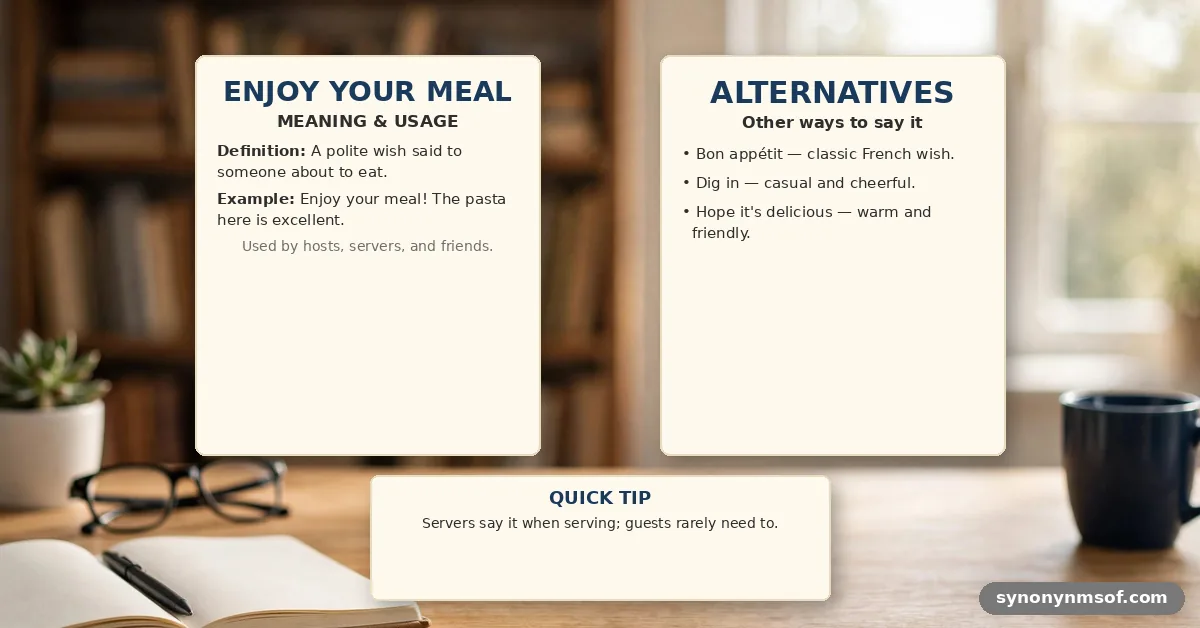

When you hear someone tell you to enjoy your meal, they are offering a polite, hospitable wish for your dining experience to be pleasant. It serves as a social bridge, acknowledging the act of eating as a communal or personal satisfaction rather than just a biological necessity.
Whether you are in a high-end restaurant or grabbing a quick bite at home, understanding how to use this phrase helps you navigate various social settings with grace. You will learn the nuances of this common expression and how to respond to it effectively.
The Meaning Behind the Expression

At its core, saying enjoy your meal is an act of goodwill. It signals that the speaker values your comfort and hopes the food you are about to consume meets your expectations. This simple gesture acknowledges the effort put into preparing or serving the dish.
The phrase functions as a social lubricant in the world of dining. It breaks the ice between a server and a guest or between hosts and their visitors. By wishing someone a good experience, you are essentially creating a positive atmosphere for the meal to follow.
Variations Across Cultures
Many languages have their own unique way to express this sentiment. Understanding these can help you appreciate the global nature of hospitality. For example, the French bon appétit is perhaps the most famous international equivalent, often used across the English-speaking world.
Similarly, the German guten Appetit serves the same purpose in a different linguistic context. These words are not just translations; they are cultural markers that emphasize the importance of food in human connection. Even without using the exact English phrase, the intent remains consistent across borders.
When and Where to Use It
Timing is everything when you want to use this phrase naturally. You should typically say it right after the food has been served or just before the people at the table begin to eat. If you say it too early, before the food is present, it can feel a bit premature.
In a restaurant, the server will often say it after placing the plates down. In a home setting, the host or hostess usually says it to their guests as a way to invite them to start eating. It acts as a polite signal that the time for conversation has transitioned into the time for the meal.
Common Social Scenarios
- In a professional business lunch, where keeping things brief is key.
- At a family dinner, where it helps set a welcoming tone for the family.
- When you are a guest at a friend’s house, showing appreciation for the meal.
- During casual office parties, where it acknowledges the effort of the organizers.
How to Respond Properly
Many people find themselves searching for the right words when they are on the receiving end of this wish. The most common and effective response is a simple, sincere “Thank you.” You don’t need to overcomplicate your reply; a smile and a polite nod are often sufficient.
If you want to be slightly more expressive, you can say “Thank you, I’m really looking forward to it.” This shows the speaker that you appreciate their kindness. Keeping it brief is usually best so that you can proceed to enjoy your foods without delay.
Comparison of Dining Phrases
While the English phrase is standard, different situations may call for different levels of formality. The following table helps you choose the right approach based on the environment you are in.
| Phrase | Formality Level | Best Context |
|---|---|---|
| Enjoy your meal | Standard/Neutral | Restaurants, casual gatherings |
| Bon appétit | Polite/Refined | Formal dinners, trendy cafes |
| Dig in! | Informal/Casual | Close friends, family, BBQ |
| Please, enjoy | Polite/Direct | Service industry, host to guest |
Alternatives to the Standard Phrase

Sometimes, you might want to switch things up to avoid sounding repetitive. Using an alternative allows you to tailor your message to the specific culinary experience at hand. If the food looks particularly delicious, you might say, “I hope you enjoy this, it’s one of my favorites.”
For more formal events, sticking to the classics is generally safer. If you are looking for more insight on formal etiquette, you can check out the Etiquette School of America for professional guidelines on social conduct. Using a variety of phrases keeps your interactions feeling fresh and genuine.
The Role of Intent in Hospitality
The beauty of this phrase lies in its sincerity. If you are just saying it as a reflex, it might come across as hollow. When you truly mean it, the recipient senses the warmth in your tone and body language.
The goal is to make the other person feel welcome and cared for. If you are hosting, this is the perfect way to ensure your guests feel comfortable. It signals that you have put thought into the meal and that their satisfaction is your priority.
Common Misconceptions
One common misunderstanding is that you must respond in the same language or with a specific set phrase. In reality, a polite “thank you” is universally understood and appreciated. You don’t need to feel pressured to reply with “you too” unless the other person is also about to eat.
Another myth is that it is rude to speak while someone else is eating. While it is true that you shouldn’t interrupt someone mid-bite, wishing them well before they start is a sign of good manners. It is not an intrusion; it is an acknowledgement of the shared experience.
Refining Your Social Style
Improving your social awareness is a lifelong process. Using phrases like this correctly is just one part of being a thoughtful communicator. You should observe how others use these expressions in different settings to see what feels most natural for your own personality.
Remember that the context dictates the tone. A boisterous “dig in!” might be great for a game-day party but inappropriate for a quiet, intimate dinner. Pay attention to the cues around you, and you will always find the right words to say.
FAQ
What is the best way to respond if someone says this to me?
A simple “Thank you” is the standard and most polite response. If you know the person well, you can add “Thanks, you too!” if they are also eating.
Is it rude to say this if I am not eating with them?
Not at all. A server or a host often says this to guests without participating in the meal themselves. It is a gesture of service and hospitality.
Can I use this phrase in a business setting?
Yes, it is perfectly acceptable. It is professional and polite, helping to ease the tension before a meeting or a working lunch begins.
Should I use “bon appétit” instead of “enjoy your meal”?
You can use either. “Bon appétit” is slightly more formal and has a sophisticated flair, while “enjoy your meal” is the standard, direct English equivalent.
Conclusion
Mastering the art of social niceties like wishing someone to enjoy your meal can significantly impact how you are perceived in social and professional settings. It shows that you value the comfort of others and understand the importance of hospitality. By knowing when to use the phrase and how to respond gracefully, you create a more welcoming environment for everyone involved in the dining experience.
Whether you are hosting a formal dinner or simply grabbing lunch with a colleague, these small gestures matter. Practice using these expressions with genuine intent, and you will find that they help foster better connections and a more pleasant atmosphere wherever you go.