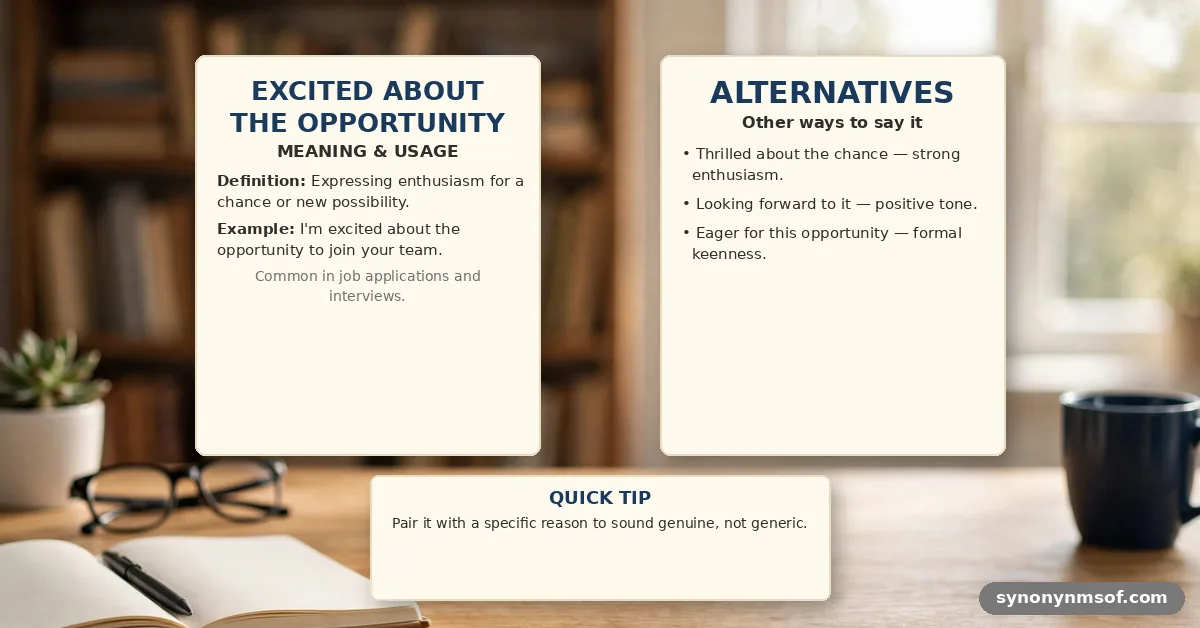

When you find yourself saying you are excited about the opportunity during a job search or a networking event, you are signaling genuine interest to a potential employer. This phrase is a staple in professional correspondence because it balances enthusiasm with a formal tone, showing that you have researched the role and see a clear path for your own growth.
Using it correctly can help you stand out from candidates who provide generic responses. You will learn how to deploy this sentiment effectively to ensure your message resonates with recruiters and hiring managers.
What the Phrase Really Means

At its core, this expression is a professional declaration of intent. It tells the recipient that you have carefully considered their offer or the specific position and have decided it aligns with your career goals. It conveys that you are not just looking for any job, but specifically for this one.
When you use this language, you are bridging the gap between your past experience and the company’s future needs. It suggests that you see yourself as a solution to their problems. Most hiring managers look for this kind of alignment because it indicates you will be a motivated, long-term contributor rather than someone looking for a quick stopover.
Why It Is Effective for Career Growth
Employers value enthusiasm because it is often a leading indicator of performance. A candidate who shows they are eager to join the team is more likely to remain engaged during challenging projects. This phrase acts as a psychological handshake, confirming that you are ready to put in the work.
It also serves a tactical purpose in the hiring process. By stating your interest clearly, you remove ambiguity from the conversation.
If you are in the final stages of an interview, this language helps the interviewer envision you in the role. It changes the dynamic from a transactional interaction to a collaborative one.
Variations for Different Professional Contexts
While the standard phrase is effective, there are moments when you might want to adjust your wording to suit a specific situation. You might want to sound more formal, or perhaps you need to emphasize a specific skill set that makes you a perfect fit for the team. Being able to pivot your language shows emotional intelligence and strong communication skills.
- The Direct Approach: I am very interested in this role and believe my background in project management makes me a strong fit.
- The Growth-Oriented Approach: I am eager to contribute to your company’s expansion and believe my skills in data analysis will be an asset to the team.
- The Collaborative Approach: I am looking forward to the possibility of working with your team to solve the current challenges in your marketing department.
- The Short and Professional: Thank you for the update; I remain very enthusiastic about the prospects of joining your firm.
Comparing Professional Expressions
Choosing the right words depends on the stage of the hiring process and the culture of the company. A startup might appreciate a more energetic tone, while a law firm or financial institution may prefer a more reserved, formal style. Use the table below to gauge which phrasing fits your current correspondence.
| Phrase | Formality Level | Best Usage Scenario |
|---|---|---|
| I am excited about the opportunity. | Moderate | Standard email follow-up after an interview. |
| I am eager to contribute to the team. | High | Cover letters or closing interview statements. |
| I look forward to discussing how I can help. | High | Initial outreach or networking emails. |
| I am very interested in this project. | Low | Casual check-ins with a recruiter. |
How to Sound Enthusiastic Without Being Overbearing
There is a fine line between showing healthy enthusiasm and appearing desperate. The key is to tether your excitement to a concrete reason. Instead of just saying you are excited, explain exactly what part of the project or the company culture appeals to you.
Specificity is the antidote to sounding robotic. When you mention a specific detail, such as an upcoming product launch or a recent company milestone, you prove that you have done your homework. This makes your message feel authentic and tailored, which is far more persuasive than a generic template.
Matching Your Tone to the Company Culture
Researching the company’s communication style is essential before you draft your follow-up. Check their website, social media, and any public statements from their leadership team. If they use casual, punchy language, you can afford to be a bit more expressive in your emails.
If their public presence is traditional and buttoned-up, stick to more formal language. You should never try to mimic their culture so closely that you lose your own professional voice. Aim for a version of yourself that is slightly more polished than your everyday conversational tone, as this helps build immediate professional trust.
Common Pitfalls to Avoid
Avoid using the word “excited” in every single sentence of your email. Repetition drains the power from the word and makes it sound like you are reading from a script. If you find yourself overusing it, try swapping it out for synonyms like “enthusiastic,” “keen,” or “looking forward to.”
Another common mistake is failing to connect your excitement back to the company’s needs. Remember that the employer is ultimately looking for someone who can solve their problems. If you can combine your interest with a brief mention of how you will help the team, you will be miles ahead of the competition.
FAQ
Is it professional to say I am excited?
Yes, it is perfectly professional to express excitement, provided it is paired with a clear, business-focused justification. It demonstrates that you are genuinely invested in the potential role rather than just collecting job offers.
What is a good alternative to the phrase?
If you want to vary your language, try saying, “I am very enthusiastic about the potential to join your team,” or “I am eager to bring my experience to this project.” These maintain a high level of professionalism while sounding slightly more distinctive.
How do I show enthusiasm in a follow-up email?
The best way to show enthusiasm is to reference a specific topic discussed during your interview. Mentioning a detail shows you were listening and that you have already started thinking about how to contribute to the company.
Can I be too enthusiastic?
Yes, if your language is overly effusive or includes too many exclamation points, it can come across as unprofessional or insincere. Stick to clear, balanced sentences that convey confidence rather than just high energy.
Closing Thoughts
Mastering how you communicate your interest is a vital part of your career development. By carefully selecting when and how to say you are excited about the opportunity, you position yourself as a candidate who is both professional and deeply engaged. Remember that your goal is to show the hiring manager that you understand their needs and have the specific skills to address them.
Keep your language clear, anchor your enthusiasm in specific facts about the role, and always maintain a focus on how you can contribute to the team’s ongoing success. With the right approach, you will find that your correspondence becomes a powerful tool in securing your next position.
If you are ready to move forward, take a moment to review your recent communications and ensure your tone reflects the professional standards of the industry you are targeting. You have the skills and the drive to succeed; now ensure your words match your ambition.
SEO Title: Excited About the Opportunity: Meaning & Examples
Meta Description: Learn how to professionally say you are excited about the opportunity. Discover effective variations, usage tips, and examples to boost your career success.
Suggested URL Slug: excited-about-the-opportunity-meaning-examples
Primary Keyword: Excited About the Opportunity
Primary Keyword: Excited About the Opportunity
Secondary Keywords: professional, enthusiastic, contribute, team, role, looking forward, example, meaning, usage