

Using the phrase by way of introduction is a classic way to signal that you are about to provide context or offer a brief self-presentation. While it might sound slightly elevated compared to a casual greeting, it serves as a polished bridge in both written correspondence and formal spoken settings. Understanding when to employ this transition can help you manage the flow of your professional communications while establishing a clear, respectful tone.
Whether you are addressing a new client or setting the stage for a project update, mastering this phrase allows you to open a dialogue with confidence. This guide explores how to integrate it naturally, ensuring your message lands exactly as intended.
Defining the Phrase
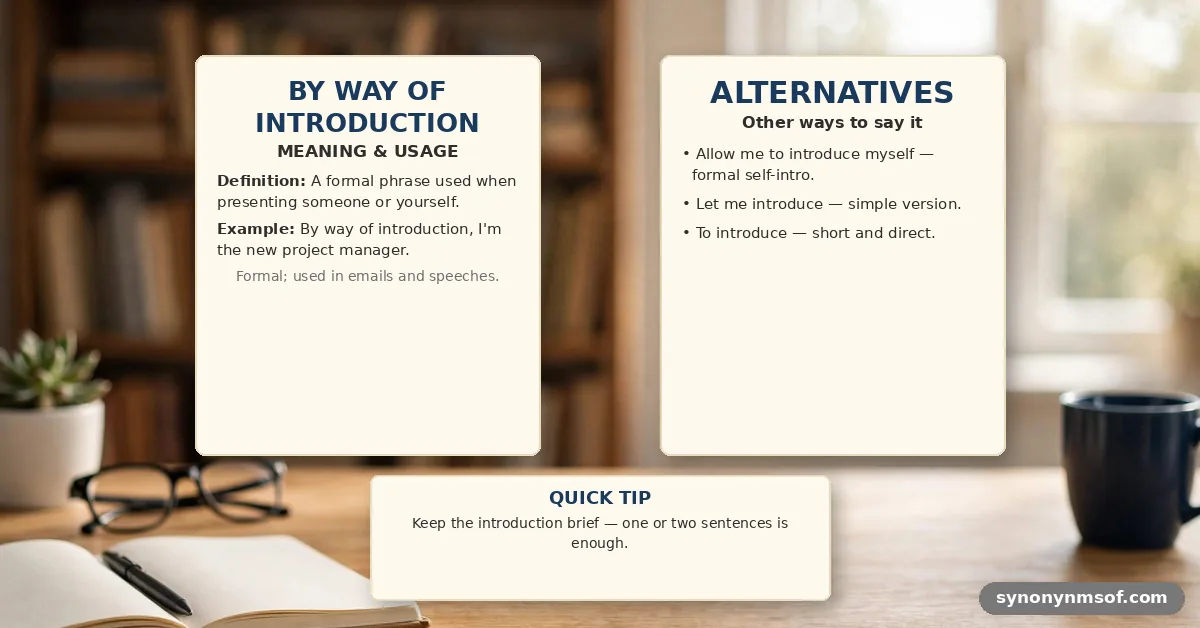
The phrase by way of introduction functions as an introductory clause that tells the listener or reader that what follows is meant to provide background. It is a formal, slightly traditional way to signal that you are about to present yourself or explain the context of your message. By using this, you are effectively saying, “I am providing this information to help you understand who I am or why I am contacting you.”
In modern professional English, the phrase is often used when the speaker or writer is not previously known to the recipient. It acts as a polite buffer, softening the suddenness of an unsolicited email or an unexpected meeting. It also functions well when you are transitioning from a general greeting into the specific purpose of your communication.
Nuance and Professional Suitability

Is this phrase appropriate for every scenario? Generally, it is best reserved for formal or semi-formal situations where a degree of decorum is expected.
If you are writing a quick message to a close teammate, it might sound overly stiff or even archaic. However, in a letter to a senior executive or a potential partner, the formality of the phrase actually works in your favor.
It signals that you respect the recipient’s time and are making a conscious effort to frame your communication professionally. Think of it as a conversational “curtain-raiser” that prepares the reader for the substance of your email. Use it to establish a sense of structure right from the start.
Categorized Alternatives
Depending on your goal, you may want to vary your opening to better fit the specific tone of your message. Below are several ways to categorize alternatives based on the desired level of formality and the specific intent of your introduction.
Polite and Soft Transitions
These phrases are excellent for networking or reaching out to someone you admire but don’t know well. They prioritize warmth over rigid formality.
- As a brief introduction: Useful for keeping things concise while still being polite.
- To introduce myself: Direct and clear; it removes ambiguity about your intent.
- I am writing to introduce: A standard, highly professional way to initiate contact.
- If I may introduce myself: A highly respectful approach for reaching out to someone in a senior position.
Urgent or Direct Openings
Sometimes you need to get straight to the point without too much preamble. These alternatives work well when the recipient is busy and prefers brevity.
In these cases, you might skip the elaborate transition entirely. A simple “My name is [Name] and I am reaching out regarding…” is often more effective than a long-winded opening. Directness is a form of professionalism in itself.
Contextual Guidance for Communication
Choosing the right phrase depends heavily on the power dynamic and the nature of the relationship. When you are writing to a manager, you want to be clear and efficient. When you are writing to a client, you want to be welcoming and clear about your value proposition.
Consider the medium as well. An email allows for more structured, formal phrasing because the recipient can read it at their own pace.
In a live video call, however, shorter and more conversational intros are usually better to avoid sounding rehearsed or stiff. Adapt your language to the environment.
Formal Communication Comparison
The table below provides a quick overview of how different introductory phrases stack up in terms of formality and urgency. Use this to gauge which option fits your current writing task.
| Phrase | Formality Level | Best Use Case |
|---|---|---|
| By way of introduction | High | Cold outreach to executives |
| To introduce myself | Medium | General professional networking |
| I am writing to… | Medium | Standard business correspondence |
| Hi, I’m [Name] | Low | Internal team messaging |
Common Mistakes to Avoid
One common error is overusing introductory clauses. If you start every email with a lengthy preamble, your actual message gets buried, which defeats the purpose of being professional. Keep your introduction short and move quickly to the main point.
Another mistake is using a phrase that sounds like a template. If you copy and paste an opening line without personalizing it, a savvy reader will notice. Always ensure that the transition leads naturally into a specific, relevant detail about your relationship or the project at hand.
FAQ
Is by way of introduction considered too formal for email?
It is certainly on the formal side. It is best used for first-time contact with people you do not know or for high-stakes professional requests where you want to signal respect.
What is the best way to express urgency politely?
If you are in a rush, honesty is the best policy. Instead of burying the urgency in a formal intro, simply state your timeline clearly: “I apologize for the short notice, but I am hoping to get your feedback by Friday.”
What is the difference between at your earliest convenience and as soon as possible?
The former is a polite way to request action without imposing a hard deadline. The latter is a direct request for speed, which can sometimes come across as demanding if not tempered with a polite tone.
How do I introduce myself in a professional email without sounding stiff?
Focus on your purpose rather than your title. Instead of “By way of introduction, I am the Senior Associate at XYZ,” try “I am reaching out to share a few updates on the project we discussed.”
Conclusion
Selecting the right language when you are by way of introduction to a new contact is a skill that develops with practice. By balancing the need for professional decorum with the desire for clarity, you ensure that your message is received with the seriousness it deserves. Whether you choose a traditional phrase or a more direct approach, the ultimate goal is to build a bridge that leads to a productive, respectful conversation.
Remember that the best introductions are those that lead quickly and effectively into the core purpose of your message. Take a moment to consider your audience before you hit send, and you will find that your communications become much more effective. Continue to refine your style, and you will soon master the art of the professional opening.
SEO Title: By Way of Introduction: Meaning & Examples
Meta Description: Learn how to use by way of introduction correctly in professional emails. Discover formal alternatives and tips for clear, effective business communication.
Suggested URL Slug: by-way-of-introduction-meaning-examples
Primary Keyword: by way of introduction
Primary Keyword: by way of introduction
Secondary Keywords: professional ways to say as soon as possible, formal, email, introduce myself, tone