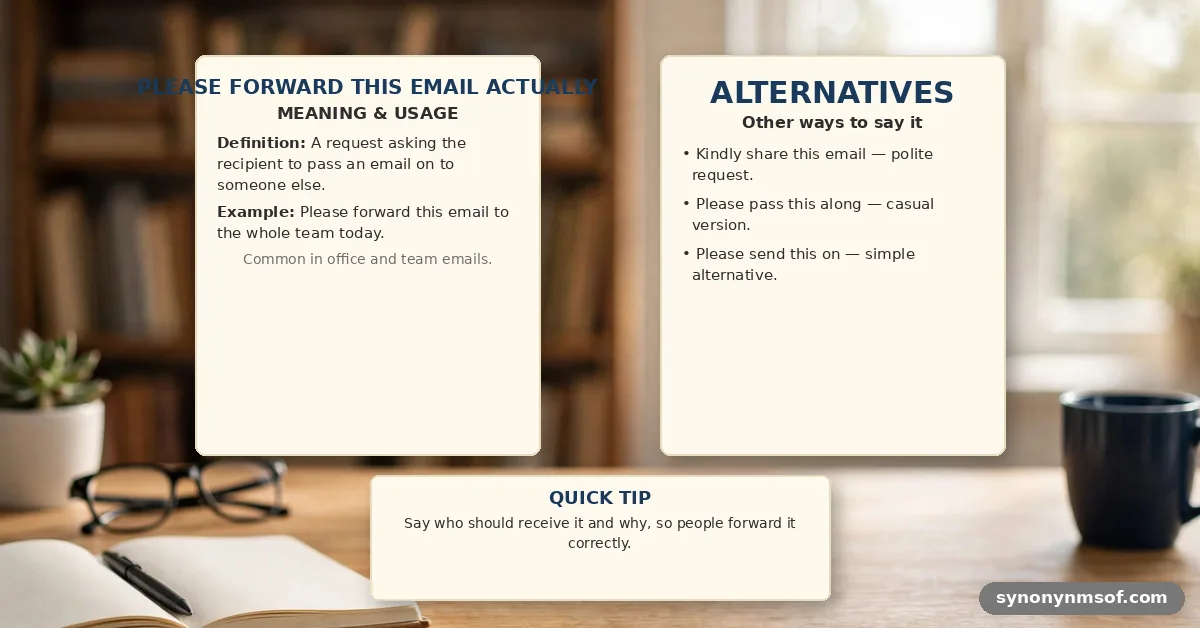

When you receive a request asking you to please forward this email, it usually serves as a simple directive to circulate information to the right person. Understanding the nuance behind such a request helps you maintain clear communication and ensures that critical data reaches the intended party without unnecessary delay.
Whether you are working with a manager, a client, or a teammate, mastering how to handle or issue this specific instruction makes your daily workflow more efficient. This article clarifies the intent behind these common messages, provides concrete examples of how to phrase them, and offers guidance on choosing the right tone for your workplace environment.
At its core, the instruction to forward a message is a delegation tool. It implies that you have received information that belongs in another person’s inbox or that you are the bridge between two parties who need to collaborate. The sender trusts you to act as an intermediary, ensuring that the necessary context is preserved for the next recipient.
Sometimes, this request signals that the sender is busy or lacks the direct contact information for the final recipient. By asking you to perform this task, they are leveraging your existing relationship with the third party. It is a common professional practice that keeps projects moving forward without requiring the original sender to start a new thread from scratch.
However, you should always double-check the sensitivity of the content before clicking send. If the email contains proprietary data or confidential personnel information, you must confirm that the person you are forwarding it to has the appropriate clearance. A simple request should never lead to a security or privacy breach.
When to Use This Request in Professional Settings

Using a formal request is best when you want to appear organized and respectful of the recipient’s time. You should avoid being overly blunt, as a naked command can sound demanding rather than collaborative. A well-constructed sentence frames the request as a helpful action for the team.
Consider the context of the email chain. If you are forwarding a message to a manager, you might want to add a brief note explaining why they need to see it. If you are forwarding to a client, ensure the tone remains polished and underscores the value of the information provided.
- Provide context: Always explain why the recipient needs this specific information.
- Check permissions: Verify that the original sender would be comfortable with the email being shared.
- Clear the clutter: Remove unnecessary signatures or irrelevant back-and-forth threads before forwarding.
- Add a call to action: Specify what you expect the recipient to do with the shared message.
Formal Alternatives for Different Scenarios
Sometimes you need more than just a standard request to convey the right level of urgency or professionalism. Depending on your relationship with the recipient, you might choose a softer or more direct approach. The following table outlines how different phrasings alter the perception of your message.
| Phrase | Best Used For | Tone |
|---|---|---|
| Please share this with your team | Distributing updates to a group | Professional |
| Could you kindly pass this along? | Requests to colleagues or peers | Polite |
| Please ensure this reaches [Name] | Urgent, high-priority information | Direct |
| I would appreciate it if you could forward this | Formal requests to superiors | Respectful |
Managing Expectations When Forwarding
When you ask someone to forward an email, you are essentially asking for a favor. Always express gratitude for their assistance, as this reinforces a positive working relationship. If the task requires them to do more than just hit the forward button—such as summarizing the content or adding their own input—make that expectation clear from the start.
Avoid the mistake of assuming the recipient knows exactly who should receive the information. If you have a specific person in mind, name them directly. Vague requests like “pass this to the right person” often lead to delays or the information being sent to an incorrect department.
If the information is time-sensitive, mention a specific deadline. Phrases like “before the meeting at 2:00 PM” are far more effective than generic requests for speed. Providing a concrete timeline helps the recipient prioritize their tasks effectively.
Common Mistakes to Avoid
One frequent error is failing to strip away irrelevant personal notes from previous emails in the thread. Before you pass an email along, scan the entire chain to ensure there are no internal comments that were never meant for the final recipient. This simple step prevents embarrassing or unprofessional disclosures.
Another common mistake is forgetting to introduce the parties involved. If you are forwarding an email to someone who doesn’t know the original sender, add a one-sentence introduction. This provides the necessary context and makes the transition seamless for everyone involved in the communication.
Do not overuse the request for forwarding. If you find yourself constantly asking others to distribute information, evaluate whether you should be looped into the initial distribution list instead. Efficient communication relies on getting the right information to the right people the first time, rather than relying on secondary relays.
Handling Privacy and Confidentiality
Forwarding an email is a serious responsibility regarding data security. Before you act on a request to forward, consider if the email contains private client data or sensitive company strategy. If you are ever in doubt, it is safer to ask the original sender for permission before you hit the send button.
Many organizations have strict policies regarding the sharing of internal communications outside of specific groups. Familiarize yourself with these guidelines to avoid accidental policy violations. Being the person who protects information is just as important as being the person who facilitates its flow.
When in doubt, use the blind carbon copy or attachment method if you need to share information without revealing the original sender’s identity. This preserves the privacy of the original conversation while still delivering the necessary data to the new recipient. Always prioritize security over the speed of the message.
Best Practices for Email Subject Lines
When you forward an email, the subject line is your first chance to tell the recipient why they are receiving the message. Do not leave the subject as a generic “Fwd: [Original Subject].” Instead, update the subject line to reflect the current purpose of the interaction.
Including a tag like “Action Required” or “For Your Review” immediately sets the expectation. This helps the recipient filter their inbox and understand the priority of your request before they even open the email. A clear subject line is the mark of a professional communicator.
If the email chain has become long and confusing, consider starting a fresh thread. Paste the essential information into a new email and provide a summary. This saves the recipient from having to scroll through pages of irrelevant text to find the core message.
Frequently Asked Questions
Is it professional to say please forward this email?
Yes, it is a standard and professional way to request that information be passed along. It is clear, concise, and direct, which is often appreciated in busy office environments. However, ensure the tone matches your relationship with the recipient to avoid sounding overly demanding.
What is the best way to express urgency when asking for a forward?
The best approach is to be specific about the timeline rather than using vague words like “soon.” Use phrases like “please forward this before the end of the day” or “this is needed for our 10:00 AM briefing.” Clarity is always more effective than intensity.
How do I politely ask a manager to forward an email?
Use a respectful tone that acknowledges their time. Phrases such as “I would appreciate it if you could forward this to your team when you have a moment” work well. This frames the request as a helpful contribution to the project rather than an added chore.
What should I do if I am asked to forward an email that contains sensitive information?
Pause and assess the risk. If you are unsure if the recipient is authorized to see the information, contact the original sender to clarify. Protecting sensitive data is a fundamental professional duty that outweighs the need for speed.
Conclusion
Mastering the art of professional communication requires attention to detail, especially when you are tasked with sharing information across teams. Knowing when and how to ask someone to please forward this email ensures that your messages remain clear, secure, and effective. By providing context, respecting privacy, and tailoring your tone to the recipient, you build trust and improve the efficiency of your workspace.
Always prioritize clarity over brevity. Taking a few extra seconds to summarize the information or explain the reason for your request saves time for everyone involved.
If you maintain these high standards in your daily correspondence, you will find that your requests are met with greater cooperation and success. Start implementing these strategies today to streamline your workflow and improve your professional impact.
SEO Title: Please Forward This Email: Meaning & Examples
Meta Description: Learn the professional meaning of please forward this email, how to use it politely, and discover formal alternatives for your workplace communication.
Suggested URL Slug: please-forward-this-email-meaning-examples
Primary Keyword: please forward this email
Secondary Keywords: forward email, professional, request, polite, communication, share email, emails, formal