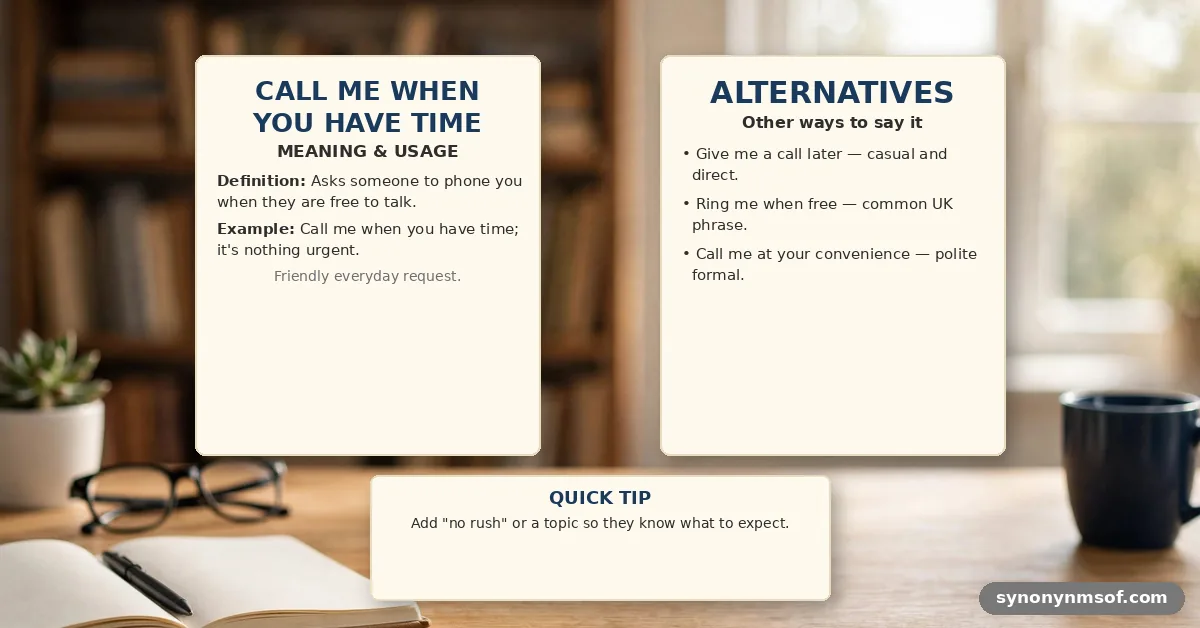

When someone tells you to call me when you have time, they are extending an invitation that prioritizes your schedule over their own. This phrase is a common staple in both casual and professional English, serving as a flexible way to initiate a conversation without imposing unnecessary pressure.
Understanding the nuance behind these words helps you gauge whether the sender is looking for a quick chat or a serious discussion. You will learn how to interpret this request, identify the right moments to use it yourself, and avoid potential pitfalls in your daily communication.
The True Meaning of the Phrase
At its core, this request is an expression of flexibility. It signals that the speaker wants to connect but recognizes that you have other commitments that might take precedence. By removing the immediate demand for a phone call, the speaker lowers the barrier to entry for the interaction.
In a business context, this phrasing is often seen as a sign of respect for your workload. It suggests that your time is valuable and that you should only reach out when your calendar allows for a meaningful exchange. The meaning is rarely about the specific timing of the call, but rather about the willingness to wait for a mutually beneficial window.
Decoding the Intent

While the phrase sounds open-ended, the intent can vary based on the relationship you share with the person. If a supervisor uses this with you, it might imply a need for a check-in that is important but not necessarily an emergency. If a close friend says it, they are simply opening a door for you to reach out whenever you feel like catching up.
The best use of this language occurs when you want to avoid being pushy. It shifts the power dynamic slightly, placing the responsibility of initiating the contact on the recipient. This is a subtle but effective way to maintain professional rapport while keeping your communication lines open.
When to Use This Expression
You should reach for this phrase when you want to signal availability without creating a sense of urgency. It works particularly well when you need to discuss something that requires a bit of focus but isn’t on a critical deadline. This is a polite way to invite dialogue that might otherwise feel intrusive.
It is also a great tool for networking. When you meet someone new and want to offer them a chance to ask questions or discuss potential collaborations, using this language removes the pressure of an immediate follow-up. It shows that you are accessible and open to conversation at their convenience.
Selecting the Right Scenario
- When delegating a non-urgent task that requires a brief verbal explanation.
- During a networking interaction where you want to leave the door open for future discussion.
- When reaching out to a colleague who is known to have a very busy, unpredictable schedule.
- As a follow-up to an email where a quick phone call might clarify complex details.
Comparing Communication Styles
Understanding the difference between an urgent request and an open-ended invitation is vital for effective communication. The table below highlights how different phrasings alter the expected response time and the overall tone of your request.
| Phrase | Urgency Level | Tone |
|---|---|---|
| Please call me as soon as possible. | High | Direct and demanding |
| Call me when you have time. | Low | Flexible and polite |
| Are you free for a quick call today? | Medium | Inquisitive |
| Let’s chat at your earliest convenience. | Low | Formal and professional |
The Worst Use Cases
There are times when telling someone to call when they have time is the worst use of your words. If you have an urgent issue that requires immediate attention, this phrase is entirely inappropriate. It masks the necessity of the situation and can lead to frustration when the recipient does not call you back promptly.
Avoid using this with subordinates or clients who are waiting on a deliverable. If a project is stalled or a client is unhappy, you need to be explicit about the timeline. Vague requests in these situations can be interpreted as a lack of focus or a failure to prioritize the issue at hand.
Navigating Professional Nuances
In a learning environment or a highly structured corporate office, the way you phrase your requests defines your reputation. Using too many softeners can make you appear indecisive, while using too few can make you seem aggressive. Balancing these extremes is a key lesson in leadership communication.
When you are in doubt, consider the seniority of the person you are contacting. If you are speaking to a mentor or a high-level executive, adding a specific window of availability can be more helpful than leaving it open-ended. Instead of just saying call me when you have time, try saying, “I would love to discuss this with you; feel free to call me when you have time later this week.”
Refining Your Tone
Tone is everything in digital and verbal communication. A simple change in word order or the inclusion of a specific timeframe can transform a casual remark into a professional directive. Always look at your relationship with the recipient to determine if you can afford to be vague or if you need to be precise.
If you find that your messages are frequently ignored, it may be time to stop using open-ended invitations. People are often overwhelmed by their own tasks, and they may appreciate it when you provide a clearer structure. Setting a boundary on your own time is just as important as being flexible with others.
Common Alternatives
If you want to vary your vocabulary, there are several ways to express the same sentiment without sounding repetitive. These options allow you to tailor your message to the specific needs of the conversation:
At your earliest convenience is perhaps the most formal alternative. It is perfect for high-stakes business correspondence where you want to maintain a respectful distance while still requesting a response.
Whenever you are free is a friendly, casual option. Use this with peers and team members whom you know well. It carries a warm tone that suggests you aren’t in a rush and you value their input.
Let me know when you have a moment acts as a soft bridge to a conversation. It works well if you aren’t sure if they are currently busy and you want to give them the chance to opt-out if they are swamped.
The Importance of Context
Context is the silent partner of every conversation. A request that works in an informal Slack channel might be completely out of place in a formal board meeting proposal. Always consider the medium you are using to send the message.
Email allows for more formal and structured requests, while text messaging naturally leans toward shorter, more casual language. If you are sending a text, you can be more relaxed. If you are drafting an email, you might want to stick to more traditional business phrasing.
Adapting to Digital Communication
In the digital age, we have less visibility into the physical state of the people we are contacting. We don’t know if they are in a meeting, at lunch, or buried under a pile of work. Acknowledging this reality makes your request more palatable.
Phrasing your request to acknowledge their busy schedule shows emotional intelligence. It builds goodwill and makes it more likely that they will prioritize your call when they finally do have a free moment. Remember that every interaction is an opportunity to strengthen or weaken a professional bond.
Frequently Asked Questions
Is it professional to say call me when you have time?
Yes, it is generally considered professional, provided the situation does not require urgent action. It shows respect for the recipient’s schedule and avoids being overly demanding.
What is the best way to express urgency politely?
If you need to be urgent but polite, use a specific timeframe rather than an open-ended request. For example, “Could you please give me a call by 3:00 PM today to discuss this?” is much clearer than a vague request.
How does this differ from at your earliest convenience?
The phrase “at your earliest convenience” is more formal and is typically used in written business communication. “Call me when you have time” is more conversational and is best suited for verbal requests or informal messages.
Can I use this phrase with a client?
You can, but proceed with caution. If the client is waiting for information, it is better to be proactive. If you are just checking in, the phrase is perfectly acceptable and maintains a positive relationship.
Final Thoughts on Professional Communication
Choosing the right words when you need to connect with others is a vital skill. Whether you use the classic request to call when they have time or opt for a more formal alternative, the goal is always to demonstrate respect for the other person’s schedule while ensuring your message is heard. By being mindful of your tone and the level of urgency required, you can build stronger connections and manage your professional interactions with greater ease.
Practice adjusting your language based on the context of each situation to see how it improves the quality of your responses. As you continue to refine your approach, you will find that clear, respectful communication is the foundation of every successful relationship.
SEO Title: Call Me When You Have Time: Meaning & Examples
Meta Description: Learn the professional meaning of “call me when you have time.” Discover when to use this phrase, formal alternatives, and how to balance tone.
Suggested URL Slug: call-me-when-you-have-time-meaning
Primary Keyword: Call Me When You Have Time
Secondary Keywords: professional, polite, meaning, example
Secondary Keywords: professional, polite, meaning, example, best use, tone, time, free