
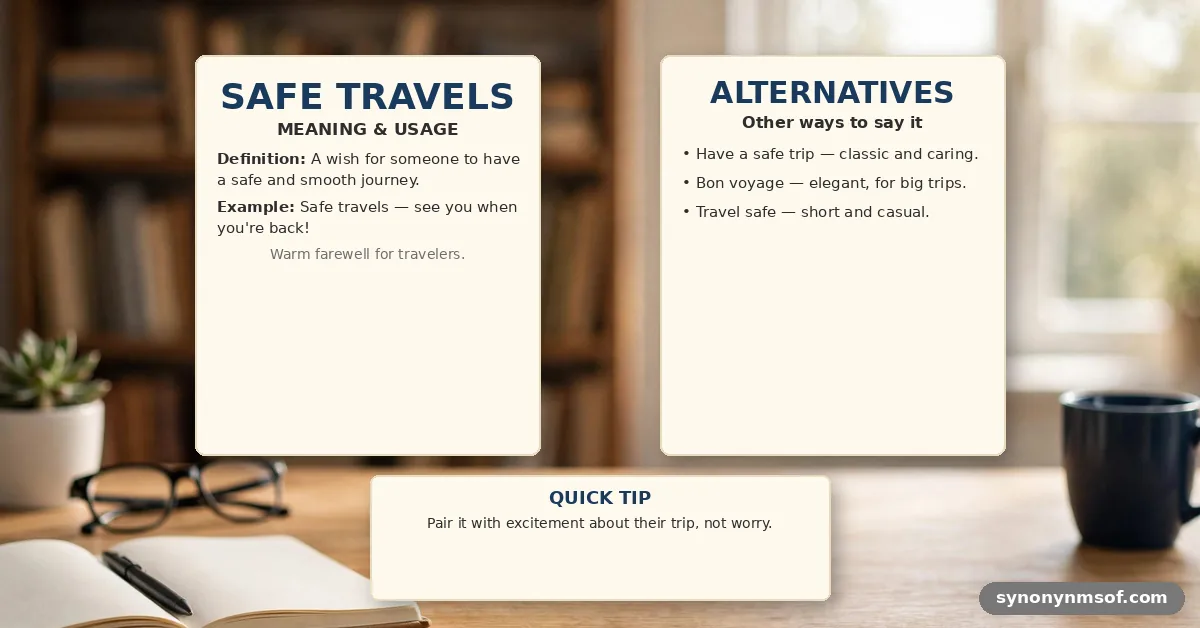

Understanding the nuances behind safe travels: meaning, messages, and alternative wishes helps you connect more deeply with friends and family before they depart. While the phrase itself is a standard social pleasantry, its emotional weight often depends on the relationship and the context of the journey.
Whether you are sending a quick text or writing a heartfelt card, choosing the right words shows you genuinely care about their well-being. This guide explores the origins, common interpretations, and creative alternatives to ensure your farewells are both thoughtful and memorable.
The phrase is fundamentally a wish for protection and ease during a transition from one location to another. It functions as a secular benediction, replacing older religious blessings that traditionally sought divine intervention for travelers. By saying these words, you are expressing a desire for the recipient to avoid accidents, delays, and unnecessary stress.
In modern usage, the phrase has evolved into a catch-all for various types of departures. It is just as appropriate for a short commute as it is for an international flight. You can use it in professional settings, casual text exchanges, or formal goodbyes without sounding out of place.
The Evolution of Travel Well-Wishes
Historical expressions of safe passage often tied travel to high levels of physical risk. Before the advent of modern aviation and infrastructure, travelers faced unpredictable weather and bandits. Wishes for safety were not merely polite formalities but genuine expressions of concern for life and limb.
Today, the risk profile has changed significantly, but the underlying sentiment remains identical. We use these phrases to acknowledge the vulnerability inherent in leaving one’s home base. It serves as a social glue that reinforces our bonds with those who are physically distancing themselves from us.
Why We Use These Wishes
Human beings are social creatures who rely on rituals to manage the anxiety of separation. When someone departs, there is a natural void created in our daily interactions. Offering a wish for a secure journey helps bridge that gap and provides a sense of closure to the encounter.
These messages also serve as a reminder that the person is valued. When you take the time to offer a specific wish, you signal that their presence in your life matters. It is a simple way to maintain emotional proximity despite physical distance.
| Recipient | Tone | Best Approach |
|---|---|---|
| Business Partner | Professional | Keep it brief and focused on the trip success. |
| Close Friend | Warm/Casual | Include a personal reference or inside joke. |
| Family Member | Affectionate | Emphasize love and a desire for their return. |
| Acquaintance | Polite | Standard phrases like “have a great trip” work best. |
Alternatives to the Standard Phrase
Sometimes the standard phrase feels repetitive or insufficient for the occasion. If you want to vary your language, consider the nature of the trip and your relationship with the traveler. You might choose a phrase that focuses on the experience itself rather than just the safety aspect.
- “Wishing you smooth skies and easy transitions.”
- “May your journey be filled with wonderful discoveries.”
- “Travel with care and enjoy every moment of your adventure.”
- “I’m looking forward to hearing all about your trip when you return.”
- “Have a peaceful and productive journey.”
Cultural Contexts of Departure
Different cultures possess unique ways of wishing someone well on their journey. In Japan, it is common to say “Itterasshai,” which translates roughly to “please go and come back,” emphasizing the expectation of a return. This cultural focus on the homecoming is a powerful variation on the standard Western wish for safety.
In other regions, the focus might be on the journey itself. European traditions often emphasize “bon voyage,” which centers on the concept of a good trip. Understanding these nuances can help you tailor your messages if you are interacting with people from diverse backgrounds.
Religious and Spiritual Perspectives
Many people find comfort in spiritual blessings when they embark on a journey. In the context of the Bible, Psalm 121:8 reminds us that the Lord preserves our going out and our coming in from this time forth and even for evermore. This perspective shifts the focus from human effort to divine protection.
You can incorporate these themes into your wishes if the recipient shares your faith. A simple “Go with God” or “May you be watched over on your travels” can carry significant weight for those who rely on prayer. These wishes provide a layer of comfort that standard secular phrases may lack.
Texting and Digital Communication
Digital communication requires a balance between brevity and warmth. When you are texting someone about their upcoming travel, use emojis to add personality if the relationship allows.
A simple “Safe travels! Can’t wait to see your photos” is perfect for a quick, supportive message.
If the recipient is traveling for a stressful reason, such as a funeral or a difficult business meeting, avoid overly cheerful language. Stick to something grounded and supportive, such as “Thinking of you on your journey.” This shows you are aware of the context and aren’t just sending a generic pleasantry.
Professional Travel Etiquette
In a professional environment, keeping your wishes concise is key. You want to appear thoughtful without being intrusive. A message like “Wishing you a successful trip and safe travels” covers both the professional outcome and the personal well-being of your colleague.
Avoid over-explaining your concerns regarding their safety. If you are their manager, keeping the message focused on their return and the work ahead is usually the most appropriate path. You can find more tips on office communication through the official government resource portal for professional standards.
Travel Wishes for Partners
When a loved one is traveling, the dynamic of the message changes entirely. You have the freedom to be vulnerable and expressive. Phrases like “I’ll be counting down the days until you’re home” or “Travel safely, my love” convey a depth of emotion that is not appropriate for other relationships.
Consider the timing of your messages as well. Sending a heartfelt wish right before they head to the airport or train station shows you are thinking of them during the transition. It helps set a positive tone for their entire trip.
Handling Long-Distance Separation
Long-distance travel can be difficult for both the person leaving and those staying behind. Use your messages to reinforce the strength of your connection. Acknowledging the distance while expressing your support can help mitigate the feeling of separation.
Focus on the positive aspects of the reunion. When you emphasize the future time you will spend together, the distance feels less daunting. This approach turns a goodbye into a temporary milestone rather than a permanent loss.
The Impact of Intent
The effectiveness of your message lies in your intent. If you truly care about the person, the specific words you choose matter less than the sentiment behind them. Authenticity is always felt by the recipient, even if the phrasing is simple.
Take a moment to consider how the person might be feeling. Are they excited? Are they nervous?
Tailoring your message to their emotional state makes a massive difference in how it is received. A well-timed, empathetic message can provide significant comfort.
Frequently Asked Questions
What is a good alternative to saying “safe travels”?
You can use phrases like “I hope you have a smooth journey,” “Take care of yourself,” or “Wishing you a wonderful adventure.” The best choice depends on whether the trip is for business or leisure.
How do I wish someone safe travels over text?
Keep it short and sweet. You can add a personal touch by saying “Safe travels! I’ll be thinking of you” or “Can’t wait to hear all about it when you’re back.”
Is “safe travels” grammatically correct?
While it is a shortened form of “I wish you safe travels,” it is widely accepted as a standard idiomatic expression in English. You can use it freely in both spoken and written communication.
What can I say to someone traveling for a difficult reason?
Focus on support rather than the trip itself. A message like “I’m keeping you in my thoughts during your journey” or “Wishing you strength as you travel” is much more appropriate than a cheerful “have a great time.”
Are there cultural differences in how we wish people well?
Yes, many cultures emphasize the return of the traveler rather than the journey itself. Researching the customs of the person’s culture can help you choose a more meaningful and respectful farewell.
Conclusion
Mastering the art of safe travels: meaning, messages, and alternative wishes is about more than just vocabulary. It is about recognizing the importance of transitions and the value of the people in your life. Whether you choose a formal blessing or a casual text, your intention to provide comfort and support is what truly resonates.
By tailoring your language to the specific person and the nature of their journey, you create a lasting impression of care. Keep these principles in mind the next time you say goodbye, and you will find your interactions are both more thoughtful and more meaningful for everyone involved.
As you continue to refine how you express these sentiments, remember that simplicity is often the most powerful tool. A genuine message of goodwill, delivered with sincerity, is a gift that makes any journey feel a little bit lighter. We invite you to share your own favorite ways to wish someone well on their next adventure and keep the conversation going with your own community.